
Clean Beauty vs. Greenwashing: What’s Really in Your Products?
Walk into any beauty aisle and you’ll see the same words everywhere:
natural, gentle, pure, non-toxic.
They look reassuring, but here’s the catch—none of them are regulated.
They’re marketing terms, not safety standards.
That gap between what labels promise and what products actually deliver is what gave rise to the clean beauty movement. —one that continues to evolve alongside the future of skincare.
In this article, we’ll cut through the confusion and show you how to separate clever branding from true safety.
🔑 Quick Summary
— Clean beauty means safer ingredients and full transparency.
— Most labels like “natural” or “non-toxic” aren’t regulated.
— U.S. laws barely restrict harmful ingredients.
— The EU bans over 1,600 ingredients. The U.S. bans around 30.
— Greenwashing hides toxic formulas behind pretty packaging.
— Watch out for vague terms like “fragrance” or “proprietary blend.”
— Real clean products list every ingredient and explain why it’s used.
— Look for trusted certifications like EWG Verified or MADE SAFE.
— If it looks clean but won’t tell you what’s inside—it’s not clean.
— Clean beauty is about safety, not just style.
Disclosure: The information provided is for educational purposes only and not intended as medical advice. Consult a healthcare professional before making any changes to your health routine. If you make a purchase through the links provided, I may earn a small commission at no additional cost to you.
How Synthetic Ingredients Replaced Traditional Skincare
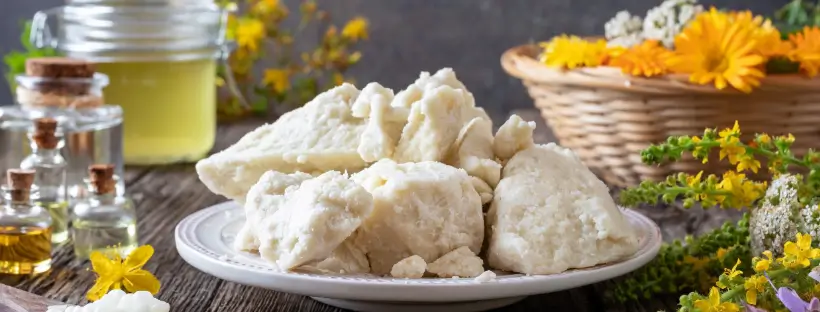
For centuries, skincare was simple: oils, shea butter, clay, herbs, beeswax, and natural soap. If your grandmother couldn’t grow it, she didn’t use it.
That changed after World War II (1940s–1950s), when chemists discovered how to make cheap synthetic versions of natural ingredients. Preservatives kept products from spoiling. Petroleum byproducts acted as moisturizers. Artificial fragrance made everything smell “fresh.” It looked like progress—but it was really profit.
The laws never caught up.
For more than 80 years, U.S. cosmetics law was based on the 1938 Food, Drug, and Cosmetic Act—a law written long before the rise of synthetic preservatives, petroleum byproducts, hormone-disrupting chemicals, and artificial fragrance compounds. In 2022, Congress passed the Modernization of Cosmetics Regulation Act (MoCRA) to update it. The law introduced basic reforms like product registration, adverse event reporting, and limited recall authority. But companies still aren’t required to prove a product is safe before it’s sold. There’s still no testing for long-term health effects. No independent review. Just marketing, with a few more rules on paper.
That’s why the U.S. currently bans or restricts around 30 cosmetic ingredients. In the European Union, the number is more than 1,600. Canada and Japan fall somewhere in between. American consumers are left with some of the weakest protections in the developed world.
And it gets worse. As shelves filled with modern formulas, loopholes multiplied—letting brands hide what they didn’t want you to see. Loopholes built into the system allow companies to:
- Hide ingredients under vague terms like fragrance or proprietary blend — leaving consumers with no idea what they’re really using
- Set their own safety standards — brands are required to keep internal safety files, but there’s still no mandatory testing or public oversight
- Avoid full accountability — the FDA can now issue recalls, but only after a product has caused serious harm and is already on the market
Most of us still trust the labels, without realizing how much they conceal.
By the early 2000s, the truth started leaking out. Scientists, activists, and small indie brands began exposing the risks: hormone disruptors, carcinogens, allergens—all legal, all hidden in plain sight.
Clean beauty wasn’t born as a trend. It was born as a rebellion.
It was never meant to be about pretty packaging or buzzwords. It was meant to be a warning—that the products we use every day were never designed with our health in mind.
What’s Really in Everyday Products

Every morning, millions of people unknowingly coat themselves in chemicals never proven safe.
Shampoo on your scalp. Lotion on your skin. Lipstick on your mouth. Even baby soap in the bath.
What most of us don’t realize is that these everyday products can legally contain substances linked to cancer, infertility, hormone disruption, and organ damage. And the companies selling them don’t have to prove otherwise.
Here are some of the most dangerous ingredients still hiding in plain sight:
- Parabens – Preservatives that prevent mold, but mimic estrogen in the body. Linked to hormone imbalance, reproductive issues, and certain cancers. Still widely used in U.S. products, even though some are banned in the EU.
- Fragrance – A single word, “fragrance”, can legally mask dozens of undisclosed chemicals, including allergens and endocrine disruptors. It’s one of the biggest loopholes in the entire industry.
- Phthalates – Chemicals that make fragrance last longer and plastics more flexible. They’re strongly tied to fertility problems and developmental harm in children. Almost never listed by name—usually hidden under “fragrance.”
- Formaldehyde releasers – Preservatives like DMDM hydantoin that slowly release formaldehyde, a known carcinogen. Yes, it’s still legal in cosmetics.
- Petrolatum and mineral oil – Cheap moisturizing agents derived from petroleum. If not properly refined, they can carry cancer-causing impurities. Banned or restricted in Europe—still common in the U.S.
- Artificial dyes (FD&C colors) – Bright pigments that can be contaminated with heavy metals like lead and arsenic. Some are linked to behavioral and developmental issues.
- BHA and BHT – Synthetic antioxidants used as preservatives, flagged for hormone disruption and toxicity.
- Microplastics and silicones – Added for texture, slip, or shimmer. They don’t break down in the environment and offer no benefit to your skin.
Want the full breakdown? Here’s a deep dive into the 10 most toxic ingredients still found in cosmetics in 2025.
Every single one of these ingredients is legal.
That’s not confusion. That’s the system working exactly as designed. Regulators give companies freedom to use whatever they want, and companies take advantage—because it’s cheap, it’s easy, and it sells.
And here’s the part that should make you stop in your tracks: these aren’t rare chemicals you might encounter once in a while. They’re in products you use every single day. On your skin, in your hair, near your mouth. Over and over, year after year.
This isn’t about one bad product. It’s about an entire industry built on loopholes.
And until you know how to read past the labels, you’re the one carrying the risk.
Greenwashing in the Beauty Industry
When people started worrying about what was in their products, the beauty industry faced a choice: make products safer—or make them look safer.
They chose the look.
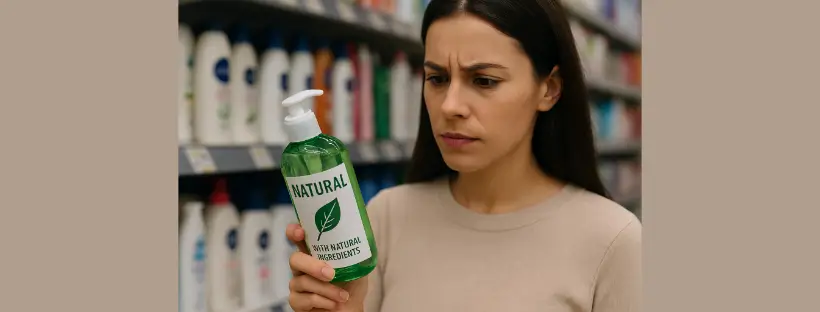
Greenwashing is the marketing trick of dressing up the same old formulas in eco-friendly packaging and wellness buzzwords. A bottle may still contain hormone disruptors or carcinogens, but add a leaf on the label and the word natural, and most shoppers believe it’s safe.
Why? Because rebranding is cheap. Reformulating is not. It’s easier—and more profitable—to sell the illusion of clean beauty than to deliver it.
The danger never left the bottle. Only the story changed.
Here are some of the most common greenwashing tricks you’ll see on shelves today:
- “Natural” – There’s no legal definition. A product can be 95% synthetic and still call itself “natural.”
- “Non-toxic” – Sounds reassuring, but has no regulatory standard. Anyone can use it.
- “Fragrance-free” – Often replaced with essential oils or scent-masking agents that can still trigger allergies.
- “Dermatologist tested” – An unregulated term. It could mean one dermatologist tested it on a few people for a day. It proves nothing about safety or effectiveness.
- “Eco-friendly packaging” – Many “green” bottles are still made from virgin plastic that isn’t recyclable.
- Minimalist design – Soft fonts, neutral tones, and glass jars give the appearance of safety—but say nothing about ingredients.
This isn’t confusion. It’s strategy.
The industry knows most people don’t have the time to decode labels. They count on you trusting what looks safe, what sounds gentle, what feels eco-conscious. It’s surface-level change that protects profit, not people.
That’s how clean beauty—the movement meant to demand transparency and safety—was hijacked and turned into a marketing aesthetic.
It looks clean. It sells clean. But the formulas haven’t changed.
What Real Clean Beauty Looks Like
If greenwashing is all about illusion, clean beauty—real clean beauty—is about proof.
It’s not the soft fonts, the neutral jars, or the word “natural” stamped on the box. A truly clean product is defined by what’s inside, how it’s disclosed, and the ethics behind how it’s made.
Here’s what separates real clean beauty from marketing spin:
- Full ingredient list – No hiding behind “fragrance” or “proprietary blend.” Every ingredient is listed, in plain sight.
- No known toxicants – The formula avoids ingredients linked to hormone disruption, cancer, or reproductive harm (like parabens, phthalates, and formaldehyde releasers).
- Transparency about the “why” – Brands explain what each ingredient does, not just what they’ve excluded.
- Independent verification – Certifications like EWG Verified, MADE SAFE, COSMOS, Ecocert, Leaping Bunny aren’t perfect, but they provide accountability beyond self-marketing.
- Consistency across products – A real clean brand doesn’t release one “green” product while selling dozens of others with harmful ingredients. Clean is a standard, not a side hustle.
- No animal testing – True clean brands don’t sell in markets that require animal testing and are transparent about cruelty-free status.
The key? Transparency.
If you have to hunt for information, if the ingredient list is vague, if the claims sound pretty but lack explanation—that’s not clean. That’s marketing.
A real clean beauty product earns your trust through openness, not design. It explains itself clearly, makes safety part of its identity, and doesn’t leave you guessing. If you’re ready to make the switch, start with clean beauty swaps that are simple, affordable, and actually safer.
Clean beauty isn’t about buzzwords. It’s about honesty, health, and accountability.
How to Spot a Fake “Clean” Product in 5 Seconds
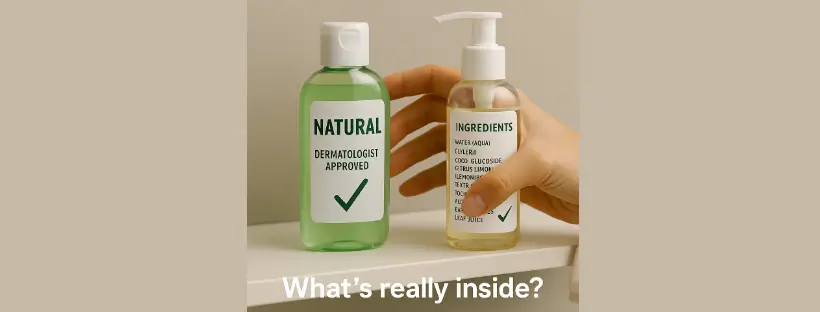
You don’t need a science degree to protect yourself. If a product is faking “clean,” the warning signs jump out the moment you look at the package. The trick is knowing what to look for.
Here’s your 5-second gut check:
- If it hides behind mystery words. Anything labeled fragrance, parfum, or proprietary blend is designed to conceal what’s really inside.
- If it only tells you what’s not in it. “Free from parabens” doesn’t prove what’s actually in the formula. Real clean beauty leads with what it is, not what it avoids.
- If the safety is “borrowed.” A leaf on the label, eco-colored packaging, or the phrase “dermatologist tested” are borrowed signals of trust—not proof of safety.
- If you can’t find the facts fast. A clean brand makes full ingredient lists easy to find—on the box, the website, everywhere. If you’re digging around, they don’t want you to know.
- If it feels like a side hustle. One “green” hero product in a brand’s lineup of synthetics isn’t a clean brand—it’s a marketing strategy. Truly clean brands apply the same standards across their whole line—like these seven natural skincare brands that are actually walking the talk.
You don’t have to read every label in the aisle. You just need to know that real clean beauty makes itself clear. Fake clean beauty makes you guess.
And that’s the difference.
Final Thoughts: It’s Not Confusion. It’s the System.
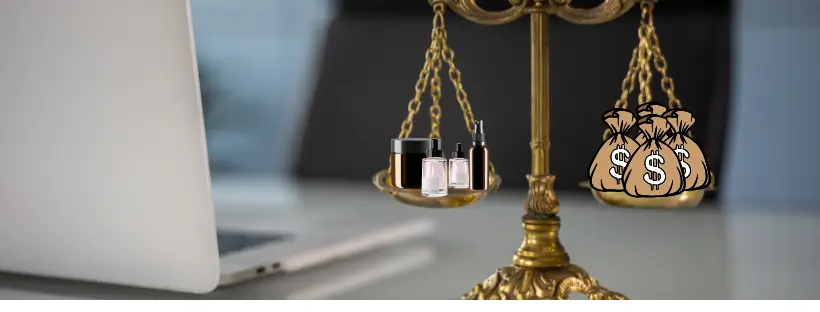
When it comes to beauty, the problem isn’t consumer ignorance — it’s a system designed to profit from it.
On one side, you have products that strive to be clean: transparent labels, safer ingredients, and ethical standards. On the other, an industry built on loopholes, greenwashing, and marketing spin that prioritizes profit over people. And right now, profit is winning.
The scales are unbalanced not because we don’t care, but because the system was never designed to protect us. Regulations remain outdated, companies police themselves, and the burden of proof always falls on the consumer — after the damage is already done.
But awareness shifts the balance. Every time you read an ingredient list, question a claim, or choose a product that values honesty over hype, you tip the scales.
Clean beauty isn’t a trend. It’s a demand for accountability — and the more we demand it, the harder it becomes for the system to ignore.
Because once you understand how the system really works, its tricks lose power. No glossy ad, no “sponsored” influencer grinning on your feed, and no PR-funded article trying to debunk the truth can cover up what’s hiding in plain sight. When the curtain lifts, the marketing loses its magic.
