
7 Clean Beauty Innovations Reshaping Skincare in 2026
Walk into any supermarket or pharmacy and you’ll see the illusion:
Words like clean, natural, non-toxic, and dermatologist-approved printed on pastel labels and soft green packaging.
It looks safe. It feels responsible.
But much of it is still built on greenwashing — selling the appearance of clean while packing formulas with toxic ingredients that disrupt hormones, inflame the skin, and linger in your body long after you’ve rinsed them off.
This isn’t a design flaw — it’s the business model.
For decades, the beauty industry has relied on misleading language to keep consumers confused about what ingredients actually do — to your skin barrier, your hormones, and your long-term health.
That’s finally starting to change.
In 2026, a new kind of skincare is emerging — not just free from harmful ingredients, but built on better science, sustainable systems, and a deeper respect for human biology.
It’s no surprise clean beauty is booming — the global sustainable personal-care market surpassed $54 billion in 2024 and is projected to reach $90.4 billion by 2032, according to Fortune Business Insights.
These are the 7 clean beauty innovations already reshaping the future of skincare.
Some will surprise you. One might change how you shop forever.


🔑 Quick Summary
1. Waterless Skincare
— A more potent, non-toxic alternative that skips fillers, reduces waste, and delivers concentrated results.
2. Microbiome-Friendly Products
— Designed for sensitive skin, these formulas support your microbiome instead of stripping it — restoring balance from within.
3. Upcycled Ingredients
— Eco-conscious brands are turning food waste into nutrient-dense actives that outperform conventional extracts.
4. Blue Beauty
— From reef-safe SPF to biodegradable formulas, this trend protects marine life and promotes sustainable packaging.
5. Bioengineered Actives
— A lab-grown, clean beauty approach that reduces resource strain while delivering high-performance results.
6. Minimalist Skincare (Skinimalism)
— The less-is-more routine that streamlines your shelf and supports skin health — without compromise.
7. Refillable & Zero-Waste Packaging
— Clean beauty’s next step: packaging that’s reusable, compostable, or actually recyclable — minus the greenwashing.
1. Waterless Skincare
Why You Don’t Need 80% Water in a $50 Bottle
Most face creams and cleansers start with the same first ingredient: water.
It sounds harmless — even hydrating — but in most formulations, water makes up 70–90% of the entire product.
That means you’re paying $40, $60, sometimes more… for something that’s mostly filler.
To keep that water from growing bacteria, companies add chemical preservatives — many of which are skin disruptors or potential hormone disruptors. The active ingredients? Often less than 1% of the total formula.
Water-based skincare isn’t designed for potency. It’s designed for profit, shelf life, and texture.
Waterless skincare flips that model.
Instead of diluting the good stuff, waterless products remove water entirely — creating solid cleansers, balm serums, powder exfoliants, and lotion bars made from real, concentrated actives. They need fewer preservatives, last longer, and deliver more visible results with less product.
For people with sensitive skin, hormonal imbalances, or chronic dryness, this is a breakthrough. No evaporation. No tightness. No hidden synthetics that exist just to keep water stable.
It also changes the impact on the planet.
Waterless formulations use less energy, less packaging, and produce less waste — making them one of the most important innovations in sustainable skincare today.
🛒 Try it: Ethique Gentle Solid Cleanser is a waterless face wash in solid form — no plastic, no dilution, no nonsense. Ideal for travel, sensitive skin, and barrier repair.
Water isn’t the enemy — but paying for mostly water in your skincare routine is a problem. This innovation solves it. Waterless products are part of a wider movement of smarter clean beauty swaps that prioritize efficacy and sustainability.
2. Microbiome-Friendly Products
For decades, skincare was built on a single assumption: bacteria = bad.
Cleansers foamed, toners burned, and acne treatments promised to “strip away impurities.” The goal? Sterilize your face. Eliminate anything that might clog pores.
But your skin isn’t sterile by design. It’s alive.
The skin microbiome is a complex ecosystem of bacteria, fungi, and microbes that protect against inflammation, infection, and even premature aging. It regulates pH, strengthens the skin barrier, and helps retain moisture — naturally.
When we attack it with alcohols, sulfates, preservatives, and overwashing, we destroy that balance.
The result?
Chronic breakouts. Sensitivity. Eczema. Barrier dysfunction that no moisturizer can fix.
Microbiome-friendly skincare reverses that damage.
Instead of stripping your skin, these products feed it — using prebiotics (microbe food), probiotics (beneficial bacteria), and postbiotics (bioactive compounds that calm irritation and rebuild the skin barrier).
They don’t fight your skin. They help it heal itself.
This approach is especially powerful for:
- People with rosacea, perioral dermatitis, or adult acne
- Anyone coming off years of harsh treatments or chemical peels
- Skin that feels dry and oily at the same time — a classic sign of barrier imbalance
Microbiome-supportive products are typically low-foaming, low-preservative, and high in fermented, plant-based actives. Think gentle cleansing milks, probiotic essences, and pH-balanced creams — like the ones featured in our Clean & Non-Toxic Skincare for Sensitive Skin guide.
And yes — they work.
🛒 Try it: DERMA E Pure Biome Balancing Serum supports a healthy skin microbiome with bio-fermented postbiotics and plant-derived prebiotics. This clean, fragrance-free formula helps balance oil, calm reactivity, and rebuild your skin’s natural barrier — without parabens, sulfates, or synthetic preservatives.
You don’t need to wage war on your skin to make it look good. Supporting your microbiome does more — with less.
3. Upcycled Ingredients
Why “Food Waste” is the New Luxury Skincare Secret

In the food industry, peels, seeds, stems, and pulp are tossed by the ton.
What’s discarded as “waste” is often packed with antioxidants, enzymes, and plant compounds far more potent than what ends up on your plate.
Clean beauty is finally catching on.
Upcycled skincare uses ingredients that would otherwise go to landfill — think olive pulp, fruit pits, used coffee grounds, and wine grape skins — and transforms them into high-performance actives.
Why does this matter?
Because the discarded parts of plants are often the most bioactive.
Grape seeds contain more resveratrol than grape flesh. Olive pomace is rich in squalene. Citrus peels hold more vitamin C than the juice itself.
And unlike synthetic extracts or lab-spiked formulas, upcycled actives come with a complex mix of polyphenols, enzymes, and micronutrients — making them more skin-compatible and antioxidant-rich.
For sensitive or inflamed skin, that matters.
You’re getting whole-plant power, not a lab replica.
But the real power of upcycled skincare is environmental.
By redirecting food byproducts, these products cut emissions, reduce agricultural waste, and lower the demand for monoculture crops grown just for beauty. That’s circular skincare — and it’s reshaping the supply chain from the ground up.
🛒 Try it: UpCircle Organic Face Serum is made with antioxidant-rich coffee oil — upcycled from used coffee grounds — to brighten skin, boost collagen, and fight free radical damage without waste or fillers.
When done right, upcycling isn’t a trend. It’s a return to wholeness — using every part of the plant, every layer of nourishment, and every ounce of potential.
4. Blue Beauty
Why Your Face Cream Might Be Harming the Ocean

Clean beauty often focuses on what’s safe for you — your hormones, your skin barrier, your long-term health.
But Blue Beauty asks a bigger question:
What happens when that product goes down the drain?
Many common skincare ingredients — synthetic UV filters, microplastics, and silicones — don’t break down in water. They wash off your face and into rivers, lakes, and oceans, where they disrupt marine ecosystems and harm aquatic life.
Even natural-sounding formulas can leave a toxic trail.
Blue Beauty flips the clean beauty script outward.
It prioritizes ingredients and packaging that are biodegradable, reef-safe, and non-toxic to marine environments. It avoids not just parabens and sulfates, but oxybenzone, octinoxate, and non-biodegradable silicones that persist in the water supply.
This isn’t just about sunscreen on coral reefs — although that’s a serious issue.
It’s about the cumulative impact of rinsing, cleansing, and exfoliating every single day.
Here’s what Blue Beauty brands are doing differently:
- Choosing ocean-safe UV filters like non-nano zinc oxide
- Avoiding microbeads and replacing them with jojoba spheres or fruit enzymes
- Using biodegradable packaging, often made from algae, glass, or post-consumer resin
- Partnering with ocean cleanup initiatives and plastic-negative certifications
The result? Products that nourish your skin and respect the water they return to.
🛒 Try it: Thinksport Everyday Face Sunscreen SPF 30 uses non-nano zinc oxide and skips all marine-harming filters — making it a top choice for reef-safe, daily sun protection.
Clean doesn’t stop at your skin.
Blue Beauty reminds us that truly sustainable skincare protects the ecosystems we can’t always see.
5. Bioengineered Actives
Why Lab-Grown Ingredients Might Be Safer Than “Natural” Ones
Clean beauty has long favored plant-based, natural ingredients — and for good reason.
But not everything from nature is sustainable. Or safe.
Take rose oil. To produce just one ounce, it takes over 60,000 roses — often grown in water-scarce regions, harvested under poor labor conditions, and subject to pesticide use.
Now imagine getting the same skin-soothing compounds… without ever picking a flower.
That’s the promise of bioengineered actives.
These are not synthetic chemicals.
They’re lab-grown replicas of natural molecules — made using fermentation, yeast cultures, or cellular agriculture. Think of it like brewing kombucha or sourdough… but for skincare.
The benefits?
- Purity: No pesticides, heavy metals, or environmental toxins
- Potency: Higher concentrations of the active compound, without the plant filler
- Stability: More shelf-stable without harsh preservatives
- Sustainability: Less water, land, and resource use — with no biodiversity loss
Bioengineered ingredients like bakuchiol, squalane, and collagen peptides are already being produced this way. And because they’re molecularly identical to their natural counterparts, your skin doesn’t know the difference — but the planet does.
If you’ve been burned (literally or metaphorically) by essential oils or plant allergens, these ingredients offer another path: clean, effective, and hypoallergenic.
🛒 Try it: Biossance Squalane + Vitamin C Rose Oil uses sugarcane-derived, bioengineered squalane — a lightweight oil that mimics your skin’s own moisture barrier, without animal or petrochemical sourcing.
Bioengineered skincare isn’t fake.
It’s future-forward — designed for purity, performance, and a planet that can’t afford waste.
6. Minimalist Skincare (Skinimalism)
Why 10-Step Routines Are Making Your Skin Worse

More isn’t better — especially when it comes to your skin.
For years, skincare trends pushed multi-step routines: cleansers, toners, essences, serums, spot treatments, oils, moisturizers, SPF, masks, mists… and that was just the morning.
But layering too many products doesn’t just waste time and money.
It can confuse your skin, disrupt the barrier, and cause exactly the issues you’re trying to fix: breakouts, sensitivity, dullness, and inflammation.
Skinimalism strips it back.
It’s the shift from more products to smarter ones — choosing multifunctional formulas that support your skin’s natural rhythms, instead of overriding them.
This isn’t about skipping skincare.
It’s about being intentional. Each product should earn its place.
Skinimalist routines typically include:
- A gentle, pH-balanced cleanser
- One or two treatment products (like a serum or exfoliant)
- A supportive moisturizer or barrier balm
- Daily mineral SPF — no exceptions
By removing redundancies, you give your skin room to self-regulate.
Fewer ingredients means fewer chances for irritation or interactions. And because your skin isn’t constantly “overcorrecting,” it often becomes clearer, calmer, and more resilient.
Skinimalism also aligns with clean beauty values:
- Fewer products = less waste
- Simpler routines = lower environmental impact
- Less clutter = less consumer burnout
🛒 Try it: One Love Organics Skin Dew is a multitasking moisturizer-serum hybrid with barrier-repairing squalane and antioxidant-rich watermelon seed oil — one step, multiple benefits.
Your skin is already intelligent.
Minimalist skincare is about getting out of its way — and letting it thrive.
7. Refillable and Zero-Waste Packaging
Why Tossing Your Empty Skincare Jar Isn’t Harmless
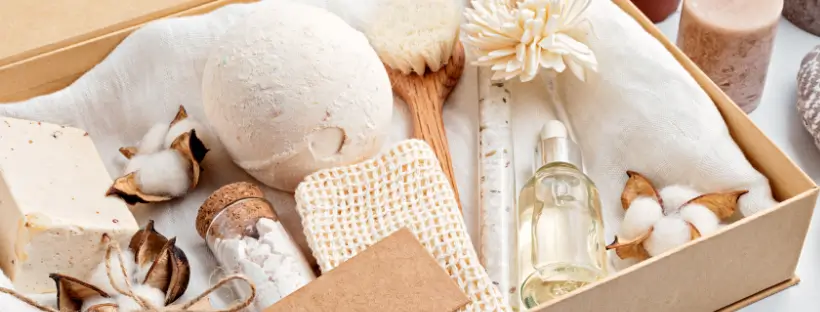
Every year, the beauty industry produces over 120 billion units of packaging — most of it plastic, and most of it never recycled.
Even “clean” products often come in shiny, single-use containers destined for landfills. Pumps, droppers, and mixed-material tubes are nearly impossible to recycle.
Zero-waste skincare asks a harder question:
What happens after you’ve used it?
The new wave of clean beauty isn’t just focused on what’s inside the jar — but on how many jars it takes to stay beautiful.
Refillable systems cut down drastically on waste by letting you keep the core packaging — typically glass, aluminum, or durable bioplastic — and refill only the inner chamber or product pod.
And zero-waste brands take it even further, offering:
- Compostable packaging made from mushroom, paper, or cornstarch
- Fully recyclable mono-material tubes
- Take-back programs that actually recycle what you return
- Shipping materials that are plastic-free, biodegradable, and minimal
This isn’t just about aesthetics. It’s about accountability.
The most sustainable packaging is the one you don’t throw away — or the one designed to return safely to the earth.
🛒 Try it: Tata Harper Water-Lock Moisturizer comes in a chic, reusable glass jar with a recyclable refill pod — a luxury formula with a low-waste footprint.
Clean beauty shouldn’t leave a dirty trail.
Refillable and zero-waste packaging makes your skincare routine lighter — on your skin and the planet. Some of today’s most responsible clean beauty brands are already building these features into their products.
Final Thoughts

Clean beauty in 2026 is more than just a trend—it’s a shift toward mindful, transparent, and innovative skincare practices that prioritize both individual well-being and environmental responsibility. From waterless formulations to microbiome-focused products, these trends highlight the power of science and sustainability working hand in hand to reshape the beauty industry.
As consumers become more informed, the demand for ethical and effective skincare continues to grow. Innovations like bioengineered actives and adaptive skincare are meeting this demand, offering solutions tailored to diverse needs and lifestyles. At the same time, movements like blue beauty and upcycled ingredients remind us that the choices we make in skincare can have a far-reaching impact on the planet.
The future of skincare is bright, with inclusivity, sustainability, and efficacy at its core. By embracing these clean beauty trends, we’re not just enhancing our routines—we’re contributing to a healthier, more conscious world. Explore these innovations and make choices that reflect your values while nourishing your skin.
