
How to Repair a Damaged Skin Barrier
Why Your Skin Isn’t Healing—Even Though You’re Using More Skincare
If your skin feels worse the more products you use, you’re not imagining it.
You were told:
More steps = better skin.
More actives = faster results.
But what many women experience instead looks like this:
Tightness minutes after washing. Moisturizer that burns when you apply it.
Serums that sting. Redness that lingers.
Oil in one area, dryness in another. Breakouts that rotate instead of resolve.
That’s not bad skin. That’s skin that’s been repeatedly disrupted.
Daily cleansing and layered actives can gradually weaken the skin barrier.
Over time, skin may compensate with more oil, more sensitivity, and more instability.
More steps don’t create balance. They create friction.
The longer your barrier stays disrupted, the harder it becomes to stabilize.
You don’t need 10 products. You need fewer inputs. Fewer irritants. Fewer interruptions.
And you can build a clean, skin barrier-supportive routine for under $40.
Here’s how.
(Or skip straight to the 2-product reset below.)
What Is a Damaged Skin Barrier?
A damaged skin barrier occurs when the outermost layer of the skin — made up of lipids (fats), skin cells, and natural moisturizing factors — becomes weakened or disrupted. This outer layer is responsible for preventing water loss and protecting against irritation, bacteria, and environmental stress.
When the barrier is compromised, transepidermal water loss (TEWL) increases. The skin loses moisture faster than it can replenish it, leading to tightness, burning, redness, breakouts, oil imbalance, and increased sensitivity.
Common causes include over-cleansing, frequent exfoliation, retinoid overuse, harsh surfactants, and layering too many active ingredients without recovery time.
A damaged barrier is not a skin type — it is a temporary state of dysfunction that can improve when irritation is reduced and the lipid layer is supported.
Quick Answer: How to Repair a Damaged Skin Barrier
If your skin burns, stings, feels tight after washing, or keeps breaking out no matter what you use — your skin barrier is likely disrupted.
If your skin feels overwhelmed, this is where to begin.
• Stop using foaming cleansers and exfoliating acids
• Replace your cleanser and moisturizer with one lipid-based product
• Use it on dry skin, massage for 30–60 seconds, rinse with lukewarm water
• Do nothing else for 4 weeks
If your skin feels tight, reactive, or easily irritated → use a rich tallow balm.
If your skin feels oily, shiny, or congested → use pure jojoba oil.
Most skin doesn’t need more actives.
It needs fewer interruptions.
Commit to simplicity before adding anything new.
- What Is a Damaged Skin Barrier?
- Quick Answer: How to Repair a Damaged Skin Barrier
- Why Modern Skincare Is Damaging Your Skin Barrier
- Best Products for Skin Barrier Repair (Budget-Friendly Picks)
- Is Oil Cleansing Safe? Common Questions About Minimal Skincare
- How Long Does Skin Barrier Repair Take?
- Skincare Products You Can Stop Using
- The Simplest Skin Reset Most People Need
- ❓ FAQs
Disclosure: This article is for educational purposes only and is not intended as medical advice. Always consult a qualified healthcare professional regarding any skin or health concerns. This article contains affiliate links, and I may earn a commission if you purchase through them, at no additional cost to you.
Why Modern Skincare Is Damaging Your Skin Barrier

For most of human history, skin care meant minimal interference.
Water. Occasionally oil. Protection from the elements.
Today, cleansing often means surfactants, exfoliating acids, retinoids, toners, and layered serums — used daily, sometimes twice daily.
The issue isn’t that these products exist.
It’s how frequently they’re used together.
The rise of daily exfoliation, foaming cleansers, and multi-step routines over the last few decades reshaped what we now consider “normal” skincare.
Your skin barrier is built from lipids — fats that slow water loss and buffer irritation. Each time you cleanse with a foaming or detergent-based formula, some of those protective fats are removed.
Used occasionally, your skin replaces them.
Used continuously, without recovery time, that replacement cycle can’t keep up.
Add daily exfoliation, active ingredients, and multiple correction steps, and the margin for resilience narrows even further.
This doesn’t cause immediate damage.
It creates cumulative stress.
And cumulative stress shifts the skin from regulation to compensation.
Every time the barrier is disrupted, recovery resets.
When irritation continues daily, the skin never reaches full repair — it stays in a low-grade inflammatory loop.
Over time, this can make sensitivity more persistent, breakouts harder to calm, and texture slower to normalize.
The solution isn’t another corrective produc
It’s reducing the frequency of disruption.
When stripping decreases and recovery time increases, the barrier has space to stabilize.
That’s where repair begins.
Best Products for Skin Barrier Repair (Budget-Friendly Picks)
Replace your cleanser and moisturizer with a single lipid-based product — nothing else for now.
Here’s exactly how to use it: massage onto dry skin for 30–60 seconds, then rinse with lukewarm water and pat dry.
No toner. No exfoliants. No 5-step routine.
Choose the product based on your current skin state — not a fixed “skin type,” but how your skin behaves right now. What we call “oily” or “dry” is often a temporary response to barrier disruption from over-cleansing, irritation, stress, or product overload.
If Your Skin Feels Tight, Dry, Reactive, or Barrier-Damaged
If this sounds like your skin:
• Tight within minutes of washing
• Flaky but still breaking out
• Stings when applying “gentle” products
• Reacts to fragrance or essential oils
• Feels worse the more products you add
What’s happening to your skin barrier:
• Repeated cleansing has stripped protective lipids
• Your skin loses water faster than it can retain it (increased transepidermal water loss)
• The outer barrier becomes thinner and less resilient
• Nerve endings are more exposed — increasing stinging and sensitivity
• Low-grade inflammation rises, even if you don’t always see visible redness
This isn’t a permanent “skin type.”
It’s a destabilized barrier.
What your skin actually needs:
• Stop daily stripping
• Replenish compatible fats the barrier is made of
• Reduce the number of daily inputs
• Give your skin time to regulate instead of constantly correcting it
A fat-based cleanser and moisturizer can do all three.
Start with one product that replaces what’s been stripped.
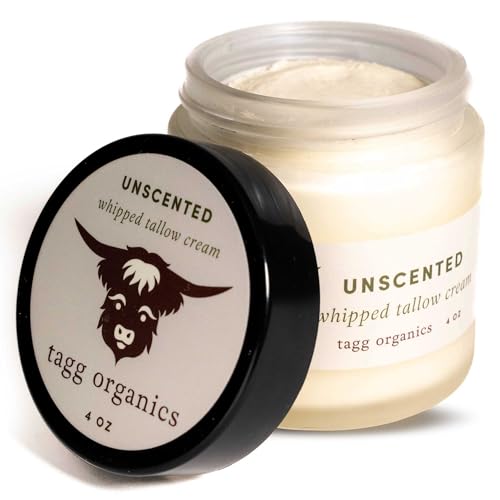
A minimalist tallow-based balm that replaces both cleanser and moisturizer.
✓ Grass-fed rendered tallow blended only with cold-pressed olive oil
✓ Replenishes the lipids your skin barrier is made of
✓ Cleans without detergents
✓ Reduces transepidermal water loss
✓ Lowest irritation risk during a reset
If your skin burns after moisturizer, this is your starting point.
If Your Skin Feels Oily, Congested, Shiny, or Breakout-Prone
If this sounds like your skin:
• Shiny by midday
• Breakouts around the T-zone or jawline
• Feels greasy but still somehow dehydrated
• Gets congested when products feel heavy
• Produces more oil when you use foaming cleansers
What’s happening to your skin barrier:
• Repeated cleansing has triggered rebound oil production
• Your skin increases sebum output to compensate for lipid loss
• Skin barrier function becomes impaired — even if the skin still looks oily
• Inflammation increases beneath the surface, even when skin looks oily
• Pores clog more easily when excess oil mixes with dead skin buildup
What your skin actually needs:
• Stop over-cleansing and stripping natural oils daily
• Dissolve excess sebum without detergents
• Reduce inflammation instead of drying it out
• Use lighter, breathable textures that don’t sit heavily on the surface
An oil-based cleanser can remove buildup and excess sebum without triggering the rebound cycle harsh cleansers create.
Start with one product that dissolves buildup and replaces your cleanser and moisturizer.

A single-ingredient oil that cleanses and moisturizes in one step.
✓ 100% cold-pressed, USDA Organic jojoba oil
✓ Fragrance-free — no essential oils, no additives
✓ Mimics skin’s natural sebum to help regulate oil production
✓ Dissolves excess oil and buildup without detergents
✓ Leaves a breathable lipid layer instead of triggering rebound dryness
✓ Suitable for combination, oil-prone, or acne-prone skin during a reset
If your skin is shiny by midday but still feels dehydrated, start here.
Use code HOLISTIC20 for 20% off your order at Cliganic.com
What If You’re Acne-Prone?
If you struggle with recurring breakouts — especially along the jawline, cheeks, or T-zone — you’ve probably been told to dry your skin out.
Stronger cleansers.
More acids.
More spot treatments.
But aggressive acne routines often increase inflammation and trigger rebound oil production, making breakouts more persistent over time.
Acne is not just excess oil.
It’s inflammation + trapped sebum + barrier instability.
And yes — what’s happening internally matters too.
Blood sugar spikes, chronic stress, gut imbalances, and hormonal shifts can all influence breakouts. Skincare alone doesn’t override that.
When the barrier is destabilized:
• Inflammation increases
• Oil production becomes reactive
• Breakouts take longer to resolve
• Skin becomes more sensitive to treatment
For many people, simplifying the routine and stabilizing the skin barrier reduces baseline inflammation — which often improves breakouts naturally.
What to use:
- If your breakouts feel inflamed, sting, or flare easily → start with Option 1 (tallow).
- If your skin is oily, congested, and shiny by midday → start with Option 2 (lighter oil cleanser).
Start with how your skin feels, not the label you’ve been given.
If your acne is severe, cystic, or painful, medical support may be necessary. But for many people stuck in the over-cleansing cycle, simplification is the first step.
Is Oil Cleansing Safe? Common Questions About Minimal Skincare
Won’t oil clog my pores?
Pores clog when oil mixes with dead skin buildup and inflammation — not from oil alone. Oil dissolves oil. When you stop stripping your skin barrier daily, sebum production often stabilizes instead of overcompensating.
Can this actually remove sunscreen and makeup?
Yes. Oil breaks down sunscreen, foundation, and excess sebum effectively. Massage onto dry skin first, then rinse thoroughly with lukewarm water. No foaming detergents required.
Will my skin get greasy?
In the first 1–2 weeks, oil production can fluctuate as your skin recalibrates. This is temporary. Stable skin produces predictable oil — not excess.
Isn’t tallow heavy?
Tallow is rich, which makes it ideal for dry or reactive skin. If your skin feels congested or overheated, choose the lighter jojoba oil option instead.
Will it smell?
High-quality, properly rendered tallow has a mild, neutral scent that fades quickly after application.
What if I live in a humid climate?
In hot or humid weather, lighter oils tend to feel more comfortable. Choose based on how your skin feels, not the season alone.
What about exfoliation?
If your skin barrier is compromised, daily exfoliation usually prolongs irritation. Once your skin stabilizes, exfoliation can be occasional — not constant.
What if this doesn’t work for me?
If your skin is severely cystic, painful, or worsening after 6–8 weeks, that may indicate an internal or medical issue. This approach is designed for skin barrier instability — not advanced dermatologic conditions.
How Long Does Skin Barrier Repair Take?

If you’ve been over-cleansing, exfoliating, or layering actives for years, your skin won’t reset overnight.
Barrier repair is biological. And biology moves in phases.
Here’s what most adults experience when they switch to a minimalist skincare routine:
Week 1: Adjustment
• Oil production may increase slightly
• Skin may feel different without foaming cleansers
• Mild congestion can surface as exfoliation stops
This isn’t failure.
When you stop stripping, your skin doesn’t instantly “trust” that it’s safe. It may temporarily overproduce oil while recalibrating.
Weeks 2–3: Stabilization
• Stinging decreases
• Redness begins to calm
• Oil production becomes more predictable
• Skin feels less reactive overall
This is when many people notice the first real shift: their skin stops feeling constantly irritated.
Weeks 4–6: Skin Barrier Rebuild
• Tightness after washing reduces significantly
• Breakouts become less inflamed
• Texture evens out
• Skin feels more resilient and less fragile
This is typically how long it takes for the skin barrier to meaningfully repair — assuming stripping has stopped.
Not 3 days. Not overnight. But steadily.
Important: This Is Not “Purging”
Purging usually happens when strong actives increase cell turnover.
If you’ve removed exfoliating acids and retinoids, what you’re seeing is more likely recalibration — not worsening skin.
When Should You Reevaluate?
If after 6–8 weeks your skin is:
• Painfully inflamed
• Deeply cystic
• Persistently worsening
That may signal an internal or medical issue, not just a routine problem.
For most people stuck in the over-cleansing cycle, simplification improves stability before it improves appearance.
Stability comes first. Glow comes second.
Many people who simplify their routine are surprised by how much calmer their skin feels within weeks — not because they added something stronger, but because they stopped interrupting repair.
If you switch to one of the options above, commit to at least 4 weeks before judging results.
The goal isn’t instant perfection.
It’s removing friction so your skin can regulate itself again.
And regulation takes time.
Ready to Start?
If your skin feels tight, reactive, or easily irritated → start with tallow.
If your skin feels oily, congested, or shiny by midday → start with jojoba oil.
Use it as both cleanser and moisturizer for 4 weeks.
Skincare Products You Can Stop Using
(So You Don’t Waste a Dime)
If you’re simplifying your routine, you may not need nearly as much as you’ve been told.
Most modern routines are built around correcting problems that constant product use created in the first place.
When you stabilize your skin barrier, you can often remove:
• Daily exfoliating acids
• Separate day and night creams
• Alcohol-based toners
• “Oil-control” cleansers
• Multiple layered serums
• Spot treatments used in panic
• A different product for every small fluctuation
Skin does not need to be micromanaged.
The goal isn’t to abandon skincare.
It’s to remove what keeps your skin in a constant cycle of disruption.
Fewer inputs.
More stability.
Better long-term outcomes.
And often, more money left in your pocket.
The Simplest Skin Reset Most People Need
If your routine keeps getting more complicated but your skin keeps getting worse, that’s not a coincidence.
Barrier instability doesn’t improve with more correction.
It improves with fewer interruptions.
Most skin doesn’t need more actives.
It needs time and consistency.
One product.
Four weeks.
No micromanaging.
Start there.
