
How to Build a Clean Skincare Routine for Under $60

The labels say clean, natural, dermatologist-recommended — but they don’t mention the hormone disruptors, barrier-damaging agents, and synthetic fillers still allowed in many skincare products.
Toxic ingredients are rarely listed front and center. They’re buried in fine print — and they’re far more common than most people realize.
You don’t need a 10-step K-beauty routine, a $200 serum, or a Pinterest-perfect shelf. What you need is a routine that respects your biology — and doesn’t bankrupt you.
A clean skincare routine under $60 focuses on fewer products, minimal ingredients, and formulas that support the skin barrier without synthetic fragrance or hormone-disrupting additives.
In this guide, I’ll show you exactly how to build a clean, nervous-system-safe skincare routine for under $60 — using real products that work, without greenwashing or overwhelm.
At minimum, a clean skincare routine under $60 includes a gentle cleanser, a hormone-safe moisturizer, and optional targeted support based on skin needs.
🔑 Quick Summary
— “Clean” and “natural” labels often hide toxic ingredients — most skincare products still contain hormone disruptors, barrier-damaging agents, and synthetic fillers.
— You don’t need a 10-step routine or $200 serum — just a simple, biologically respectful skincare routine under $60 that actually works.
— Start with 2 non-negotiables: a gentle, skin-safe cleanser, a hormone-friendly moisturizer, and an optional targeted serum or oil.
— You can build a complete clean skincare routine for $34–$58 — no fluff, no greenwashing, just trusted products that support your skin and nervous system.
— Learn to read product labels — ignore front-facing claims, and scan for red flags like fragrance, parabens, PEGs, and sulfates.
— Tailor your clean routine by skin type — dry, oily, or sensitive — with affordable product swaps that support your skin’s current state.
— You don’t have to go 100% clean overnight — start by replacing products you use most often or those with the highest toxic load.
— Clean beauty isn’t a trend — it’s a shift toward honoring your biology and making empowered, informed choices about what goes on your skin.
— The real transformation? Trusting your body again — and learning that taking care of your skin can also mean reclaiming your health.
Disclosure: The information provided is for educational purposes only and not intended as medical advice. Consult a healthcare professional before making any changes to your health routine. If you make a purchase through the links provided, I may earn a small commission at no additional cost to you.
- 🔑 Quick Summary
- What does clean skincare actually mean?
- How to build a clean skincare routine under $60 step by step
- Budget Clean Beauty by Skin Type
- The $60 Clean Skincare Routine (Tested & Trusted)
- Questions People Ask When They’re New to Clean Beauty
- Final Thoughts: What No One Tells You About Clean Skincare
- ❓Quick FAQ: Clean Skincare on a Budget
What does clean skincare actually mean?
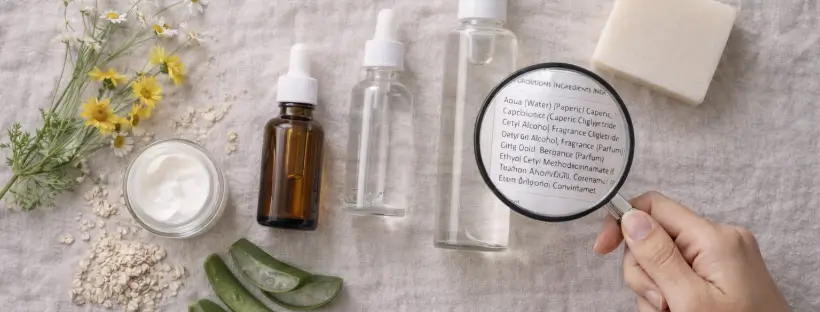
Let’s get something straight: the beauty industry is not here to protect you.
It’s built to sell to your fear of aging, your desire to “glow,” and your trust in words like clean, natural, and safe. And it’s banking on you not reading the fine print.
Because here’s the truth most people don’t realize:
The words “clean” and “non‑toxic” still have no strict legal definition. Brands can use them freely—even when products contain endocrine disruptors, synthetic fragrance, and petroleum‑derived preservatives—because labeling standards remain vague and largely unenforced.
Yes, the U.S. finally updated cosmetic regulation with the Modernization of Cosmetics Regulation Act (MoCRA) of 2022—the biggest shift in oversight since 1938. It gave the FDA more authority to track products, collect safety reports, and require manufacturer registration.
But here’s what it didn’t do:
It didn’t require pre‑market safety testing.
It didn’t ban hundreds of known problematic ingredients.
And it didn’t stop brands from marketing “clean” products that still disrupt hormones and stress the skin barrier.
Meanwhile, the European Union restricts or bans over 1,600 cosmetic ingredients. The U.S. still restricts only a fraction of that.
So yes—you’re still expected to believe that a $12 cleanser with a leaf on the label is “safe.”
Clean beauty isn’t about marketing language or trends.
It’s about products that don’t mess with your biology.
Your skin isn’t just a surface.
It’s a living organ that can absorb certain substances applied to it. Some of what penetrates the skin can enter the body and influence hormonal and stress‑response pathways—which helps explain why nervous system dysregulation often shows up physically long before it’s recognized.
This isn’t theory. It’s human physiology.
In fact, multiple studies — including research published on ScienceDirect — show that ingredients commonly used in cosmetics, such as phthalates and parabens, don’t just stay on the surface of your skin. They can permeate the epidermis, enter circulation, and accumulate in the body. Over time, this kind of chronic chemical exposure has been linked to hormone disruption, reproductive effects, and metabolic imbalance in humans.
And while not every synthetic ingredient is harmful, many of the ones used in mainstream products are deeply problematic, especially when used daily. We’re talking about:
- Fragrance / parfum — a labeling loophole that can conceal dozens of undisclosed chemicals, some of which have been associated with hormone disruption, migraines, asthma, and even neuroinflammation. If you’ve ever felt wired, anxious, or emotionally volatile from your skincare, this is one reason why. Here’s how neuroinflammation hijacks your nervous system—and what to do about it.
- Phthalates & parabens – used to preserve products, but also known to mess with estrogen and testosterone balance
- Sodium lauryl sulfate (SLS) – the foaming agent that strips your skin barrier and stresses your nervous system
- Formaldehyde releasers – preservatives that can slowly emit formaldehyde, a known human carcinogen, under names like DMDM hydantoin or quaternium-15
These aren’t rare. They’re in everyday products—moisturizers, cleansers, eye creams, even baby wash.
And here’s the kicker: you don’t need them.
There are clean, effective, affordable alternatives that support your skin’s health without jacking up your stress hormones or disrupting your endocrine system.
You just haven’t been shown how to find them—yet.
How to build a clean skincare routine under $60 step by step
If you’ve ever stood in the skincare aisle thinking what the hell do I actually need?—you’re not stupid. You’ve been intentionally overwhelmed.
The modern beauty industry thrives on confusion. It convinces you that if you just buy the right serum, exfoliant, toner, mask, eye cream, night cream, day cream, and two different SPFs… you’ll finally have “good skin.”
But here’s the truth clean beauty experts and functional dermatologists agree on:
You don’t need more products—you need the right ones.
And for most people, that starts with just two non-negotiables. These are the foundation of a routine that supports your skin barrier, respects your hormones, and doesn’t quietly stress your nervous system every single day.
1. A Gentle, Skin Barrier-Safe Cleanser
Cleansing isn’t about stripping your skin or chasing that “squeaky clean” feeling. That tight, dry sensation after washing your face? That’s not cleanliness—it’s barrier damage.
Your cleanser should remove dirt, oil, and pollution without disrupting your skin’s microbiome or lipid barrier. A truly clean cleanser is free from harsh foaming agents like sodium lauryl sulfate (SLS), avoids synthetic fragrance, and includes calming ingredients such as aloe, glycerin, or oats.
If your skin feels irritated, dry, or reactive after cleansing, it’s already under stress. And stressed skin doesn’t heal—it inflames, breaks out, or prematurely ages.
2. A Moisturizer That Doesn’t Mess With Your Hormones
If you start clean anywhere, start here.
Your moisturizer sits on your skin all day (or all night), which means whatever’s in it has prolonged contact with your body. Many conventional moisturizers rely on petroleum-derived ingredients, synthetic preservatives, and endocrine disruptors that do more harm than good over time.
A clean moisturizer should seal in hydration, support the skin barrier with nourishing lipids like squalane or jojoba, and stay free from parabens, phthalates, and undisclosed “fragrance.”
This isn’t about luxury. It’s about function. Your skin needs moisture to regulate itself—and when that barrier is compromised, everything else you apply works worse.
3. A Targeted Serum or Oil (Optional, but Powerful)
Once your skin is clean and supported, a serum or oil can help address a specific goal—hydration, brightness, calm, or repair.
This is where ingredients like vitamin C, niacinamide, hyaluronic acid, rosehip oil, or sea buckthorn actually earn their place. When they’re not buried under silicones or synthetic fillers, small amounts can make a real difference.
You don’t need an $80 bottle to get results. You just need a formula where the active ingredients are doing the work—not the marketing.
And just as important as what to include in your routine is what to ignore.
You don’t need a 10-step routine to build a clean skincare routine under $60.
Actually, this can even be harmful. If your skin is:
- Sensitive
- Recovering
- Overwhelmed by ingredients
Layering multiple formulas isn’t helping—it’s overloading.
You don’t need separate day and night creams either.
Why?
That’s mostly marketing fluff.
Many so-called “night creams” are just heavier moisturizers — with a higher price tag and a fancy label.
Your skin doesn’t suddenly change its needs when the sun goes down. One good, clean moisturizer can hydrate and repair—morning or night.
You don’t need retinol if your skin barrier is already compromised.
And you don’t need to throw everything away overnight.
Clean beauty isn’t about perfection. It’s about making smarter, safer swaps that support your biology instead of fighting it.
Now that you know what actually matters, let’s take it one step further—by tailoring your clean skincare routine to your unique skin type, so you can support your biology without overspending.
Budget Clean Beauty by Skin Type
(So You Don’t Waste a Dime)
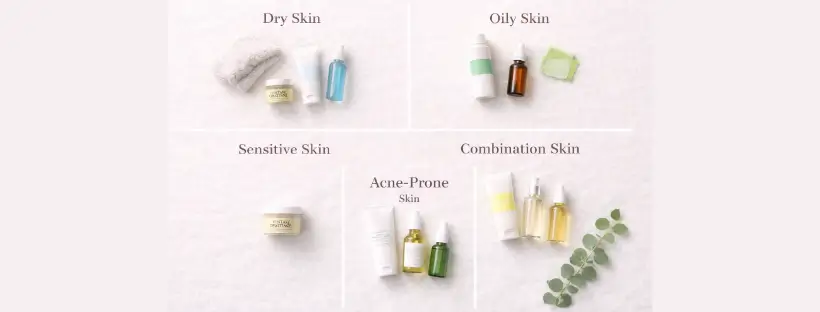
Let’s get one thing straight: your skin type is not a flaw.
It’s not something to “fix.”
It’s a state — a reflection of what your body is processing, protecting you from, or recovering from.
But the skincare industry doesn’t profit when you understand that.
It profits when you believe:
Dry = damaged
Oily = dirty
Sensitive = broken
Acne = your fault
Combination = too complicated to treat without 5 products
The truth?
These are biological signals — not personal failures.
Your skin is an intelligent organ.
It’s absorbing your environment.
Responding to ingredients.
Reacting to hormonal shifts.
And communicating in the only way it knows how: through symptoms.
So let’s decode them.
The Skin Condition No One Talks About
If your skin feels dry no matter what you use, stings when you apply “hydrating” products, or reacts to clean skincare, this isn’t a moisturizer problem. It’s a barrier problem.
Your skin barrier is the outer layer that keeps water in and irritants out. When it’s damaged—by harsh cleansers, exfoliation, sauna heat, winter air, or fragrance—your skin starts losing water faster than any cream can replace it. That’s why oil alone doesn’t fix dryness and why serums can burn instead of helping.
Most people don’t actually have dry, sensitive, or acne-prone skin. They have barrier-damaged skin, which is why moisturizer often feels useless and dryness keeps coming back.
Until that barrier is repaired, no routine—clean or not—will work the way it should.
Dry, Flaky, or Dehydrated Skin
What it really means?
Your skin barrier — the protective outer layer — is compromised. This isn’t just about “not enough moisture.” It’s often about:
• Harsh cleansers stripping natural oils
• Overexfoliating
• Weather or indoor heating
• Nutrient deficiencies like omega-3s, vitamin D, zinc — especially in synthetic forms your body can’t absorb well
• Chronic stress or hormone imbalance
What dry skin is trying to say:
“I’m not safe. My barrier is leaking. I need support, not stripping.”
The symptoms:
Tightness after washing, visible flakes, dullness, fine lines, or makeup sitting on top of skin instead of blending in.
Oily Skin
What it really means?
Your skin isn’t “greasy” — it’s overcompensating. Most often, this happens because your barrier is stripped or your hormones are imbalanced. Oily skin can be triggered by:
• Overwashing or using harsh cleansers
• Alcohol-based toners or “oil control” products
• Hormonal fluctuations (testosterone, cortisol spikes)
• Inflammatory foods or blood sugar spikes
• Chronic stress or overproduction of androgens
What oily skin is trying to say:
“I’m trying to protect you — but I’m producing too much sebum, too fast.”
The symptoms:
Shiny T-zone or entire face, enlarged pores, makeup sliding off, blackheads, frequent need to blot or powder.
It teaches your skin to panic and produce more.
Sensitive, Inflamed, or Reactive Skin
What it really means?
Your skin isn’t “too delicate.” It’s overstimulated.
Sensitive skin is almost always a sign that your skin barrier and nervous system are under stress at the same time. This isn’t random — and it’s rarely genetic.
Common triggers include:
• Synthetic or “natural” fragrance (including essential oils)
• Overuse of actives like retinol, acids, or vitamin C
• Layering too many products at once
• Preservatives and solvents that disrupt the microbiome
• Gut inflammation, histamine issues, or immune activation
• Chronic stress or nervous system dysregulation
When the nervous system is stuck in fight-or-flight, blood flow, immune response, and barrier repair all change — and the skin feels it fast. And no, it’s not always trauma — these 7 overlooked stressors are often behind the dysregulation.
What sensitive skin is trying to say:
“I’m overwhelmed. Please stop doing so much.”
The symptoms:
Redness, burning or stinging after application, itching, flushing, random breakouts, reactions to products labeled “clean,” or skin that seems fine one day and inflamed the next.
Combination Skin
What it really means?
Your skin is adapting — not malfunctioning.
Combination skin isn’t a “type” in the traditional sense. It’s a mixed response to imbalance. Some areas are compensating, while others are depleted.
This often happens when:
• The skin barrier is unevenly stripped
• You’re using products that are too harsh for some areas and too weak for others
• Hormones fluctuate throughout the cycle
• Stress or cortisol is elevated
• Blood sugar spikes drive inflammation in certain zones
Most commonly, the T‑zone overproduces oil to protect itself, while the cheeks or jawline are dry or reactive.
What combination skin is trying to say:
“I need balance — not extremes.”
The symptoms:
Oily or shiny forehead, nose, or chin with dry, tight, or flaky cheeks; breakouts in one area and sensitivity in another; products that “work” for part of your face but make the rest worse.
Acne-Prone Skin
What it really means?
Acne isn’t just a surface issue. It’s an inflammatory condition with deep roots in your internal and external environment. Breakouts are your skin’s way of telling you that something is off — not that you’re dirty, lazy, or doing skincare wrong.
Often, acne is triggered by:
• Hormonal imbalances (especially androgens or cortisol)
• Blood sugar spikes and insulin resistance
• Inflammatory or ultra-processed foods
• Harsh or stripping skincare that disrupts the microbiome
• Hidden pore-clogging ingredients (even in “clean” products)
• Gut dysfunction or sluggish detox pathways
What acne-prone skin is trying to say:
“I’m inflamed — from the inside out. Please stop attacking me and start listening.”
The symptoms:
Frequent breakouts (especially around the jawline or cheeks), cystic or hormonal acne, clogged pores, redness, scarring, or breakouts that worsen with stress, diet, or product changes.
PSA: Skin Type ≠ Skin Identity
Your skin is not static. It shifts.
It might be dry in winter, oily in summer, sensitive after stress, or breakout-prone during your luteal phase.
That’s not failure—it’s intelligence.
Your skin is adapting, responding, and communicating in the only language it knows: symptoms.
This is why rigid skincare systems don’t work—and why your $90 cream suddenly “stopped working.”
Your skin isn’t a fixed type. It’s a living system, shaped by your environment, your hormones, your stress levels, and what you put on (and in) your body.
Understanding your skin type isn’t about labeling yourself.
It’s about learning to listen—and respond with products that support your biology, not suppress it.
So what now?
Now that you understand what your skin is actually telling you,
you can stop throwing random products at it—and start building a clean, supportive routine based on what it truly needs.
Next, I’ll show you exactly how to do that—
with a targeted, under-$60 clean skincare routine tailored to your current skin state.
The $60 Clean Skincare Routine (Tested & Trusted)
Let’s build your routine.
Not a 10-step ritual that drains your bank account.
Not a Pinterest-perfect shelfie.
Just the minimum effective dose—clean, functional skincare that supports your skin’s biology and keeps toxins off your largest organ, which is your skin.
Because if you’re here, you’re probably wondering:
Can I actually do this without spending a fortune?
Yes. You can.
I’ve built this exact routine for people who were overwhelmed, burnt out, and tired of spending money on “clean” products that didn’t do anything but smell like essential oil smoothies.
This starter routine gives you everything you need for a basic, biologically supportive regimen—and nothing you don’t.
No fluff. No filler. No endocrine disruptors.
What ingredients should you avoid in skincare and why
(2026 Dirty List)
Before we get into products, one thing matters more than brand names:
Clean skincare isn’t about trends or “viral” products.
It’s about minimizing chemical load, protecting your skin barrier, and not stressing your nervous system.
That means:
- No undisclosed fragrance
- No endocrine disruptors
- No harsh surfactants
- No filler ingredients pretending to be “actives”
You shouldn’t need a chemistry degree to understand your skincare.
But the industry counts on you not reading the fine print. Below is your clean, no-BS breakdown of ingredients to avoid—no fearmongering, just facts rooted in physiology, toxicology, and ancestral common sense.
Many everyday skincare ingredients sound harmless on the label—but what they actually do inside your body can be a very different story.
Fragrance (parfum) is a major loophole. That one word can legally conceal dozens of undisclosed chemicals, some of which have been linked in studies to hormone disruption, migraines, asthma, and even neuroinflammation. Because companies don’t have to list what’s in a “fragrance blend,” it’s impossible to know what you’re reacting to.
Scent additives like benzyl salicylate, citronellol, eugenol, linalool, limonene, and geraniol are often found in “natural” products too. These are classified as allergens and sensitizers in the EU, and may trigger rashes or irritation—especially in sensitive or barrier-compromised skin.
BHT (butylated hydroxytoluene) is a synthetic antioxidant used to preserve oils and extend shelf life. Some animal studies have linked BHT to endocrine disruption and liver stress, leading to ingredient restrictions in certain countries.
Phenoxyethanol is a common preservative considered safe in small amounts, but prolonged or cumulative exposure has been shown to irritate the skin and, in some cases, affect the nervous system—especially in infants.
Retinol and retinyl propionate, while popular for anti-aging, are known to cause irritation and increase sun sensitivity. They are also on many OB-GYNs’ “avoid during pregnancy” list due to potential risks at high doses.
Chemical sunscreen filters like oxybenzone, octinoxate, homosalate, and avobenzone have been found to absorb into the bloodstream. Some human and environmental studies raise concerns about hormone disruption and coral reef damage, which is why places like Hawaii and Palau have banned them.
Alcohol denat. (denatured alcohol) is added for fast-drying texture or preservation, but in higher concentrations it can strip the skin barrier, leading to dryness, sensitivity, and irritation—especially with repeated use.
PEGs (like PEG-100 stearate) and other ethoxylated compounds (like laureth-7) may be contaminated with 1,4-dioxane, a byproduct classified as a probable human carcinogen. Even when purified, these compounds may weaken the skin barrier over time.
Polysorbates (20, 60, 80) are synthetic emulsifiers that help oil and water mix, but some research suggests they can disrupt the skin microbiome and increase absorption of other chemicals.
EDTA compounds (disodium, tetrasodium, trisodium EDTA) help stabilize formulas by binding metals, but they can also increase skin permeability—and are known to harm aquatic life.
Silicones like dimethicone, dimethiconol, and crosspolymers form a smooth film over the skin, but can trap debris, interfere with natural skin communication, and lead to buildup—especially if you’re acne-prone.
Petroleum-derived occlusives such as mineral oil, petrolatum, paraffinum liquidum, and C13-14 isoparaffin provide a sealing effect, but offer no nutrients. While refined for cosmetic use, they may clog pores or contribute to skin dullness and congestion.
Solvents like C13-14 alkane and isohexadecane are added for silky texture, but they’re petroleum-derived and non-biodegradable. They accumulate on the skin and in the environment with little benefit.
Plastic-based thickeners like polyacrylamide, acrylates, and ammonium polyacrylate are used for texture, not skin health. They may contain residual acrylamide—a potential carcinogen—and offer no therapeutic function.
Crosspolymers like acrylates/C10-30 alkyl acrylate crosspolymer are common synthetic texture agents. They’re stable, but environmentally persistent and non-biodegradable.
Poloxamers, such as poloxamer 338, are synthetic surfactants sometimes flagged for disrupting the skin’s microbial balance when overused.
Artificial dyes (FD&C and D&C colors) are petroleum-based and may be contaminated with heavy metals. Some have been linked to allergic reactions and behavioral effects in children, prompting bans in foods—but not always in cosmetics.
Talc, unless explicitly labeled asbestos-free, may carry contamination risk. Some lawsuits have raised concerns about its potential link to reproductive and respiratory harm, especially with chronic use.
Formaldehyde releasers like DMDM hydantoin, quaternium-15, and imidazolidinyl urea are preservatives that slowly release trace amounts of formaldehyde over time. Formaldehyde is a known human carcinogen, and even low-level exposure can cause irritation in sensitive individuals.
Hydroxyacetophenone is a synthetic antioxidant and preservative booster with limited long-term data. Some databases list it as a potential skin irritant.
Myristimonium bromide is a quaternary ammonium compound used in conditioners. While effective, it may cause irritation and could accumulate with prolonged exposure.
The $60 Clean Skincare Routine — by Skin Type
Now that you know what not to put on your skin, let’s talk about what actually works.
These products are the real deal—clean, functional, and free from the greenwashed junk that most brands still sneak in.
Here’s how to build a clean, nervous system-safe skincare routine for under $60—designed for your current skin state, not some idealized version of it.
Without sacrificing safety, function, or results.
💡 Editor’s Tip: If you’re inflamed, exhausted, or just done with 5-step routines — you could stop right here and buy this one product. It mimics your skin’s natural oils, seals in moisture without clogging pores, and delivers real vitamins A, D, E & K — no synthetics, no fillers. It works for most skin types (especially dry, sensitive, or barrier-damaged) and replaces both cleanser and moisturizer in one step. Ancestral, effective, and nothing the industry profits from.
What This Should Teach You?
You don’t need:
- Separate day and night creams
- A shelf full of actives
- “Medical‑grade” marketing
You need:
- Fewer ingredients
- Cleaner formulations
- Products that work with your biology, not against it
Questions People Ask When They’re New to Clean Beauty
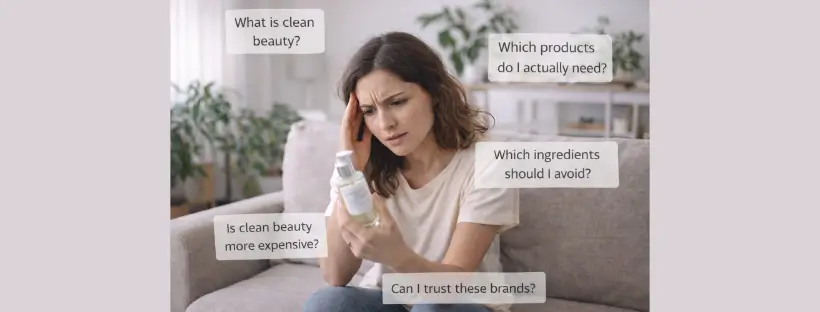
Starting clean doesn’t just mean swapping products. It means questioning what you’ve been told about your skin—and that’s a bigger deal than most people realize.
If you’ve ever felt overwhelmed, skeptical, or afraid to make the wrong choice again, you’re not alone. Below are real questions I get from readers, and students who are just beginning to wake up to what’s actually in their products.
No shame. No judgment. Just answers that make sense.
1. Do I have to throw everything out and start over?
No. And please don’t.
That’s exactly what the wellness industry wants you to think—so you’ll go out and spend $300 on a new routine overnight. But clean beauty is not about perfection or panic. It’s about momentum.
Start by replacing the products that:
- Stay on your skin the longest (like moisturizer or SPF)
- Cover the largest surface area (like body lotion or cleanser)
- Contain the biggest offenders (fragrance, parabens, PEGs)
That alone will dramatically reduce your toxic load. You don’t have to be 100% clean to see real change.
2. Can I mix clean and conventional products?
Yes, you can. In fact, most people do while they’re transitioning.
You’re not going to undo the benefits of a clean routine just because you haven’t replaced your mascara yet. What matters most is consistency, simplicity, and awareness.
Clean isn’t a religion—it’s a redirection.
3. How do I know if it’s actually working?
This is where most people give up—because we’ve been trained to expect instant results. But clean beauty is not about overnight miracles. It’s about long-term support.
Here’s what to look for:
- Less redness or irritation after washing your face
- Skin that feels hydrated at the end of the day, not tight
- Fewer breakouts, or breakouts that heal faster
- A calmer, more stable relationship with your skin overall
Give it 4–6 weeks. Your skin has to unlearn everything it’s been reacting to.
4. Is this just another trend?
No—but the way it’s marketed? Sometimes, yes.
Clean beauty shouldn’t be trendy. It should be the baseline standard for anything you put on your body. But greenwashing is real, and many brands co-opt the language of wellness without changing their ingredients.
That’s why you’re here—not to follow a trend, but to understand what clean actually means, and how to spot the difference between hype and health.
5. Why does all of this feel so complicated?
Because it’s designed to.
The modern beauty industry profits when you feel confused, broken, or like your face is a never-ending project. But your skin is not a problem to fix. It’s a system to support. Once you understand how it works—and what helps versus what harms—it gets a whole lot simpler.
You’re not behind. You’re right on time.
And you’re exactly the kind of person this industry didn’t expect to wake up.
In the final section, I’ll leave you with the part no one talks about: what clean skincare really changes, beyond your skin. Stick with me. This is where it gets real.
Final Thoughts: What No One Tells You About Clean Skincare
Let’s be honest: this was never just about skincare.
Yes, we talked about ingredients and budgets and serums. But underneath all of that is something deeper. Something no influencer or beauty brand is going to tell you.
This is about learning to trust your body again.
Because the system you live in has trained you to ignore it.
To numb discomfort. To normalize inflammation. To outsource your wisdom.
To believe that your skin is a flaw to fix, that your hormones are unpredictable, that your worth lives in a mirror.
But the moment you start questioning what’s in your products—and what those ingredients are doing to your body—you start waking up. And once you see it, you can’t unsee it.
The average woman uses dozens of products before she even leaves the house. Most of them are filled with hormone disruptors, inflammatory fillers, synthetic fragrance, petroleum byproducts, and preservatives that haven’t been meaningfully regulated in decades. And they’re marketed to you as self-care.
But real care doesn’t cost $300.
Real care doesn’t hide what it’s made of.
And real care never asks you to trade your health for “results.”
Clean skincare isn’t the solution to everything—but it is one place to start. A small, defiant step toward living in alignment with your biology, not the beauty industry’s broken promises.
You don’t need to do this perfectly.
You don’t need to toss your whole bathroom tonight.
You just need to start making decisions that support your body instead of silencing it—the same principle that underpins real nervous system healing.
A cleanser without SLS. A moisturizer that doesn’t disrupt your hormones. A label you can actually understand.
That’s where change starts—not just in your skin, but in how you show up for yourself.
Not with fear. Not with shame.
But with clarity, courage, and the truth.
You deserve better. Your skin does too.
And you don’t need a trust fund to get it.
Want to know where clean beauty is heading next?
These 7 innovations are quietly reshaping skincare in 2026—and one of them might change how you shop forever.
