5 Energy Healing Techniques That Make You Feel Amazing
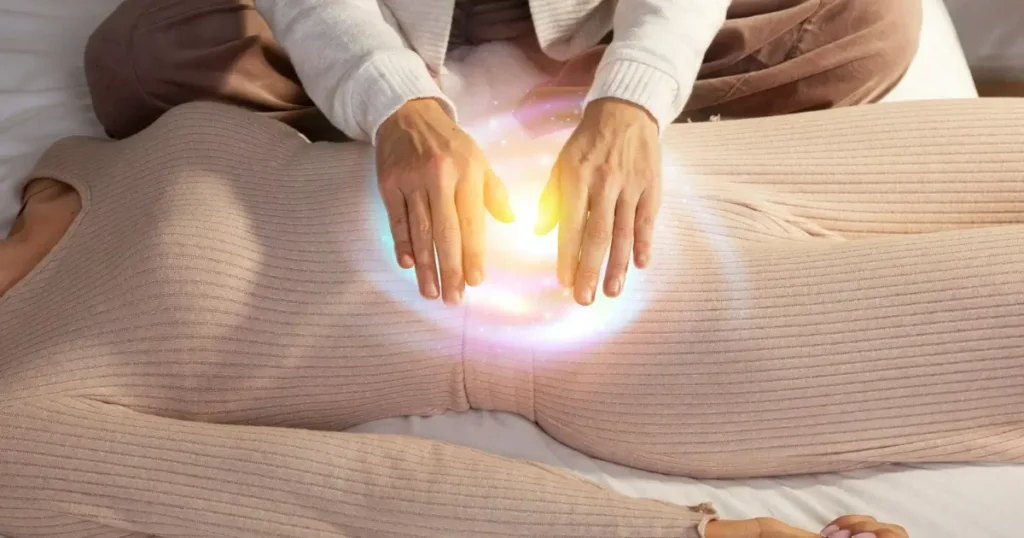
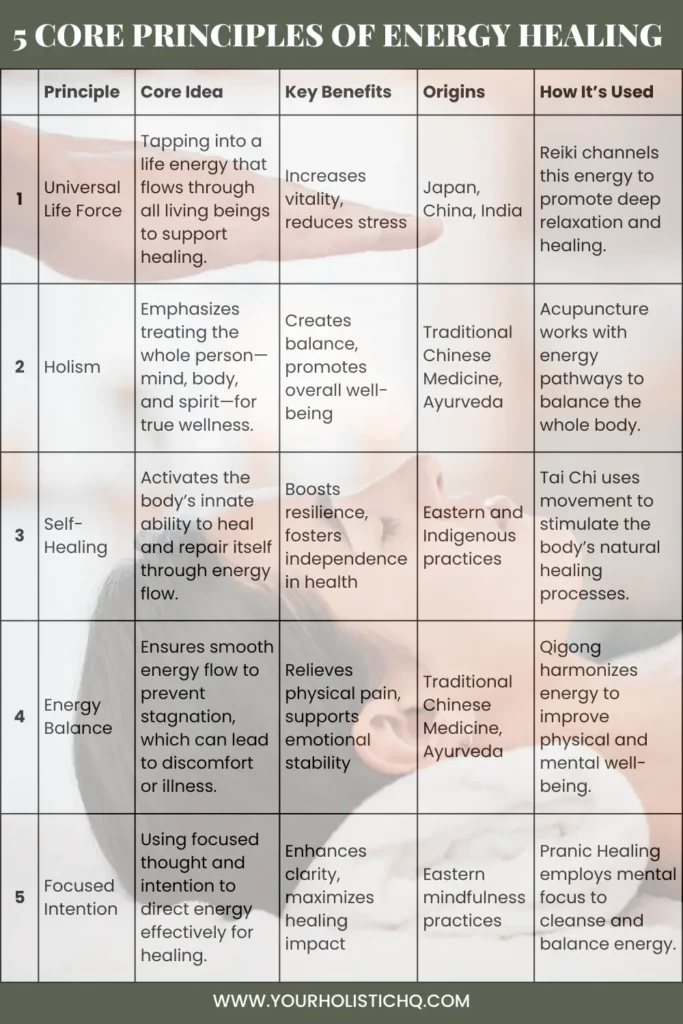
Energy healing taps into the body’s natural energy systems to foster balance, resilience, and wellness. Practices like Reiki, acupuncture, and Qigong focus on restoring flow within the body’s energy fields, reducing stress, and supporting healing processes. Guided by core principles such as the universal life force, holism, self-healing, energy balance, and focused intention, these techniques work to harmonize mind, body, and spirit.
In the following sections, we’ll explore five key energy healing practices—Reiki, Acupuncture, Qigong, Tai Chi, and Pranic Healing—each offering a distinct approach to enhancing health and well-being.


1. Reiki

Reiki is a Japanese form of energy healing where the practitioner uses a hands-on technique to channel universal energy to the recipient, aiming to enhance physical, emotional, and spiritual well-being. Originating from the Japanese words rei (universal) and ki (life energy), Reiki is primarily used for stress reduction and relaxation but is also believed to support overall health by promoting the body’s natural healing processes.
During a session, the practitioner places their hands lightly on or just above the client’s body, channeling energy to areas where it’s most needed. This non-invasive practice is thought to improve sleep, alleviate pain, and reduce symptoms of anxiety and depression. Reiki is safe, works in conjunction with other medical or therapeutic techniques, and is increasingly offered in healthcare settings to complement traditional treatments.
Reiki’s gentle and holistic approach makes it a popular choice among those seeking alternative or complementary therapeutic practices. Its effectiveness is often attributed to its ability to bring about a deep state of relaxation, which is where the body’s natural healing abilities are most effective. Many people report a sense of calm, mental clarity, and increased energy following Reiki sessions.
Because of its non-invasive nature and supportive role alongside conventional medicine, Reiki has been integrated into various healthcare settings, including hospitals and palliative care centers, where it helps patients manage pain and reduce stress during treatment and recovery.
2. Acupuncture

Acupuncture, a pivotal practice in traditional Chinese medicine, involves the precise insertion of thin needles into designated points on the body, known as acupoints. This ancient technique is founded on the principle of restoring and maintaining health by balancing the flow of the body’s vital energy, or “qi” (pronounced “chi”).
According to Chinese medical theory, qi circulates through natural pathways in the body called meridians. Disruptions in the flow of qi are believed to be responsible for disease and discomfort.
By targeting specific acupoints linked to various bodily functions, acupuncture seeks to release blocked qi, stimulate the body’s natural healing responses, and restore balance to the body’s energy systems. The practice is widely used to treat a range of conditions, from chronic pain and digestive issues to anxiety and insomnia.
Modern research often focuses on acupuncture’s effects within the framework of neurology, suggesting mechanisms such as nerve stimulation, increased blood flow, and muscle relaxation as reasons for its effectiveness.
Acupuncture’s integration into Western healthcare settings as a complementary therapy underscores its recognized value. It is often combined with other forms of care, enhancing treatment outcomes and contributing to holistic wellness. As a result, acupuncture is not only a deeply established method in Eastern medicine but also a respected and utilized practice in global health perspectives.
3. Qigong

Qigong, a profound and ancient discipline rooted in traditional Chinese medicine, is a holistic practice that encompasses coordinated body postures, movements, breathing techniques, and meditation. This integrative approach is designed to cultivate and balance the body’s vital energy, known as “qi” (chi).
By harnessing this life force, Qigong aims to promote health, spiritual well-being, and physical prowess, making it applicable not only in health care but also in martial arts training.
The practice of Qigong is built on the foundational belief that a harmonious flow of qi within the body is essential to maintaining overall health and preventing disease. Through gentle, rhythmic movements combined with deep, mindful breathing and meditative focus, Qigong helps to calm the mind, condition the body, and optimize energy flow across the meridian system—the network of pathways through which qi circulates.
In terms of health benefits, Qigong has been shown to improve cardiovascular, respiratory, and immune system functions. It also plays a significant role in reducing stress, enhancing limbic system control, and promoting mental clarity.
Furthermore, many practitioners report improvements in flexibility and balance, increased strength and vitality, and better overall physical and mental health outcomes.
As Qigong continues to gain recognition globally, it is increasingly incorporated into holistic health programs and is recognized by health professionals and researchers as a valuable component in integrative health care. Its effectiveness in treating a wide array of medical conditions, alongside its potential in preventive care, underscores its importance as a therapeutic practice within both Eastern and Western medical paradigms.
4. Tai Chi

Tai Chi, a distinguished and traditional Chinese martial art, is often lauded as “meditation in motion” due to its synthesis of deep, meditative breathing with slow, fluid movements. This practice, which originated as a form of self-defense, has evolved into a graceful form of exercise that aids in stress reduction, promotes relaxation, and enhances physical health.
The fundamental principles of Tai Chi center on mindfulness, controlled breathing, and deliberate physical motion, all of which are designed to foster a serene mind and a vigorous body.
The technique involves a series of movements performed in a slow, focused manner accompanied by deep breathing. Each posture flows into the next without pause, ensuring that your body is in constant motion. Tai Chi’s gentle, low-impact movements, which can be performed by individuals of all ages and at various levels of fitness, emphasize technique over strength.
They do not strain muscles or joints, which makes it an exceptionally safe practice, widely recommended by medical professionals.
Scientific studies have confirmed multiple health benefits of Tai Chi, including improvements in cardiovascular fitness, reduction of blood pressure, enhanced immune function, and alleviation of symptoms associated with conditions such as arthritis, heart disease, and diabetes. Moreover, Tai Chi’s benefits extend to mental health, enhancing cognitive function, and reducing symptoms of stress and anxiety. It has also been shown to improve sleep quality and overall resilience.
Tai Chi’s holistic approach to well-being makes it an integral part of preventive health care and therapeutic regimes in the East and West alike. It aligns with contemporary health paradigms that advocate for preventative and integrative medicine, making Tai Chi not only a cultural legacy but also a modern lifestyle choice for maintaining health and wellness. This growing appreciation is evidenced by its inclusion in community centers, gyms, and clinics around the world, where it is practiced both as a therapeutic intervention and a form of spiritual exercise.
5. Pranic Healing

Pranic Healing is a sophisticated no-touch energy healing technique that utilizes the life force, or “prana,” to harmonize and balance the body’s energy systems. Developed by Grand Master Choa Kok Sui, this modality enhances the body’s natural healing capabilities by cleansing and energizing the aura, which significantly impacts both physical and mental health.
This healing practice operates on the belief that health issues first manifest as energetic disturbances in the aura before appearing physically. Pranic Healing practitioners use techniques to identify these imbalances and direct fresh prana to areas in need, promoting recovery and well-being without physical contact, drugs, or medical instruments.
The method is especially effective in treating not only physical ailments but also psychological issues, offering a holistic approach to health that complements traditional medical treatments. Pranic Healing has gained global recognition and is integrated into many holistic health programs, emphasizing its role in both preventative health and active healing processes.
Pranic Healing also emphasizes the importance of self-care and personal development for both practitioners and recipients. Regular practice is said to enhance personal clarity, reduce stress, and increase overall energy levels, contributing to a balanced and healthy lifestyle.
Workshops and courses on Pranic Healing teach participants how to effectively manage their energy, leading to improved emotional resilience and a deeper understanding of spiritual wellness. As a result, Pranic Healing is not only a therapeutic tool but also a pathway to greater personal empowerment and mindfulness.
Final Thoughts

Energy healing represents a valuable component of holistic health practices, offering a gentle yet potent means to enhance both physical and emotional well-being.
By focusing on the body’s energy systems, these practices provide a unique perspective on health and healing that complements traditional medical approaches. As awareness and acceptance of energy healing grow, it continues to offer profound benefits for those seeking non-invasive and supportive therapies that harmonize the body and mind.
In addition to promoting relaxation and stress relief, energy healing can significantly contribute to pain management and accelerate recovery from illnesses by stimulating the body’s own healing mechanisms.
This makes it an appealing option not only for those dealing with chronic conditions but also for individuals looking to maintain general health and prevent future ailments. Whether used alone or as part of an integrated approach to wellness, energy healing encourages a balanced, healthy lifestyle, inviting deeper self-awareness and healing.