How to Choose Clean Beauty Products
5 Questions to Ask Before You Buy
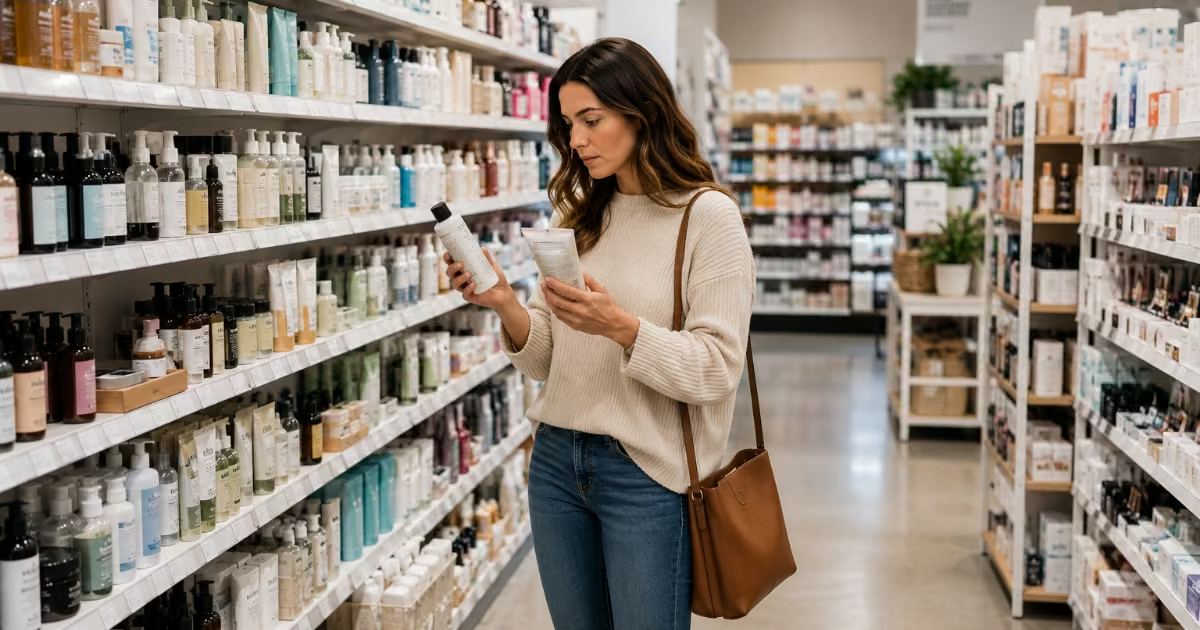
At some point, many people realize they are spending more time researching beauty products than actually buying them.
One expert says an ingredient is perfectly safe. Another says it should be avoided. One brand markets itself as clean. Another claims to be natural. Social media is full of recommendations, yet many consumers feel more confused than ever.
The problem isn’t a lack of information.
It’s knowing which information matters.
Over the years, I’ve found that most beauty products become much easier to evaluate once you stop chasing opinions and start asking better questions.
These are the five questions I ask before buying anything.
Disclosure: This guide is for informational purposes only. If you make a purchase through the links provided, I may earn a small commission at no additional cost to you. As an Amazon Associate, I earn from qualifying purchases.
The Quick Guide
If you only remember three things from this article, make them these:
- Question whether you need the product. The beauty industry encourages more products, more steps, and more specialised solutions. Before buying anything, ask whether it genuinely deserves a place in your routine.
- Prioritise the products you use every day. Leave-on products such as moisturisers, deodorants, lip balms, and serums generally deserve more attention than products that are quickly washed away.
- Look beyond the marketing. Words like “natural,” “clean,” and “non-toxic” tell you very little on their own. Instead, judge products by their complete ingredient list, formulation, and the transparency of the company behind them.
1. Do I Actually Need This Product?
Why More Skincare Products Don’t Always Lead to Better Skin
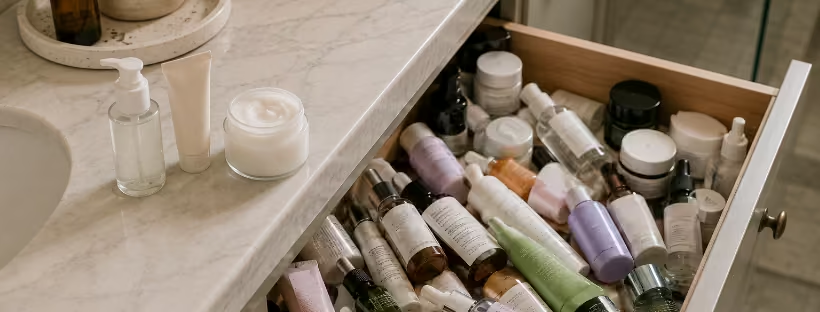
Before I look at ingredients, marketing claims, or brand reputation, I start with a simpler question:
Do I actually need this product?
That may sound obvious, but it’s a question the beauty industry rarely encourages consumers to ask.
Instead, we’re constantly told that better skin requires more products, more steps, and more specialized solutions.
Eye creams. Neck creams. Firming creams. Brightening serums. Plumping treatments. Overnight masks. Age-defying formulas.
The list keeps growing.
But healthy skin has relatively simple biological needs.
Your skin acts as a protective barrier between your body and the outside world. To do its job, it needs support, protection, and moisture.
That’s why products such as cleansers, moisturizers, lip balms, and sun protection serve a clear purpose. They support functions the skin is already trying to perform.
Many other beauty products are different.
Rather than supporting a basic biological need, they are marketed around improving appearance.
Radiance. Glow. Firmness. Brightening. Lifting. Tightening. Plumping. Youth-preserving.
There’s nothing wrong with wanting healthier-looking skin.
The problem is that consumers are often taught to look for the solution in another bottle.
Many beauty products are designed to improve the appearance of a problem. That doesn’t necessarily mean they address the reason the problem exists.
A moisturizer can help dry skin feel more comfortable.
A serum may help skin appear brighter.
A cream may temporarily improve the appearance of fine lines.
But healthy skin is influenced by far more than skincare products.
Sleep. Nutrition. Stress. Hormones. Movement. Overall health.
In other words, some of the factors that influence your skin may have very little to do with what you’re putting on it.
This doesn’t mean skincare products are useless. It means they have limits.
It’s also worth remembering that beauty marketing and product performance are not always the same thing.
A product may advertise a hero ingredient on the front of the packaging, but consumers are rarely told how much of that ingredient the formula actually contains or whether it’s present in an amount likely to deliver the promised result.
That’s one reason I have become skeptical of products that rely heavily on marketing language while providing very little information about the formula itself.
The goal is to understand which products genuinely deserve a place in your routine and which ones may be solving a problem that never really existed in the first place.
2. Is This a Product I Use Every Day?
Why Leave-On Products and Lip Products Are Often the Best Place to Start
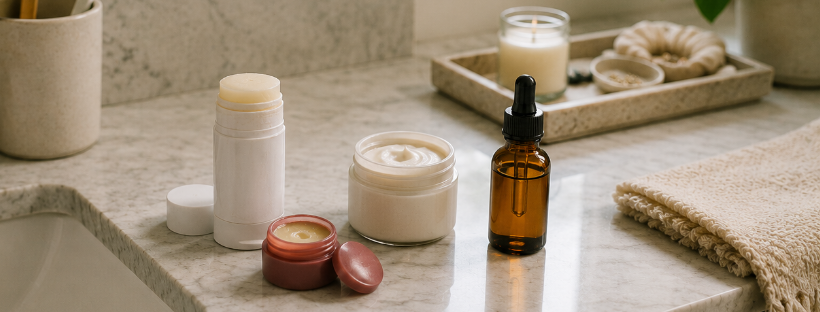
Once you start paying attention to ingredients, it’s easy to assume every product deserves the same level of concern.
It doesn’t.
A shampoo may be on your scalp for a minute before being rinsed away.
A body wash may stay on your skin for less than sixty seconds before going down the drain.
A facial moisturizer can remain on your skin all day.
The same is true for body lotion, deodorant, foundation, sunscreen, and many leave-in hair products.
That doesn’t automatically make leave-on products harmful.
It does mean they play a much larger role in your daily routine.
A product used once and washed away is very different from a product applied every morning, worn for twelve hours, and repeated day after day for years.
This is why low-tox living is often about prioritization rather than perfection.
If you’re not sure where to start, focus on the products you use most often and the products that stay on your skin the longest.
For most people, that means:
- Facial moisturizer
- Body lotion
- Deodorant
- Foundation
- Sunscreen
- Leave-in hair products
Lip products deserve special attention.
Unlike most beauty products, some of the product inevitably ends up being swallowed through normal daily use. That doesn’t make lip balm or lipstick dangerous, but it does make ingredient quality worth considering.
This is one reason many people prefer lip products made with simple ingredients such as beeswax, cocoa butter, shea butter, and plant oils rather than lengthy ingredient lists filled with fragrances and unfamiliar additives.
The goal isn’t to replace everything overnight.
Start with the products you use every day, the products that stay on your body the longest, and the products you understand the least.
Everything else can wait.
3. Do I Know What’s Actually In This Product?
Why Ingredient Lists Often Create More Questions Than Answers
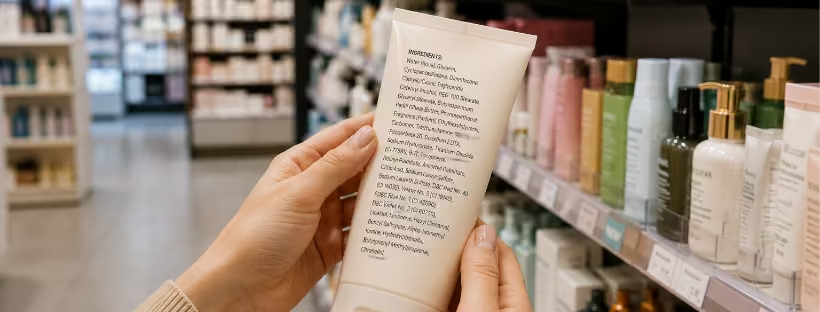
At some point, many consumers decide they want to better understand the products they’re putting on their skin.
So they turn the product around and read the ingredient list.
And that’s often where the frustration begins.
Instead of finding a simple list of ingredients, they find something that looks more like a chemistry textbook:
Aqua, Glycerin, Pentaerythrityl Tetraethylhexanoate, Hydroxyethylpiperazine Ethane Sulfonic Acid, Poloxamer 338, Pentaerythrityl Tetra-di-t-butyl Hydroxyhydrocinnamate…
Most people have no idea what these ingredients are.
More importantly, they have no idea why they’re there.
That creates a problem.
Consumers are expected to make decisions about products they cannot realistically evaluate for themselves.
Even highly educated consumers often struggle to answer basic questions:
- What is this ingredient?
- Why is it included?
- Is it helping my skin?
- Is it helping the product?
- Is it helping the manufacturer?
The more ingredient lists I read, the more I realized that many beauty products are not built solely around skin health.
They are also built around shelf life, texture, fragrance, stability, manufacturing, and mass distribution.
A moisturizer may need to survive months in a warehouse, travel across multiple countries, sit on a store shelf, and remain stable in a bathroom cabinet long after it has been opened.
All of those requirements can add ingredients to a formula.
This helps explain why a product marketed around a handful of hero ingredients may contain dozens of other ingredients that consumers know very little about.
The front of the packaging may highlight:
- CoQ10
- Peptides
- Collagen
- Hyaluronic Acid
- Botanical extracts
But the ingredient list often tells a much more complicated story.
Consumers think they’re buying the ingredients featured on the front of the packaging.
In reality, they may be buying a formula largely made up of water, texture agents, stabilizers, preservatives, fragrance ingredients, and other components that help create the final product.
Fragrance creates another challenge.
When you see “fragrance” or “parfum” on an ingredient label, it sounds like a single ingredient.
It isn’t.
That single word can represent a blend of multiple ingredients used to create a product’s scent.
What surprises many consumers is not that fragrance contains multiple ingredients.
It’s that they are often not shown what those ingredients are.
In many cases, fragrance formulations are treated as proprietary trade secrets, which means companies are not always required to disclose every ingredient used to create the scent.
As a result, consumers may know the preservatives, emulsifiers, thickeners, and colorants in a product while knowing very little about the ingredients responsible for one of its most noticeable features.
The issue isn’t that every unfamiliar ingredient is harmful.
The issue is that most consumers are being asked to trust products they don’t fully understand.
Could you spend hours researching every ingredient?
Of course.
There are ingredient databases and INCI decoders that can help explain individual ingredients.
But I don’t believe consumers should need to become cosmetic chemists just to buy a moisturizer.
Personally, if I look at a product and feel completely overwhelmed by the ingredient list, I put it back on the shelf.
Not because every unfamiliar ingredient is necessarily dangerous.
But because I prefer products I can reasonably understand.
I prefer brands that make transparency easier, not harder.
And I prefer products that don’t require thirty ingredients and a chemistry lesson before I feel comfortable using them.
Because if I can’t reasonably understand what I’m buying, I have a hard time trusting that it’s the right product for me.
4. Is This Product Greenwashed?
How to Look Past the Marketing: What “Natural,” “Clean,” and “Non-Toxic” Really Mean on Beauty Product Labels
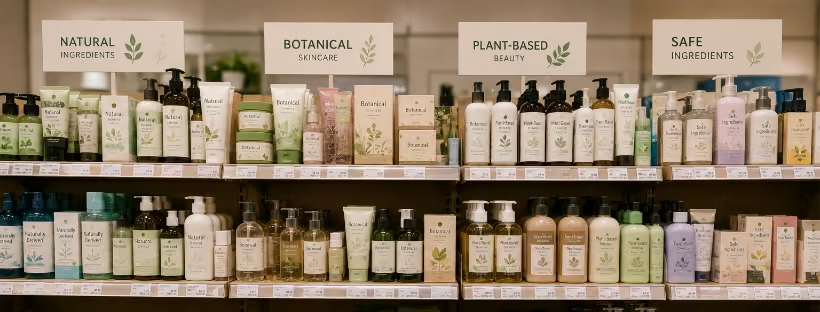
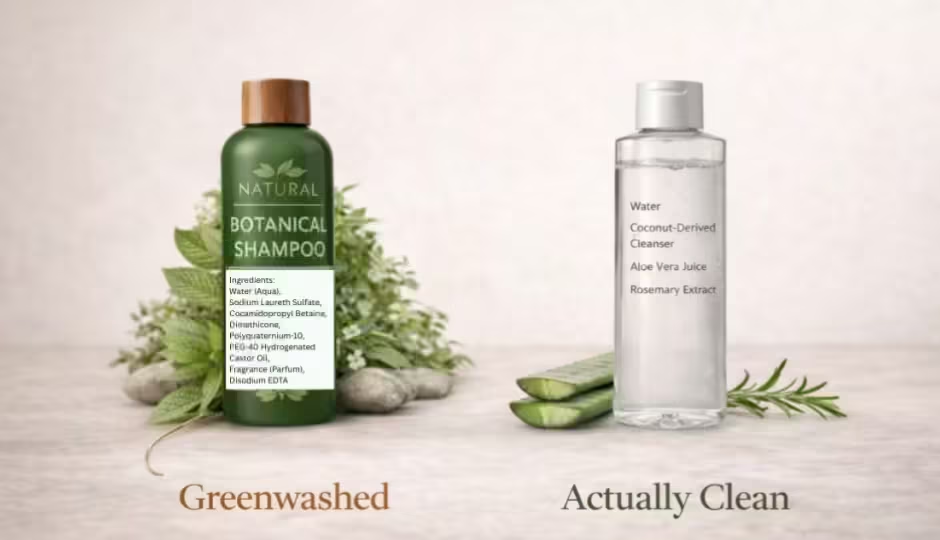
Greenwashing is the use of misleading marketing to make a product or the company behind it appear more natural, healthier, or more environmentally friendly than it really is.
It works through manipulation of attention. The front of the bottle draws your eye to the words and ingredients the company wants you to notice.
Natural.
Clean.
Pure.
Plant-based.
Made with Aloe Vera.
Infused with Argan Oil.
Combined with green packaging, leaves, flowers, earthy colours, and images of nature, these claims can create a reassuring impression before you have looked any closer.
Most consumers assume that terms like natural, clean, or plant-based are backed by clear standards. In reality, many of these marketing terms don’t have a single legally defined meaning or universally accepted standard in cosmetics. That means different companies can use the same reassuring language for products with very different formulations.
Turn the bottle around and the ingredient list often tells a more complicated story. A product promoted with aloe vera, argan oil, or plant-based ingredients may also contain water, emulsifiers, solvents, preservatives, thickeners, silicones, fragrance ingredients, colourants, stabilisers, and many other ingredients that receive little or no attention in the marketing.
The problem is when the marketing gives one highlighted ingredient the emotional weight of the entire product., while overlooking the ingredients that deserve the most scrutiny.
That is what makes greenwashing misleading. It encourages you to judge the product by a few carefully selected words while overlooking the fuller picture.
If the front of the bottle creates an impression that the ingredient list, formulation, or company practices do not support, there is a good chance you are looking at greenwashing.
5. Can I Trust This Brand?
What “Natural,” “Clean,” and “Non-Toxic” Really Mean on Beauty Product Labels
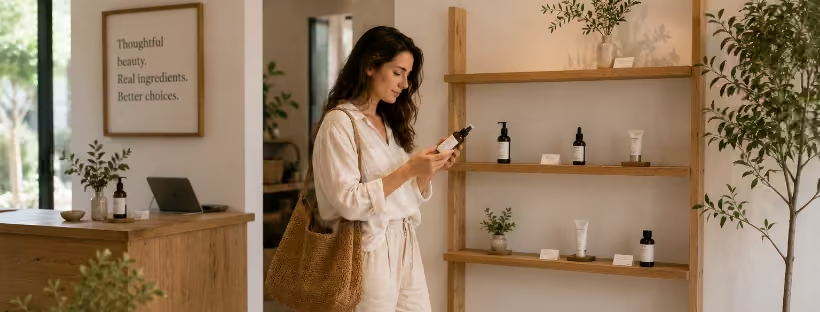
By now, you’ve learned to ask whether you need a product, how often you’ll be exposed to it, whether you understand the ingredients, and whether the marketing is giving you an accurate picture of what’s inside.
The final question is one of the most important:
Can I trust the company behind this product?
You shouldn’t need a degree in chemistry to choose a moisturiser or shampoo. If a company genuinely believes in its products, it should make it easy for you to understand what you’re buying and why those ingredients were chosen.
A trustworthy company doesn’t earn that trust through clever branding, green packaging, or reassuring buzzwords. It earns it through transparency, consistency, and a clear philosophy.
When evaluating a brand, look for the following:
- Clearly explain its ingredient philosophy.
- Make ingredient information easy to find and understand.
- Support its claims with evidence rather than vague marketing.
- Ensure its marketing accurately reflects its products.
- Be transparent about its sourcing, manufacturing, and business practices.
- Use meaningful third-party certifications where relevant, rather than self-created trust symbols.
The goal is to identify companies that consistently demonstrate honesty, transparency, and a genuine commitment to helping consumers make informed decisions.
When a company’s philosophy, formulations, and marketing all tell the same story, you can buy with far greater confidence.
Brands I Trust Most
By now, you might be wondering:
“So which brands actually meet these standards?”
The brands below aren’t here because they call themselves natural, clean, or non-toxic. They’re here because they make it easier to understand what you’re buying. Their ingredient lists are easy to find, their formulations are relatively straightforward, and they provide enough information to help you make informed decisions.
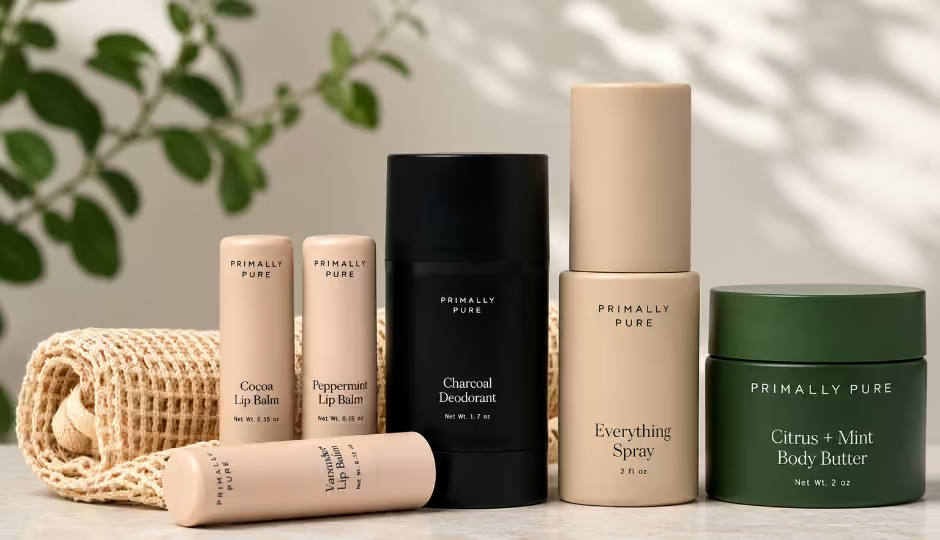
Primally Pure
Primally Pure is a California-based skincare and personal care brand founded in 2015. The company is known for natural deodorants, tallow-based skincare, and body care. Its formulas combine animal-based and plant-based ingredients with a focus on transparency and simplicity.
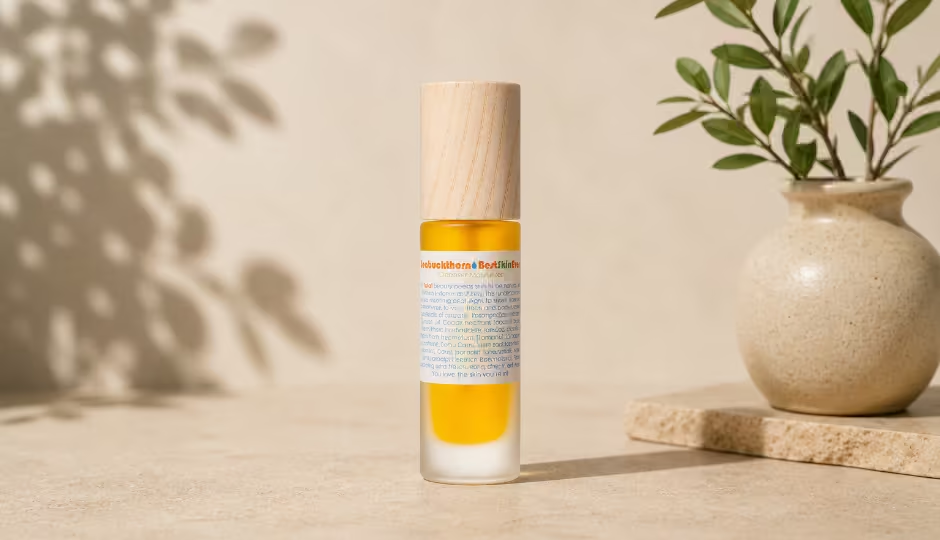
Living Libations
Living Libations is a Canadian beauty, oral care, and wellness brand known for botanical formulas and essential oil-based products. The company offers skincare, oral care, perfumes, and wellness products made with plant oils and botanical extracts, with a focus on ingredient sourcing.
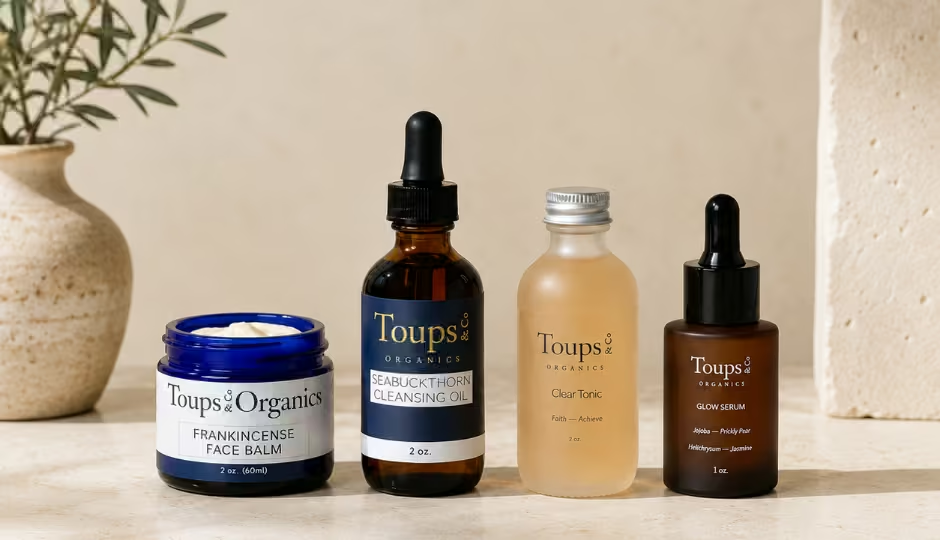
Toups & Co Organics
Toups & Co Organics is a U.S. skincare, personal care, and makeup brand known for traditional ingredients and simple formulations. The company offers skincare, cosmetics, and body care made with ingredients including tallow, botanical oils, clays, and mineral pigments.
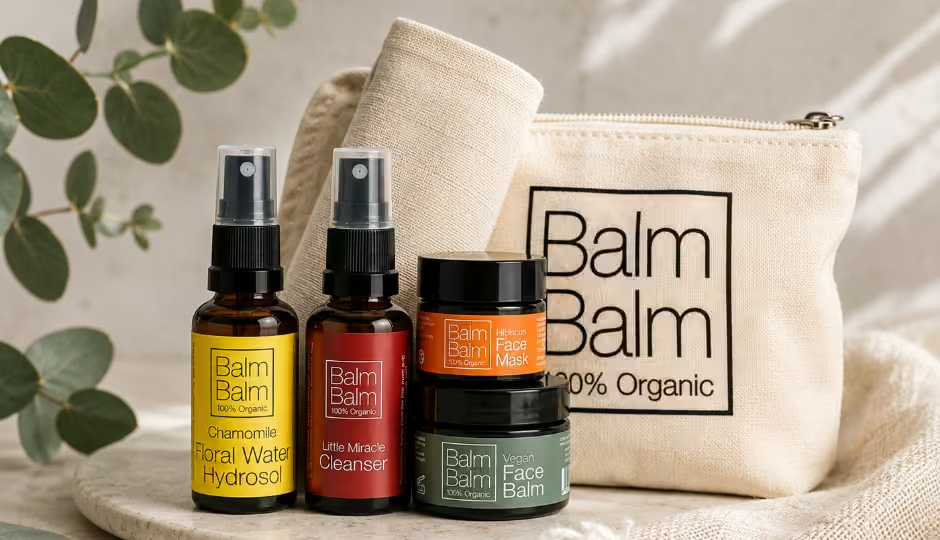
Balm Balm
Balm Balm is a UK skincare brand known for certified organic, multi-purpose products and minimalist formulas. The company offers balms, oils, cleansers, and skincare products made with a small number of selected ingredients. The range includes fragrance-free options.
The Goal Isn’t Perfection
Choosing better beauty products isn’t about finding perfection.
It’s about becoming a more informed consumer.
The beauty industry spends billions of pounds every year competing for your attention. The more you understand how products are marketed, formulated, and sold, the easier it becomes to make decisions based on evidence rather than emotion.
You won’t get every purchase right—and you don’t need to.
Every thoughtful decision is another step towards reducing unnecessary exposure, supporting companies that value transparency, and creating a healthier home.
Progress is built one product at a time.
❓ FAQs