
How to Reduce Toxins in Your Kitchen
The 5 upgrades that matter most for reducing everyday chemical exposure
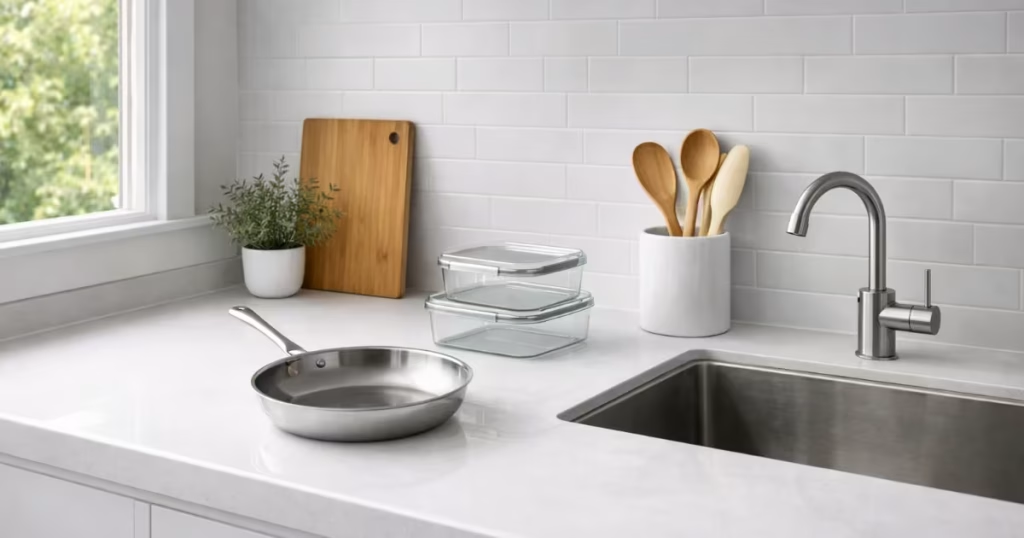
Creating a healthier kitchen sounds simple until you start researching it.
One source says to replace your cookware. Another warns about plastic containers. Then you hear about cutting boards, utensils, water filters, food storage, coatings, and ingredients you’ve never thought twice about before.
At some point, the advice starts to blur together.
You want to make better choices for yourself and your family, but separating genuine concerns from marketing claims, social media trends, and conflicting opinions can feel nearly impossible.
The result is often the same: uncertainty, information overload, and a growing list of products that supposedly need replacing.
If you’ve ever found yourself wondering where to start—or whether any of this really matters—you’re not alone.
Disclosure: This article is for informational purposes only. If you make a purchase through the links provided, I may earn a small commission at no additional cost to you. As an Amazon Associate, I earn from qualifying purchases.
Quick Replacement Guide
| Replace This | Replace With | My Recommendation | |
|---|---|---|---|
| Scratched or Flaking Nonstick Cookware | Stainless Steel Skillet | Cuisinart Stainless Steel Skillet | Buy Now |
| Scratched or Flaking Nonstick Cookware | Cast Iron Skillet | Lodge Cast Iron Skillet | Buy Now |
| Plastic Containers Used for Reheating | Glass Food Storage Containers | Urban Green Store Glass Storage Containers with Glass Lids | Buy Now |
| Worn Plastic or Silicone Cooking Utensils | Untreated Wooden Utensils | Hefild Uncoated Beech Wood Utensil Set | Buy Now |
| Worn Plastic or Silicone Cooking Utensils | Stainless Steel Utensils | Berglander Stainless Steel Cooking Utensil Set | Buy Now |
| Worn-Out Plastic Cutting Boards | Solid Wood Cutting Board | Andrew Pearce One-Piece Cherry Cutting Board | Buy Now |
| Unfiltered Tap Water | Glass Filter Pitcher | LifeStraw Home Glass Water Filter Pitcher | Buy Now |
| Unfiltered Tap Water | Stainless Steel Gravity Filter | British Berkefeld Stainless Steel Gravity Filter | Buy Now |
| Unfiltered Tap Water | Tankless Reverse Osmosis | Waterdrop X12 Alkaline Mineral Reverse Osmosis System | Buy Now |
How I Decide What To Replace First
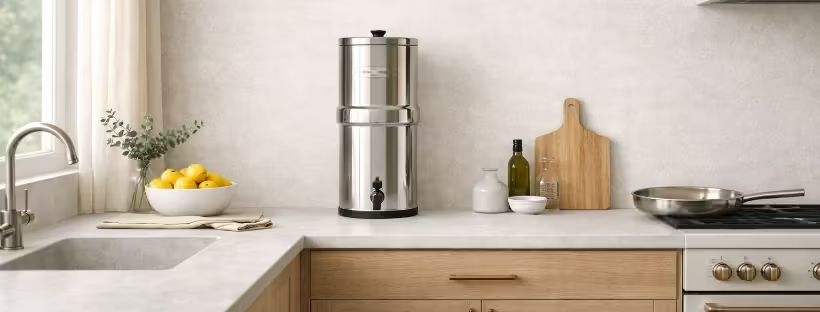
If low-tox living feels overwhelming, start here: do not replace everything at once.
Instead, ask three simple questions:
- Does it get hot?
- Does it touch your food?
- Is it scratched, chipped, warped, or worn out?
If the answer is yes to all three, that item moves to the top of your list.
This rule matters because not every kitchen item has the same impact. A scratched pan you use every day is very different from a container used occasionally for cold leftovers. Heat increases stress on materials, food contact increases exposure, and wear tells you what is already breaking down.
That is why damaged nonstick cookware, plastic used for reheating, worn utensils, and old cutting boards are usually the best places to start.
A simple way to remember it:
Hot + touching food + breaking down = replace first.
You do not need to overhaul your entire kitchen overnight. Focus on the items you use most often, then work from there.
These are the kitchen swaps I would prioritize first:
1. Scratched or Flaking Nonstick Cookware
→ Replace With Stainless Steel or Cast Iron
Most people assume nonstick cookware was invented for cooking.
It wasn’t.
In 1938, a chemist working on refrigeration technology discovered that a gas he was experimenting with had unexpectedly turned into a slippery substance inside its container. That accidental discovery would later become the material used in traditional nonstick cookware.
It solved a real problem. Food didn’t stick as easily, cleanup became faster, and people loved the convenience. Before long, nonstick pans had become a kitchen staple.
Every time the pan is used, that coating is exposed to heat, utensils, cleaning, and everyday wear. Manufacturers recommend avoiding overheating and replacing cookware once the surface becomes scratched, chipped, peeling, or flaking.
The reason is simple: traditional nonstick cookware uses a synthetic fluoropolymer coating called PTFE, commonly known as Teflon. Once the surface becomes damaged, the coating begins to break down. Tiny particles can be released from the cooking surface, and PTFE coatings can release fumes when overheated.
Convenience made nonstick cookware popular. Growing awareness around chemical exposure has led many people to question whether repeatedly heating a synthetic coating is a tradeoff worth making when alternatives exist.
If stainless steel and cast iron can cook the same meals, withstand higher temperatures, and last for decades, why cook on a synthetic coating at all?
There is no coating to scratch, peel, flake, or eventually replace.
A quality stainless steel pan can last for decades, while a cast iron pan can last for generations.
My Stainless Steel Skillet Recommendations
BEST VALUE
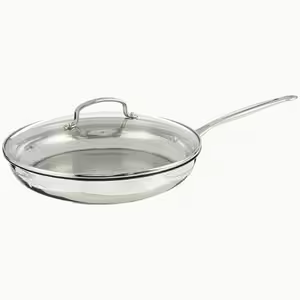
Cuisinart Stainless Steel Skillet
Why I Recommend It
One of the few affordable stainless steel skillets that includes a tempered glass lid. The 12-inch size offers plenty of cooking space, while compatibility with all cooktops—including induction—makes it a practical choice for most kitchens.
PREMIUM UPGRADE
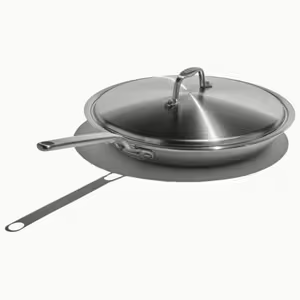
Heritage Steel 12-Inch Fry Pan with Lid
Why I Recommend It
Made in the USA from 5-ply stainless steel and backed by a lifetime warranty, this pan is built to last for decades. Its fully clad construction, included lid, and spacious 12-inch size make it ideal for everyday cooking.
My Cast Iron Skillet Recommendation
LIFETIME PICK
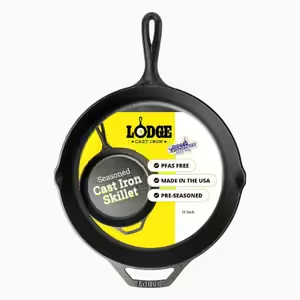
Lodge Cast Iron Skillet
Why I Recommend It
Simple, durable, and built to last for generations, Lodge cast iron is an affordable alternative to nonstick cookware. It comes pre-seasoned, handles high heat, and develops a naturally nonstick surface over time.
2. Plastic Containers Used for Reheating
→ Replace With Glass Food Storage
Plastic food containers are often marketed as microwave-safe, but that label can create a false sense of security.
Microwave-safe simply means the container is unlikely to melt under normal use. It does not necessarily mean that nothing transfers from the container into your food.
This matters because heat changes the equation.
A plastic container used to store leftovers in the refrigerator is very different from a plastic container repeatedly exposed to microwave heat. Over time, containers become scratched, stained, warped, cloudy, and worn. Research suggests that heat and wear can increase the release of chemicals and microplastics from plastic into food.
That’s why plastic containers used for reheating deserve a higher place on your replacement list than many other kitchen items. They combine the three factors that matter most:
- Heat
- Direct food contact
- Material wear over time
The goal isn’t to throw out every piece of plastic in your kitchen.
The goal is to stop heating food in it.
Unlike plastic, glass remains stable when exposed to heat, doesn’t absorb food odors or stains, and can last for years without becoming cloudy, warped, or heavily worn.
Glass lids are ideal when available, but even containers with plastic lids are a significant improvement because the food itself is no longer being heated inside a plastic container.
If you’re looking for one of the simplest low-tox kitchen upgrades, replacing your reheating containers with glass is a great place to start.
My Glass Food Storage Recommendation
BEST GLASS STORAGE SET
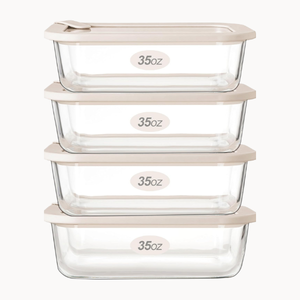
Urban Green Store Glass Storage Containers with Glass Lids
Why I Recommend It
Glass lids with a silicone seal help reduce plastic contact, while the 35-ounce size is practical for leftovers, meal prep, and reheating food.
3. Worn Plastic Cooking Utensils
→ Replace With Wood or Stainless Steel
Plastic cooking utensils are designed to withstand heat, but they aren’t designed to last forever.
Over time, cooking, dishwashing, and daily use wear the material down. Scratches appear. Edges become rough. Some utensils warp, crack, or begin to melt.
The reason this matters is simple.
A plastic utensil doesn’t become scratched or worn without losing material from its surface. If the utensil is repeatedly stirring hot food, that wear isn’t happening in isolation. Material is being removed from the utensil somewhere along the way.
A simple rule helps: if a utensil is warped, melting, cracking, heavily scratched, or no longer smooth, it’s time to replace it.
Stainless steel and wood are more durable alternatives.
A stainless steel utensil can last for decades without warping, melting, or degrading under normal cooking conditions.
Wood has been used in kitchens for generations. A quality wooden spoon or spatula wears naturally over time and doesn’t rely on synthetic materials to do its job.
When choosing wooden utensils, look for solid one-piece designs made from untreated or lightly oiled wood. Many cheaper products are coated with paints, lacquers, or glossy sealants. If you’re choosing wood, it makes sense for the wood itself—not a synthetic coating—to be the surface touching your food.
The best utensils are often the simplest ones.
My Wooden Utensil Recommendation
UNCOATED WOOD
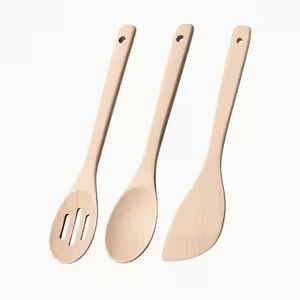
Uncoated Beech Wood Kitchen Utensil Set
Why I Recommend It
Made from untreated, uncoated beech wood. Unlike many wooden utensils that provide little information about finishes or coatings, this version specifically discloses that the wood is untreated.
My Stainless Steel Utensil Recommendation
WOOD ALTERNATIVE
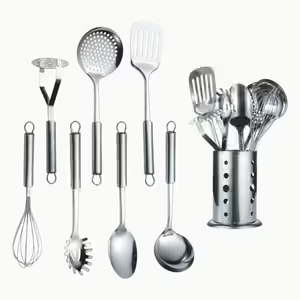
Berglander Stainless Steel Cooking Utensil Set
Why I Recommend It
Made entirely from stainless steel, this set is durable, easy to clean, and designed to handle high-heat cooking without melting, cracking, or wearing down over time. A good option if you prefer stainless steel over wood.
4. Worn-Out Plastic Cutting Boards
→ Replace with a solid wood cutting board
For years, plastic cutting boards were promoted as the more hygienic option, while wooden boards were often criticized for harboring bacteria.
The reality is more nuanced.
One of the biggest concerns with plastic cutting boards is wear. Every slice, chop, and dice leaves behind knife marks. Over time, those grooves become deeper and more noticeable.
This has led many people to question whether plastic is the ideal material for a surface that comes into contact with food every day. A cutting board doesn’t become scratched without material being removed from its surface, which is one reason concerns about microplastics have brought plastic cutting boards back into the spotlight.
The obvious question is: don’t wooden cutting boards have the same problem?
Wooden boards scratch too. No cutting board stays perfectly smooth forever. However, wood has been used for food preparation for centuries, and despite its reputation, a well-maintained wooden board is not generally considered a food-safety problem when cleaned and dried properly after use.
A quality hardwood board also has another advantage: it can often be sanded, refinished, and maintained rather than discarded once it starts showing signs of wear.
When choosing a wooden board, look for solid hardwood options such as maple, walnut, cherry, or beech. Many inexpensive boards are made by gluing together multiple pieces of wood or bamboo and may contain additional adhesives and finishes. If your goal is to keep things simple, solid hardwood is usually the better choice.
An occasional beeswax conditioner can help prevent the wood from drying and cracking, allowing the board to last for many years.
My Wooden Cutting Board Recommendation
SOLID MAPLE
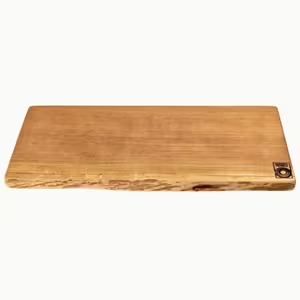
Andrew Pearce Single Live Edge Wood Cutting Board
Why I Recommend It
Made from solid American cherry hardwood, without glue or laminates. Finished with heat-treated walnut oil instead of a synthetic coating. The manufacturer clearly discloses its materials, which is surprisingly rare.
5. Unfiltered Tap Water
→ Replace With Effective Water Filtration
Water is one of the few things most people consume every single day, yet many have no idea what is actually in their local water supply.
Modern water treatment has dramatically reduced waterborne disease and improved public health. However, depending on where you live, drinking water may contain added substances such as chlorine or fluoride, contaminants from aging infrastructure such as lead, treatment byproducts, naturally occurring minerals and metals, or traces of substances including PFAS, agricultural chemicals, industrial contaminants, and microplastics.
That does not mean your tap water is unsafe. Public water systems are regulated and regularly tested. The more useful question is:
What has been detected in your water, and are you comfortable drinking it every day?
Before buying a filter, check your local Consumer Confidence Report (CCR) or review your area using the EWG Tap Water Database. Water quality varies dramatically from one location to another, and the contaminants detected in one city may be completely different from those found in another.
Once you know what is in your water, choosing a filter becomes much easier.
Common Water Filtration Options:
Activated Carbon Filters
- Common in pitchers, faucet filters, and refrigerator filters
- Often used to reduce chlorine, odors, and improve taste
- Some certified models can also reduce lead and other contaminants
Gravity Filters
- Filter larger volumes of water without electricity or plumbing
- Popular for countertop use and households that want more capacity than a filter pitcher
- Often use replaceable filter elements to reduce a range of contaminants
Reverse Osmosis (RO) Systems
- Designed to remove a broad range of contaminants
- Commonly used for lead, PFAS, fluoride, arsenic, nitrates, and many dissolved substances
- Typically installed under the sink
The goal is not to buy the most expensive system. The goal is to understand what you want to reduce, then choose a filtration system designed for that purpose.
My Water Filtration Recommendations
SIMPLE STARTING POINT
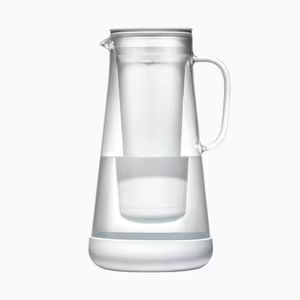
LifeStraw Home Glass Water Filter Pitcher
Why I Recommend It
Unlike many filter pitchers, the LifeStraw Home features a glass reservoir instead of an all-plastic design. It helps reduce lead, PFAS, microplastics, chlorine, and other contaminants, making it a practical way to improve drinking water quality.
COUNTERTOP FILTRATION WITHOUT PLUMBING
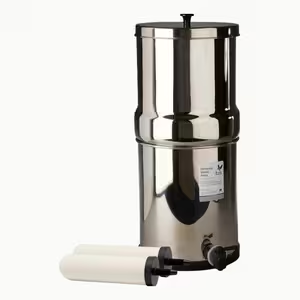
British Berkefeld Stainless Steel Gravity Filter
Why I Recommend It
This gravity-fed filtration system requires no electricity or plumbing and can filter large volumes of water directly on the countertop. It offers a practical step up from a filter pitcher while avoiding the complexity of a reverse osmosis system.
MAXIMUM FILTRATION, PREMIUM UPGRADE
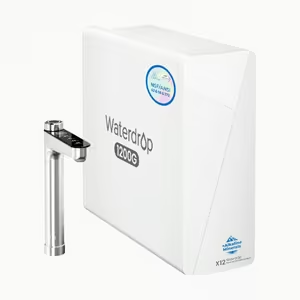
Waterdrop X12 Alkaline Mineral Reverse Osmosis System
Why I Recommend It
Reverse osmosis reduces contaminants such as fluoride, PFAS, lead, arsenic, nitrates, and dissolved substances. While not plastic-free, the Waterdrop X12’s tankless design avoids storing filtered water in a plastic reservoir.
How to Avoid “Non-Toxic” Greenwashing
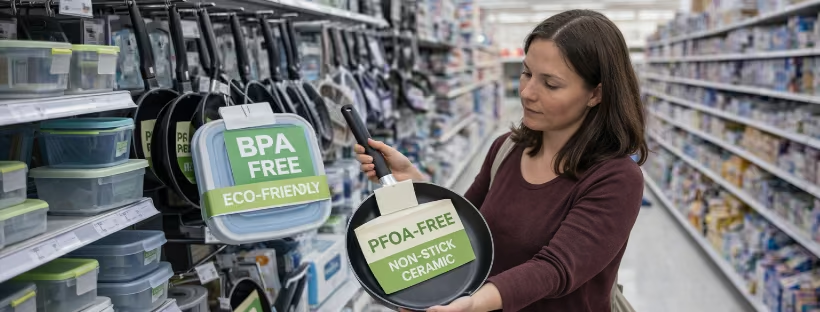
Walk into any store and you’ll see kitchen products labeled natural, non-toxic, eco-friendly, or safe. These terms sound reassuring, but they often tell you very little about how a product actually performs during everyday use.
One reason is that many of these terms are not tightly regulated. In most cases, there is no universal standard that defines what a kitchen product must be made from to be called “natural,” “eco-friendly,” or “non-toxic.” As a result, manufacturers can use these claims to make products appear healthier or safer without providing much information about the materials themselves.
Marketing tends to focus on labels. A container may be advertised as BPA-free. A pan may be marketed as PFOA-free. While those claims describe what is not present, they don’t necessarily tell you what the product is made from or how it behaves under heat, moisture, friction, and daily wear.
That’s where many people get stuck.
A plastic container without BPA is still plastic. A nonstick pan with a different coating is still a coated pan. The label may change, but the underlying material often remains the same.
Instead of focusing on marketing claims, focus on the material itself.
Ask:
- What is it made from?
- What is touching my food?
- How does it hold up to heat, moisture, and repeated use?
- Does it rely on coatings, adhesives, or synthetic layers?
These questions provide more useful answers than terms like natural, eco-friendly, or non-toxic.
The goal is not to find perfect products. The goal is to choose materials that remain stable under normal kitchen use. Glass, stainless steel, cast iron, and solid wood are examples of materials that can often do that without relying on a synthetic coating or disposable design.
When you look beyond the marketing and focus on what a product is actually made from, kitchen decisions become much simpler.
Final Thoughts
Creating a lower-tox kitchen doesn’t require replacing everything you own.
In most cases, the biggest wins come from focusing on the items you use every day—especially those exposed to heat, direct food contact, and years of wear.
That means prioritizing damaged nonstick cookware, plastic used for reheating, worn utensils, heavily scratched cutting boards, and the water you drink every day.
You don’t need the perfect brand. You don’t need products covered in “non-toxic” labels. And you don’t need to overhaul your kitchen overnight.
Instead, focus on the materials themselves.
Glass, stainless steel, solid wood, cast iron, and effective water filtration have stood the test of time for a reason. They do their job without relying on complicated marketing claims or frequent replacement.
Start with one change. Then make the next one when you’re ready.
A lower-tox kitchen isn’t built all at once. It’s built through simple decisions repeated over time.
