
How to Stay Calm in Any Situation
Even When You Feel Overwhelmed

In moments of stress or overwhelm, it can feel impossible to remain composed. Whether you’re facing a tight deadline, navigating a challenging conversation, or managing competing priorities, staying calm seems like a distant goal. However, with the right tools and mindset, you can learn to maintain your calm in any situation. This article will explore practical strategies to help you stay grounded, reduce anxiety, and respond to pressure with clarity and confidence—no matter how overwhelming life gets.
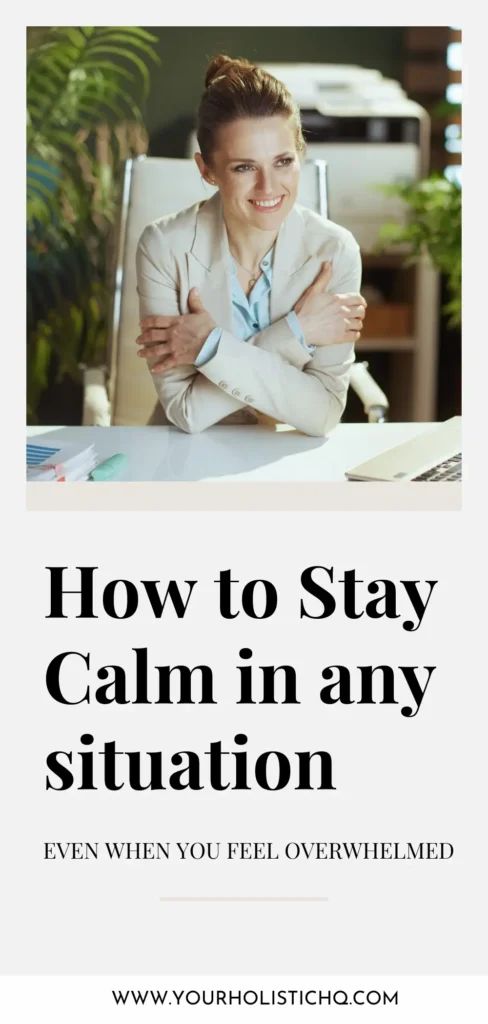
1. The Butterfly Hug Technique

The Butterfly Hug technique is a simple yet powerful method for calming the nervous system in moments of stress. Named for the way your arms mimic the wings of a butterfly, this self-soothing technique helps promote relaxation by engaging both sides of the body and mind. It’s particularly useful when you’re feeling overwhelmed or anxious, allowing you to regain control and center yourself.
To practice the Butterfly Hug, cross your arms over your chest with your hands resting on your upper arms, near your shoulders. Gently tap your fingers in a rhythmic motion, one hand after the other, like the fluttering of a butterfly’s wings. Focus on your breathing as you do this, inhaling deeply and exhaling slowly. This simple gesture signals to your brain that it’s time to shift from a fight-or-flight state into one of calm and clarity. It can be done anywhere, anytime, and takes only a few moments.
The beauty of the Butterfly Hug is in its accessibility. It’s a technique you can use in any situation—whether you’re in a meeting, stuck in traffic, or dealing with a stressful personal situation. By incorporating this small but effective practice into your routine, you’ll gradually find it easier to tap into your inner calm, even in moments of intense pressure.
2. The 4-7-8 Breathing Technique

The 4-7-8 breathing technique is a simple yet effective method for quickly reducing stress and calming the mind. Developed by Dr. Andrew Weil, this technique focuses on the power of controlled breathing to activate the body’s relaxation response. By regulating your breath, you can lower your heart rate, ease anxiety, and shift your focus away from overwhelming thoughts, allowing you to regain a sense of control in difficult situations.
To practice the 4-7-8 technique, begin by sitting or lying in a comfortable position. Close your eyes and inhale quietly through your nose for a count of 4. Hold your breath for a count of 7, then exhale slowly through your mouth for a count of 8. Repeat this cycle four times, focusing on the rhythm of your breath and the soothing sensation of each inhale and exhale. As you continue, you’ll notice that your body begins to relax, and your mind becomes clearer and more centered.
The 4-7-8 breathing technique can be used in moments of high stress or before any situation where you feel overwhelmed. Whether you’re preparing for an important presentation, calming yourself before a meeting, or simply looking to reduce daily stress, this technique helps create a moment of stillness, allowing you to approach challenges with a clearer, calmer mind. Practicing this breathing exercise regularly will help make it easier to access calmness, even in the most chaotic of moments.
3. Body Scan Meditation

Body Scan Meditation is a mindfulness practice designed to help you reconnect with your body, release tension, and restore balance. By focusing your attention on each part of your body from head to toe, you can become more aware of physical sensations and any areas of discomfort or stress. This practice not only reduces anxiety but also fosters a deep sense of relaxation and presence, allowing you to stay calm in challenging situations.
To begin a Body Scan, find a comfortable position, either sitting or lying down, and close your eyes. Start by taking a few deep breaths to center yourself. Then, bring your attention to the top of your head, slowly scanning down through your body. As you focus on each body part, notice any tension, tightness, or discomfort. If you find an area of tension, simply acknowledge it without judgment and allow your breath to soften and release the tightness. Continue this process, moving down through your body, paying attention to each part without rushing.
The beauty of Body Scan Meditation lies in its simplicity and effectiveness. It can be practiced anywhere, whether you’re in your office, at home, or even in transit. By regularly incorporating this practice into your routine, you’ll develop a heightened awareness of your body’s signals and learn to respond to stress before it becomes overwhelming. In moments of chaos, the Body Scan helps you regain control, grounding yourself in the present moment and fostering a deeper sense of calm.
4. Tactical Empathy

Tactical Empathy is a powerful technique rooted in emotional intelligence that helps you navigate stressful or confrontational situations with greater calm and understanding. Developed by Chris Voss, a former FBI negotiator, this strategy focuses on understanding and acknowledging the emotions of others to build rapport, diffuse tension, and find common ground. By practicing Tactical Empathy, you can maintain control over your emotional responses and foster more productive, calm interactions, even in high-stakes situations.
To practice Tactical Empathy, start by actively listening to the other person without interrupting or immediately offering solutions. Pay close attention to both their words and their non-verbal cues, such as tone of voice and body language. By fully absorbing what the other person is saying, you can identify their emotional state and better understand their perspective. Once you have a clear sense of their feelings, validate them by expressing understanding, such as, “I can see why you would feel frustrated.” This acknowledgment helps de-escalate tension and shows that you are open to finding a resolution.
Tactical Empathy is especially effective in professional environments where emotions often run high, such as negotiations, meetings, or conflict resolution. By using this approach, you can stay calm and composed while addressing the needs and emotions of others. It helps shift the focus from emotional reactions to problem-solving, creating a more harmonious atmosphere in which both parties feel heard and understood. With practice, this technique will become a valuable tool for maintaining your emotional equilibrium, even in the most challenging of situations.
5. Rainbow Breathing

Rainbow Breathing is a creative and calming mindfulness practice that combines deep breathing with visualization, using colors to enhance relaxation and focus. This technique encourages you to engage both your body and mind, making it an effective way to release stress, balance emotions, and foster a sense of peace. By connecting each breath with a specific color, you activate different areas of your mind and body, promoting a deeper sense of calm.
To begin Rainbow Breathing, sit or lie in a comfortable position and close your eyes. Take a deep breath in through your nose, imagining the color red filling your body from head to toe. As you exhale, visualize the red energy flowing out of your body, leaving you grounded and centered. Next, inhale deeply again, this time visualizing the color orange, filling your body with warmth and vitality. Continue this pattern as you breathe in each color of the rainbow—yellow, green, blue, indigo, and violet—allowing each color to correspond with a different feeling: stability, growth, calm, communication, intuition, and serenity.
Rainbow Breathing is a versatile technique that can be used anytime you feel overwhelmed, anxious, or in need of emotional balance. The visualizations help to shift your focus from external stressors to an internal sense of peace, while the controlled breathing relaxes the body and mind. Whether you’re at work, at home, or in a stressful situation, Rainbow Breathing offers a simple way to reset and cultivate calmness. By practicing it regularly, you’ll train your mind to access a state of mindfulness and tranquility whenever you need it most.
6. Grounding

Grounding is a simple yet powerful technique that helps you stay calm, centered, and present in the midst of chaos. This practice involves using your senses and connection to the earth to anchor yourself, particularly when you feel overwhelmed or disconnected. By focusing on the present moment and your physical surroundings, grounding helps to redirect your energy from anxious thoughts or stress back to the here and now.
One effective grounding exercise is the “5-4-3-2-1” technique, which engages your senses to bring you back to the present moment. To start, look around and name five things you can see. Then, listen carefully and identify four things you can hear. Next, feel three things—perhaps the texture of your clothing, the ground beneath your feet, or the air on your skin. Follow by identifying two things you can smell, and if possible, one thing you can taste. By focusing on these sensory details, you shift your awareness away from racing thoughts and physical tension, allowing your body to relax and your mind to regain clarity.
Grounding can be practiced anywhere, whether in the middle of a hectic workday or while dealing with a challenging situation. It’s a simple way to reconnect with yourself and the environment, enabling you to manage stress and maintain emotional stability. Regular practice can help you build resilience, making it easier to stay calm in difficult circumstances and preventing the emotional overwhelm that often arises from day-to-day pressures.
7. Positive Self-Talk

Positive self-talk is a powerful tool that helps shift your mindset from negativity and stress to confidence and calm. The way you talk to yourself plays a significant role in how you experience and respond to challenging situations. By practicing positive self-talk, you can reduce feelings of overwhelm, boost your resilience, and approach difficulties with a greater sense of control and calm. This technique helps reframe negative thoughts into constructive and supportive ones, allowing you to handle pressure with a clearer, more focused mind.
To implement positive self-talk, start by becoming aware of your inner dialogue. Notice when negative thoughts arise, such as, “I can’t handle this” or “This is too much.” Instead of accepting these thoughts as truths, challenge them by rephrasing them in a more positive, empowering way. For example, “This is difficult, but I am capable of finding a solution,” or “I am doing the best I can, and that’s enough.” Over time, consistently replacing negative thoughts with affirming statements builds a mental habit of positivity, which can be a powerful buffer against stress and anxiety.
Positive self-talk not only improves how you feel in the moment, but it also strengthens your emotional resilience over time. By speaking to yourself with kindness and compassion, you cultivate a mindset that promotes calmness, self-assurance, and problem-solving. It’s a practice that can be incorporated into any part of your day, from moments of stress at work to personal challenges at home. The more you make positive self-talk a part of your daily routine, the more naturally it will come to you in high-pressure situations, helping you stay calm no matter what life throws your way.
Final Thoughts

Staying calm in any situation, especially when overwhelmed, is a skill that can be cultivated with consistent practice. Techniques like the Butterfly Hug, the 4-7-8 Breathing, and grounding exercises offer practical tools to manage stress and maintain emotional balance. By integrating these strategies into your daily routine, you not only improve your immediate response to stress but also build a foundation of inner peace that enhances your overall well-being.
Remember, staying calm doesn’t mean suppressing emotions or avoiding challenges—it means approaching them with a clear mind and a calm demeanor. The more you practice mindfulness, the easier it becomes to navigate even the most chaotic moments with confidence and composure.
Ultimately, the key to staying calm is self-awareness and self-compassion. Be patient with yourself as you learn and grow through these techniques, and trust that every step you take brings you closer to emotional resilience and peace.
