
How to Reset Your Nervous System When You Feel Overwhelmed
7 simple techniques to help your body come out of fight-or-flight quickly and regain calm

Sometimes overwhelm arrives all at once.
Your thoughts speed up. Your chest tightens. Even small problems start to feel unmanageable.
Most people respond by trying to think their way through it. But overwhelm isn’t just a mental problem — it’s a nervous system response. When your body shifts into stress mode, your breathing changes, your muscles tense, and your brain becomes focused on threat instead of clarity.
Until your body settles, your mind usually can’t.
The techniques below work by giving your nervous system simple signals that the pressure has passed. A slower breath, rhythmic tapping, grounding your senses, or activating the vagus nerve can interrupt the stress response and help your body reset.
When that happens, something subtle shifts.
Your breathing deepens.
Your shoulders drop.
Your thoughts begin to slow.
And the moment that felt overwhelming becomes something you can actually handle.
What Does Nervous System Resetting Mean?
Nervous system resetting means helping the body move out of the fight-or-flight stress response and return to a regulated state where the body feels safe again.
When stress remains active for too long, the nervous system can become dysregulated, meaning it continues reacting as if danger is present even when the situation is not actually threatening. This can lead to symptoms like racing thoughts, muscle tension, shallow breathing, and emotional overwhelm.
Simple techniques such as slow breathing, grounding exercises, or stimulating the vagus nerve can help interrupt this stress response and allow the nervous system to settle more quickly, often within a few minutes.
Quick Nervous System Reset Techniques
If you’re feeling overwhelmed right now, these simple techniques can help your nervous system settle:
– Butterfly Hug – rhythmic tapping that helps interrupt the stress response
– 4-7-8 Breathing – slows breathing and activates the parasympathetic nervous system
– Body Scan Awareness – releases hidden tension in the body
– Vagus Nerve Humming – vibration that signals safety to the nervous system
– Rainbow Breathing – guided breathing with visual focus to interrupt racing thoughts
– 5-4-3-2-1 Grounding – brings attention back to the present moment through the senses
– Cold Water Splash – activates the dive reflex and quickly slows the stress response
1. The Butterfly Hug
When overwhelm hits, most people try to calm down by thinking.
They tell themselves to relax.
They try to reason with the situation.
But if your heart is racing and your chest feels tight, you’ve probably noticed something frustrating.
Your mind may understand what’s happening.
Your body doesn’t.
That’s because overwhelm is usually a nervous system response.
When your brain senses threat or pressure, it switches on fight-or-flight mode. Your muscles tighten. Your breathing shortens. Your body prepares to react.
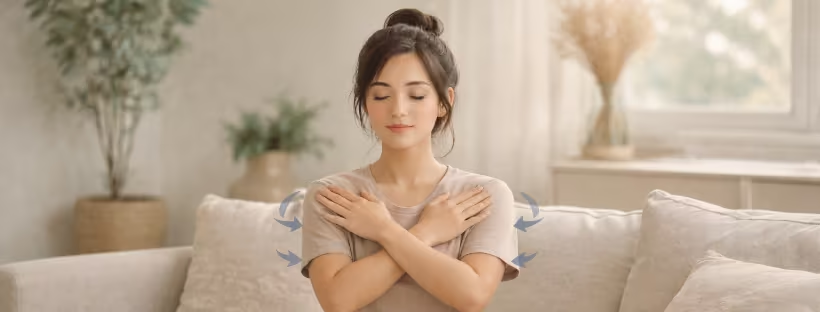
The Butterfly Hug technique helps interrupt that response.
You simply cross your arms over your chest, rest your hands on your shoulders, and gently tap left and right in a slow rhythm — like butterfly wings.
This alternating tapping sends calming signals through the body and helps your nervous system begin to stand down.
After a minute or two, many people notice their breathing deepen and their shoulders soften.
Nothing outside has changed.
But inside, your nervous system has started shifting out of survival mode.
And once your body begins to feel safe again, your mind can finally catch up.
2. The 4-7-8 Breathing Technique
When your body is overwhelmed, your breathing often changes without you noticing.
It becomes fast, shallow, and high in the chest.
This is part of the fight-or-flight response. Your body is preparing to react, not relax.
The problem is that shallow breathing sends a constant message to your brain: stay alert.
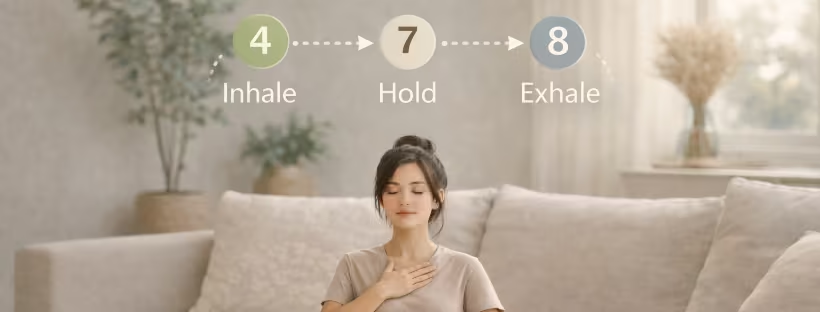
The 4-7-8 breathing technique helps interrupt that loop.
Instead of letting your breath stay short and rushed, you slow it down in a simple pattern.
You inhale through your nose for 4 seconds.
You hold the breath for 7 seconds.
Then you exhale slowly through your mouth for 8 seconds.
That long exhale is the key.
Longer exhales stimulate the vagus nerve, which activates the parasympathetic nervous system — the part of the body responsible for slowing heart rate, relaxing muscles, and reducing the stress response.
After a few cycles, your breathing often deepens and your body begins to soften.
Nothing around you has changed.
But your breathing has sent your nervous system an important signal:
You’re safe enough to stand down.
3. Body Scan Meditation

When stress builds in the body, tension often appears long before you consciously notice it.
Your jaw tightens.
Your shoulders lift slightly.
Your stomach pulls in.
Most of the time, this micro-tension runs in the background without you realising it.
Body Scan Meditation helps you bring that hidden tension back into awareness.
This type of body awareness is often used in somatic healing, which focuses on helping the nervous system release stress that the body has been holding.
Instead of trying to force yourself to relax, you simply pay attention to your body one area at a time.
You might start at the top of your head, noticing your forehead, your jaw, and your neck.
Then you slowly move your attention down through your shoulders, chest, stomach, and legs.
The goal isn’t to fix anything.
It’s simply to notice what your body is holding.
Something interesting often happens when you do this.
The moment your awareness lands on a tense area, the muscles begin to soften on their own.
Your shoulders drop.
Your breath deepens.
Your body lets go of tension it didn’t realise it was carrying.
That’s because awareness itself sends a powerful message to the nervous system.
You’re no longer bracing automatically.
You’re present inside your body again — and that presence is often enough to begin releasing the stress response.
4. Vagus nerve humming
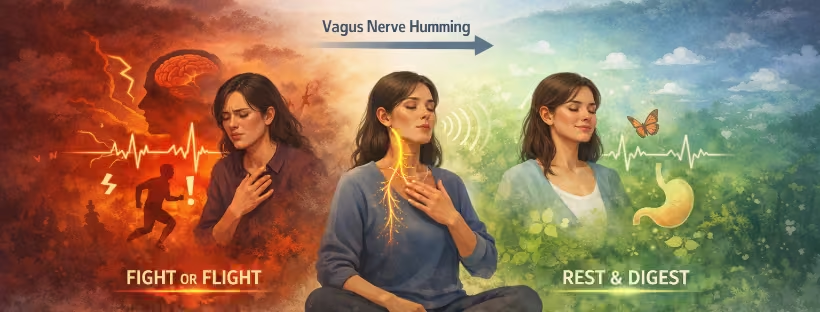
When overwhelm rises, your nervous system often shifts into fight-or-flight mode. Your heart speeds up, your breathing changes, and your body prepares for danger—even if the situation isn’t actually threatening.
One simple way to calm this response is vagus nerve humming.
The vagus nerve is one of the main pathways that tells your body when it’s safe to relax. When it’s activated, your nervous system shifts from stress mode into rest-and-digest mode.
Humming helps stimulate this nerve through gentle vibration in the throat and chest.
To try it, sit comfortably and take a slow breath in through your nose. As you exhale, hum softly—any tone is fine. Let the sound vibrate in your throat and chest for as long as the breath lasts.
Repeat this for a few breaths.
The vibration sends calming signals through the vagus nerve, which can slow your heart rate and help your body begin to settle.
After a minute or two, many people notice their breathing deepen and the intensity of overwhelm start to fade.
Nothing outside has changed.
But your nervous system has received an important signal: it’s safe enough to soften.
5. Rainbow Breathing
When your mind is overwhelmed, it often gets stuck looping the same thoughts.
Your attention stays trapped in the problem.
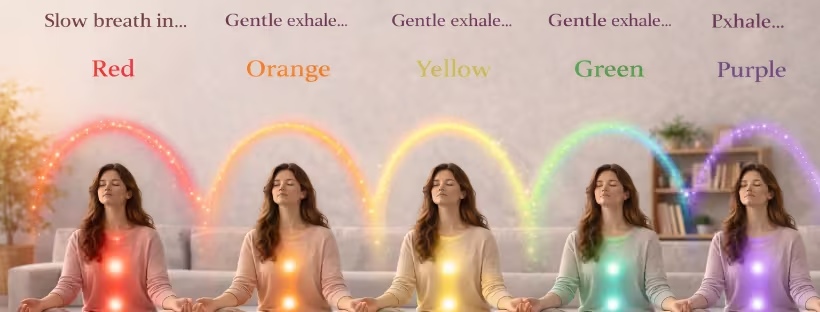
Rainbow Breathing helps break that loop by giving your mind something gentle to focus on.
You begin with a slow breath in, imagining the color red filling your body.
As you exhale, you picture that color leaving your body, carrying tension with it.
With the next breath, you imagine orange, then yellow, moving slowly through the colors of the rainbow.
Each breath becomes a small reset.
Your mind shifts from racing thoughts to visualisation and rhythm. Your breathing slows. Your nervous system begins to settle.
Nothing about the situation has changed.
But your attention has moved away from stress and back into your body.
And sometimes that small shift is enough to remind your nervous system that it doesn’t need to stay on high alert.
6. Grounding

When overwhelm spikes, your mind often leaves the present moment.
It jumps into what might happen next.
Or replays what already went wrong.
Grounding helps bring your attention back to what is actually happening right now.
One simple way to do this is the 5-4-3-2-1 method.
You pause and notice:
Five things you can see.
Four things you can hear.
Three things you can feel.
Two things you can smell.
One thing you can taste.
This simple shift moves your attention away from racing thoughts and back into your senses.
And your senses only exist in the present moment.
As your awareness returns to your surroundings, your breathing often slows and your body begins to relax.
Nothing dramatic happens.
But your nervous system receives an important message:
You are here.
You are safe enough right now.
7. Cold Water Splashing (Dive Reflex Reset)

Cold water splashing is a simple way to interrupt the stress response when your body feels overwhelmed.
When your nervous system enters fight-or-flight mode, your heart rate increases and your body prepares for danger. Cold water can help interrupt this reaction by activating what’s known as the dive reflex.
The dive reflex is a natural survival response that slows the heart rate and redirects blood flow, helping the nervous system shift away from fight-or-flight.
To try it, go to a sink and splash cool or cold water on your face, especially around your eyes and cheeks. You can also hold a cool, damp cloth against your face for about 10–20 seconds.
This area of the face is closely connected to the vagus nerve and the body’s regulation system. The sudden temperature change sends a signal to your brain that encourages your nervous system to slow down.
Many people notice their breathing deepen and their body relax slightly after doing this.
It’s not about shocking your system—it’s about giving your body a quick pattern interrupt that tells it the danger has passed.
Sometimes that small shift is enough to stop the spiral of overwhelm and bring your nervous system back toward balance.
Final Thoughts

Staying calm in overwhelming moments isn’t about forcing yourself to relax or pretending everything is fine.
It’s about understanding what your nervous system is doing — and giving it the signals it needs to stand down.
Techniques like the Butterfly Hug, slow breathing, grounding, and body awareness all work in the same way. They shift your body out of survival mode and back toward regulation — the foundation of long-term nervous system healing.
Sometimes that shift is subtle.
Your shoulders drop a little.
Your breathing deepens.
Your thoughts slow down enough for clarity to return.
Those small changes matter.
Because the more often you give your nervous system signals of safety, the easier it becomes for your body to find calm again — even in stressful moments.
Over time, these practices stop being techniques you remember in a crisis.
They become skills your body knows how to use automatically.
And that’s when calm stops feeling like something you have to chase — and starts feeling like something you can return to whenever you need it.
