
7 Essential Oil Brands That Are Actually Pure—Not Just Marketing Hype
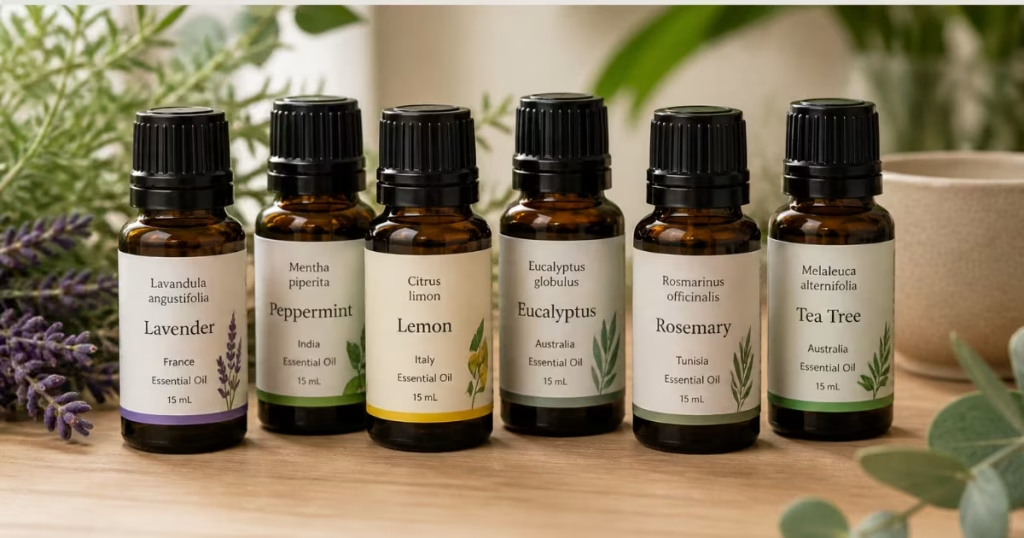
Essential oils are often marketed as if purity is obvious: a plant is distilled, the oil is bottled, and what reaches your home should simply be a concentrated version of that plant.
But that’s not always what ends up inside the bottle.
One of the least discussed parts of the essential oil industry is how easily oils can be diluted, chemically adjusted, oxidized, or blended with synthetic fragrance compounds while still appearing convincing to the average buyer. And because most people judge oils by scent, packaging, or branding, those differences often go unnoticed.
That matters because essential oils are highly concentrated plant compounds. Their quality depends heavily on sourcing, extraction methods, storage conditions, and whether a company is willing to verify what it’s actually selling.
There’s also no universal purity certification for essential oils. Marketing terms like “therapeutic grade” are not standardized or independently regulated.
The brands below stood out because they consistently provide stronger verification standards, clearer sourcing information, and more reliable production practices than most essential oils sold online.
Disclosure: This article is for informational purposes only and is not intended as medical advice. I may earn a commission from purchases made through links on this page at no additional cost to you.
Quick Compare
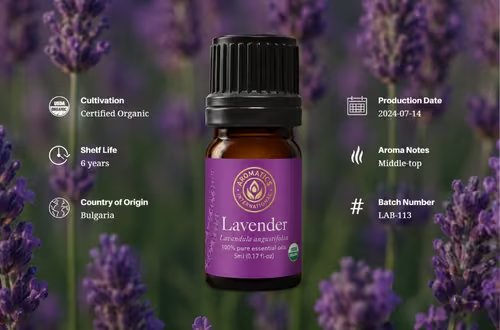
Aromatics International
Works with small-scale growers and distillers, with detailed sourcing information for individual oils.
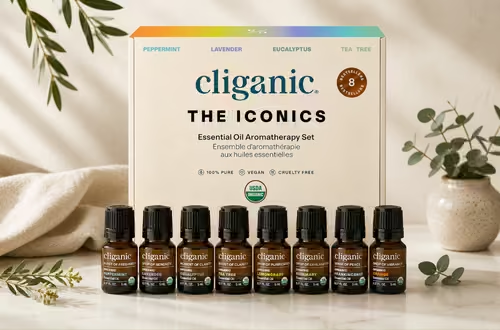
Cliganic
An affordable organic range, including an eight-oil starter collection.
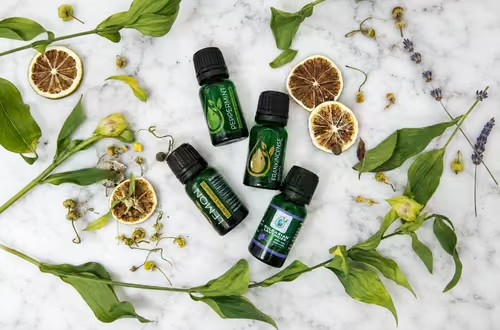
Jade Bloom
Free oil education courses and batch-number lookup for testing reports.
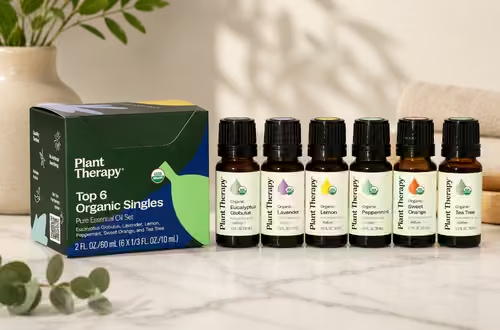
Plant Therapy
An extensive organic collection, plus KidSafe oils and aromatherapist guidance.
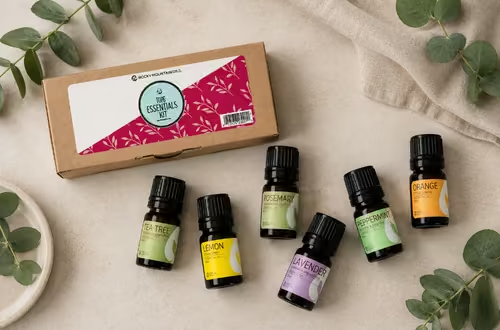
Rocky Mountain Oils
Additional quality checks include sensory evaluation and refractive-index testing.
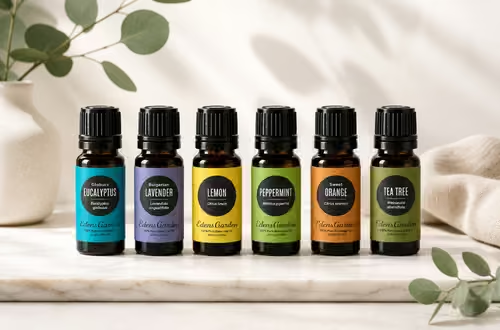
Edens Garden
An extensive catalogue of single oils, specialty blends and ready-made collections.
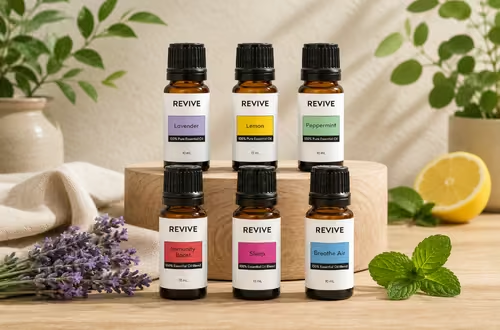
REVIVE Essential Oils
Direct-to-customer sales without distributors, memberships or monthly minimums.
What would you like to do?
What Makes an Essential Oil Pure?
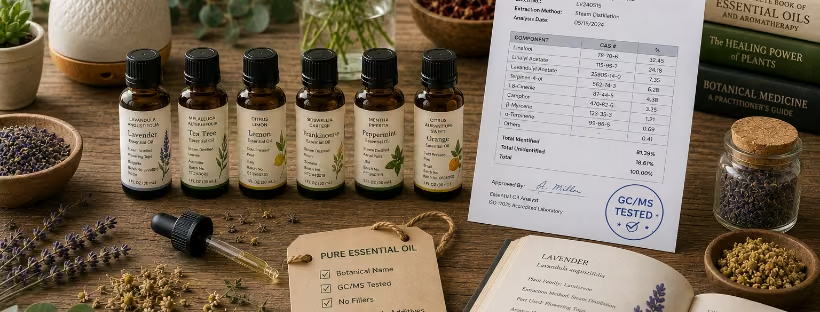
Essential oil quality varies far more than most people realize. While some claims are mostly marketing, the signals below can help you identify brands that are more transparent about testing, sourcing, and quality.
✅ GC/MS Tested: Batch-specific testing helps verify the oil’s chemical composition and screen for contamination or dilution.
✅ USDA Organic: Organic certification can add another layer of oversight around farming practices and pesticide exposure.
✅ Known Origin: Reputable brands usually disclose where their plants are sourced and grown.
✅ Full Botanical Names: Exact Latin plant names provide far more clarity than generic labels like “lavender” or “eucalyptus.”
✅ Amber Glass Bottles: Dark glass helps protect oils from light exposure and oxidation over time.
✅ Proper Extraction Methods: Steam distillation and cold pressing help preserve the oil’s natural chemical profile.
✅ Accessible Batch Reports: Some brands openly publish testing reports, while others provide little information beyond the label.
✅ Non-MLM Pricing: Expensive distributor models do not automatically mean better oils.
✅ Cruelty-Free Standards: Ethical production practices matter to many buyers looking for cleaner products overall.
If you want a deeper breakdown of what these standards actually mean — including dilution red flags, extraction quality, and how to evaluate labels — here’s how to tell if your essential oils are pure.
7 Essential Oil Brands Worth Your Money
1. Aromatics International
BEST OVERALL
GC/MS Tested · USDA Organic · Known Origin · Full Botanical Names · Proper Extraction Methods · Amber Glass · Batch Reports Available · Non-MLM · Cruelty-Free
Aromatics International was founded by professional aromatherapists who wanted a more transparent source of essential oils for aromatherapy students and practitioners. Rather than sourcing anonymously at scale, the company built relationships with small-scale farmers and distillers around the world, choosing growing regions suited to the plants and working with producers using organic, unsprayed or wildcrafted methods.
Where Aromatics really stands out is how much of that journey you can actually see. Individual oils include details such as botanical name, country of origin, cultivation method and batch information, while GC/MS reports are published for individual batches. That makes Aromatics less about asking you to trust a purity claim on the bottle and more about giving you the information to examine what you’re buying for yourself.
2. Cliganic
BEST VALUE
GC/MS Tested • USDA Organic • Known Origin • Full Botanical Names • Amber Glass • Non-MLM • Cruelty-Free
Save 20% with code HOLISTIC20 on the official website
Cliganic started in California in 2015 with a simple idea: clean, natural wellness shouldn’t be complicated or expensive. What began with a focus on pure essential oils has grown into a much larger wellness brand, but affordability remains central to how the company positions itself.
Where Cliganic stands out is the combination of accessible pricing and independent verification. The company says its ingredients are traceable back to their origin, and every lot of its essential oils undergoes GC/MS testing. Each bottle has a lot number that can be used to find its corresponding Certificate of Analysis, while its essential oils are also USDA Certified Organic, non-GMO verified, cruelty-free and vegan. That makes Cliganic particularly compelling for buyers who want independently certified organic oils without moving into specialist-brand pricing.
- Strong, natural scents without synthetic undertones
- Good value for organic oils
- Includes the most-used everyday oils
- Attractive, gift-ready packaging
- Customers frequently repurchase
- Smaller bottles than some buyers expect, but the lower price makes it easier to try multiple oils before committing to larger sizes.
3. Jade Bloom
BEST FOR EDUCATION & TRANSPARENCY
GC/MS Tested • Known Origin • Full Botanical Names • Proper Extraction Methods • Amber Glass • Batch Reports Available • Non-MLM • Cruelty-Free
Save 10% with code HOLISTICHQ on the official website
Jade Bloom was founded in 2014 around the idea that buying essential oils shouldn’t require blindly trusting what a company puts on the label. From the beginning, the company paired its oils with unusually open testing and education, publishing GC/MS results and later creating Jade Bloom University, a free platform designed to teach people about essential oils and natural wellness.
Where Jade Bloom really stands out is how much information it gives you after the bottle leaves the shelf. The company sources plants and seeds from farms in growing regions selected for each botanical, says those suppliers are regularly visited and audited, and GC/MS tests every batch before bottling. Each bottle carries a batch number that can be entered into Jade Bloom’s online lookup tool to retrieve the corresponding GC/MS report and Certificate of Analysis. Combined with its extensive free education, Jade Bloom is one of the better choices here for someone who doesn’t just want to buy an oil, but wants to understand where it came from, how it was tested, and what they’re actually using.
- High-quality oils at affordable prices
- Transparent testing and educational resources
- Smooth, natural aromas without feeling diluted
- Good value for the quality
- Helpful customer service
- Jade Bloom sources its Kashmir Lavender exclusively from a small family farm in Kashmir
4. Plant Therapy
BEST ORGANIC SELECTION
GC/MS Tested • USDA Organic • Known Origin • Full Botanical Names • Proper Extraction Methods • Amber Glass • Batch Reports Available • Non-MLM • Cruelty-Free
Plant Therapy built its brand around making high-quality essential oils more accessible, with a strong focus on education, transparency, and safe use. The company keeps its products direct-to-consumer rather than relying on the distributor structure used by many essential oil brands, which it says helps keep prices more affordable.
Where Plant Therapy particularly stands out is its approach to practical aromatherapy safety. Its team includes Certified Aromatherapists who provide guidance on using essential oils with children, during pregnancy and nursing, and around pets. The company also worked with essential oil safety expert Robert Tisserand to develop its KidSafe range specifically for children.
That emphasis on education is backed by extensive testing. Plant Therapy says every essential oil undergoes organoleptic evaluation and multiple rounds of testing, including GC/MS analysis, with batch-specific test reports available to customers. The result is a brand that combines accessible pricing with unusually detailed safety guidance and transparent quality information.
- Organic quality without a high price
- Easy to mix into DIY recipes and diffuser blends
- Strong scent with only a few drops needed
- Frequently repurchased as gifts or replacements
- Many buyers return later to purchase larger bottles
- Tea Tree has a stronger medicinal aroma than the citrus or lavender oils
5. Rocky Mountain Oils
BEST FOR QUALITY TESTING
GC/MS Tested • Known Origin • Full Botanical Names • Proper Extraction Methods • Amber Glass • Batch Reports Available • Non-MLM • Cruelty-Free
Rocky Mountain Oils was founded around the idea that high-quality essential oils should be available without memberships, minimum orders or the distributor structure associated with MLM brands. The company has built its reputation around purity, transparency and giving customers more information about the oils they are buying.
Where Rocky Mountain Oils stands out is its layered approach to quality control. Oils go through GC/MS testing alongside additional checks such as organoleptic and refractive-index testing, and customers can use the batch number on their bottle to find the corresponding test results. This makes it particularly strong for buyers who want independently tested oils with unusually transparent quality information.
- High-quality oils with fresh, natural aromas
- Well-packaged and easy to give as a gift
- Good value compared with purchasing each oil separately
- Great for humidifiers, cleaning, and DIY use
- Lavender on dryer balls praised for laundry
- Includes 5 mL bottles rather than full-size bottles, but a little essential oil goes a long way
6. Edens Garden
BEST FOR VARIETY
GC/MS Tested • Known Origin • Full Botanical Names • Proper Extraction Methods • Amber Glass • Batch Reports Available • Non-MLM • Cruelty-Free
Edens Garden was founded in 2009 by Grace Martin with the aim of making high-quality essential oils more affordable and accessible. The women-owned, family-run company has since grown into one of the largest brands on this list, working with farms and distilleries around the world and offering an unusually broad selection of individual oils and blends.
Where Edens Garden stands out is the variety it offers without abandoning transparency around quality. The company sources botanicals from regions suited to each plant and evaluates its oils using several quality checks, including independent GC/MS testing. Test results are made available to customers, while Certified Aromatherapists provide education and safety guidance. This makes Edens Garden particularly useful for anyone who wants a much wider choice of oils and blends while still being able to see how the products have been tested.
- Clean, natural scents without smelling synthetic
- Great value—often compared to premium brands
- Peppermint and Lavender are standout favorites
- Many customers continue buying from the brand
- Trusted, woman-owned, non-MLM brand
- Higher priced than some comparable starter sets
7. REVIVE Essential Oils
BEST MLM ALTERNATIVE
GC/MS Tested • Known Origin • Full Botanical Names • Amber Glass • Non-MLM • Cruelty-Free
REVIVE was created by a family that had previously bought essential oils from large MLM brands and wanted a simpler, more affordable alternative. Instead of using distributors, memberships or monthly minimums, the company sells directly to customers through its website, with the aim of offering comparable quality without the additional costs built into an MLM structure.
Where REVIVE stands out is how directly it positions itself as an alternative to brands such as doTERRA and Young Living. Its oils are sourced from growing regions around the world and every lot undergoes internal and independent third-party testing, including GC/MS analysis. Test reports are available to customers, making REVIVE particularly appealing to people who want independently tested oils without joining an MLM or paying MLM-level prices.
- Excellent value compared to many MLM brands
- High-quality oils with fresh, natural aromas
- Useful mix of everyday single oils and blends
- Fast, responsive customer service
- Many customers say a few drops go a long way
- Scent strength is subjective, with a few reviewers preferring stronger aromas
