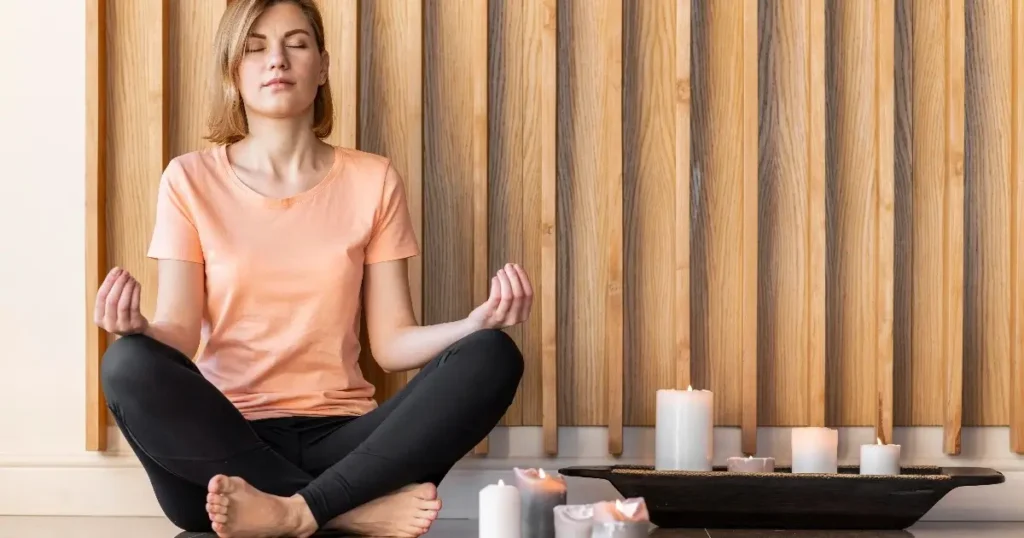
Mindfulness for Better Sleep: What is Sleep Meditation?

Sleep is a critical component of health and well-being, essential for physical restoration, cognitive function, and emotional resilience. In our modern, fast-paced society, maintaining consistent, high-quality sleep has become challenging for many people. Issues such as difficulty falling asleep, interrupted sleep, or waking feeling unrefreshed are common complaints that span various demographics, affecting both personal and professional life.
For many, these sleep disturbances stem from an overactive mind burdened by daily stresses and worries, which doesn’t quieten even at night. While lifestyle changes and medical interventions can provide relief, they often don’t address the root cause: a restless mind.
This is where sleep meditation can offer a significant benefit. As a focused practice, sleep meditation assists in calming the mind, setting aside daily concerns, and preparing the body for a restorative night’s sleep. It’s not just about improving the ease of falling asleep but also enhancing the overall quality of sleep. In the upcoming sections, we will delve into what sleep meditation entails, its benefits, and practical ways to incorporate it into your nightly routine for optimal health and well-being.
Understanding Sleep Meditation

Sleep meditation is a targeted meditation practice designed specifically to ease the transition from wakefulness to sleep. The goal is to quiet the mind, relax the body, and create the optimal conditions for falling into a deep, restorative sleep. This practice involves various techniques such as focused breathing, guided imagery, or progressive muscle relaxation that help reduce mental clutter and physical tension.
Key Differences Between Sleep Meditation and General Meditation Practices
While sleep meditation and general meditation share some common techniques and objectives, such as mindfulness and stress reduction, there are distinct differences:
- Purpose: The primary aim of sleep meditation is to promote sleep. In contrast, general meditation might focus on a broader range of goals, including increased awareness, stress management, or personal growth.
- Timing: Sleep meditation is typically practiced right before bedtime with the intention of transitioning into sleep. General meditation can be performed at any time of the day.
- Posture: Sleep meditation often encourages lying down in a comfortable position conducive to sleep, whereas general meditation usually involves sitting upright to maintain alertness.
The Role of Mindfulness in Sleep Meditation
Mindfulness is a central element in sleep meditation. It involves paying nonjudgmental attention to the present moment, which can significantly diminish the racing thoughts that often hinder sleep.
By focusing on the here and now—be it through mindful breathing, noticing sensations in the body, or hearing ambient sounds—practitioners of sleep meditation can detach from daily stresses and anxieties.
This mental shift is not about forcing sleep but rather creating a serene mental environment that welcomes sleep. Thus, mindfulness not only enhances the process of falling asleep but also improves the quality of sleep by fostering a deeper, more peaceful night’s rest.
The Science Behind Sleep Meditation

How Meditation Affects the Brain and Sleep Patterns
Meditation has profound effects on the brain, influencing various areas crucial for relaxation and sleep. Neuroscientific research reveals that regular meditation enhances the activity in the prefrontal cortex, slows down the brain waves, and reduces the arousal in the amygdala, the area responsible for fear and emotional processing.
These changes promote a calmer and more relaxed state of mind, which is conducive to falling asleep and maintaining deep sleep. Additionally, meditation increases the production of neurotransmitters such as serotonin and melatonin, which are essential for regulating sleep cycles.
Research Findings on the Benefits of Sleep Meditation for Sleep Quality
Studies on sleep meditation show promising results. Research indicates that individuals who engage in meditation practices, particularly mindfulness and guided meditation, experience improvements in sleep duration and quality.
A notable study published in JAMA Internal Medicine found that mindfulness meditation helped participants reduce the time it took to fall asleep and increased the total sleep time, leading to better sleep efficiency. These findings suggest that even a modest routine of sleep meditation can have significant benefits for those struggling with sleep disturbances.
How Sleep Meditation Helps in Reducing Stress and Anxiety
Sleep meditation is particularly effective in mitigating stress and anxiety, which are common culprits behind sleep problems. The practice aids in activating the body’s relaxation response, a physiological process that combats the stress response.
By focusing on the present and employing deep, rhythmic breathing, sleep meditation decreases cortisol levels—the stress hormone—and lowers the overall stress load.
This not only helps quiet the mind at bedtime but also improves overall emotional resilience, making it easier to manage stress in day-to-day activities. Consequently, by reducing stress and anxiety levels, sleep meditation enhances one’s ability to fall asleep naturally and maintain a restful sleep throughout the night.
Core Techniques of Sleep Meditation

Guided Visualization
Guided visualization is a powerful technique used in sleep meditation to harness the imagination to induce relaxation and sleep. It involves picturing a peaceful scene or story that engages the senses and diverts the mind from daily stresses.
- Begin in a comfortable position: Lie down in your bed, adjust your pillows and covers, and ensure the room is dark and quiet.
- Start with deep breaths: Take slow, deep breaths to initiate a state of relaxation. Inhale deeply through your nose, hold for a few seconds, and exhale slowly through your mouth.
- Engage the imagination: Visualize a serene setting, such as a quiet beach at sunset or a calm forest. Imagine all the sensory details of the scene—the sounds, the smells, and the sensations.
- Deepen the visualization: Guide yourself deeper into the scene with each breath. With each exhale, imagine sinking further into relaxation, letting go of any tension.
- Drift into sleep: Continue with the visualization until you feel yourself drifting off to sleep. Allow the scene to fade naturally as you fall deeper into sleep.
Body Scan Technique
The body scan is a method used in sleep meditation to promote awareness and relaxation of different parts of the body. This technique helps in releasing physical tension and calming the mind, which aids in falling asleep.
- Start at the feet: Lie flat on your back, close your eyes, and focus your attention on your feet. Notice any sensations present.
- Gradually move upward: Slowly move your focus up through your body—your ankles, knees, thighs, hips, stomach, chest, hands, arms, shoulders, neck, and finally, your head. Spend a few moments on each area.
- Breathe into each body part: As you focus on each part, breathe in deeply, imagining the breath reaching that body part to release tension and stress.
- Release tension on exhales: With each exhale, imagine the stress and tension leaving that part of the body, allowing it to become heavy and relaxed.
- Finish with full-body relaxation: Once you reach the top of your head, take a few deep breaths, feeling your whole body relaxed and peaceful. Allow this sensation to help you drift into sleep.
Breathing Exercises
Breathing exercises are a cornerstone of many meditation practices because they effectively reduce stress and prepare the body for sleep.
- 4-7-8 Breathing: Inhale quietly through your nose for 4 seconds, hold your breath for 7 seconds, and exhale forcefully through your mouth for 8 seconds. Repeat this cycle four times.
- Diaphragmatic Breathing: Place one hand on your chest and the other on your belly. Breathe in deeply through your nose, ensuring your diaphragm inflates and not your chest. Slowly exhale through pursed lips.
- Rhythmic Breathing: Choose a count to inhale (e.g., to the count of 3), and exhale at the same or a longer rate (e.g., to the count of 6). Continue this pattern until you feel your body relax.
These techniques serve as essential tools in sleep meditation, each helping to calm the mind and relax the body, making it easier to transition into a restful sleep.
Final Thoughts

Sleep meditation is a valuable tool that offers a natural and effective way to enhance sleep quality and overall well-being. By incorporating techniques like guided visualization, body scans, and specific breathing exercises, individuals can create a conducive environment for sleep, addressing both the mind’s and body’s readiness for rest.
As you experiment with these techniques, it’s important to remember that consistency is key. Regular practice can deepen the effectiveness of sleep meditation, turning it into a reliable part of your nightly routine. Start small, perhaps with just a few minutes each night, and gradually increase the duration as you become more comfortable with the practice.
Everyone’s journey to better sleep is unique, and what works for one person may not work for another. Therefore, be patient and open to exploring different methods to discover what best suits your needs. Over time, sleep meditation can not only improve your sleep but also enhance your daytime alertness, mood, and overall health.
By prioritizing good sleep through meditation, you’re taking a significant step towards a more balanced and fulfilling lifestyle. So, tonight, as you prepare for bed, allow yourself a moment to slow down with sleep meditation, and drift off to a peaceful night’s rest.