
Why Your Body Isn’t Healing (Even Though It’s Designed To)

Your body is not passive.
It is not waiting to be rescued by the right supplement, the right diagnosis, or the right expert.
It is a living, self-regulating system built to repair damage, resolve inflammation, replace worn-out cells, and restore balance—continuously. This is not a theory. It’s how human biology works.
So when healing doesn’t happen, the question isn’t whether the body can heal.
It’s why it isn’t being allowed to.
Most people have never been taught this distinction. They’re taught to treat symptoms, override fatigue, suppress pain, or push through dysfunction. But healing is not something you force. It’s something that emerges when the body receives the right signals and enough safety to do its work.
Stress, poor sleep, inflammation, constant stimulation, and emotional overload don’t just make you feel unwell—they reduce the body’s capacity for repair by diverting energy toward survival and regulation. Over time, this becomes the baseline, and symptoms start to feel permanent.
They aren’t.
This article explains how the body heals itself, what quietly blocks that process in modern life, and how specific biological systems—nutrition, fasting, sleep, movement, nervous system regulation, and emotional repair—work together to restore function. Not as hacks. Not as trends. As conditions your body already understands.
Healing isn’t about doing more.
It’s about creating the environment where repair can resume, which is at the heart of root cause healing.
🔑 Quick Summary
— The human body has built-in systems for repair, regeneration, and balance, including immune regulation, cellular renewal, and inflammation control.
— Healing is not triggered by effort or motivation, but by the right internal conditions: safety, energy availability, and reduced physiological stress.
— Chronic stress, poor sleep, inflammation, blood sugar instability, and constant overload can suppress the body’s natural healing processes.
— Healing often begins with stabilization—deeper sleep, steadier energy, and fewer extreme reactions—before visible symptom improvement.
— Natural healing does not replace medical care; it works alongside it by restoring regulation and resilience at a systems level.
— When pressure is reduced and foundational needs are met, the body can resume repair—even after years of chronic symptoms.
- 🔑 Quick Summary
- How the Body Heals Itself
- Why Healing Gets Blocked
- Self-Healing and Cellular Repair
- Nutrition for Repair and Inflammation Control
- Fasting, Autophagy, and Cellular Cleanup
- Movement, Circulation, and Lymphatic Health
- Nervous System Regulation, Chronic Stress, and Healing
- Natural Therapies and Supportive Practices
- Healing Isn’t Effort — It’s Environment
- What to Focus on First (When Everything Feels Like Too Much)
- Final Thoughts
- ❓ FAQs
Disclosure: The information provided is for educational purposes only and not intended as medical advice. Consult a healthcare professional before making any changes to your health routine.

How the Body Heals Itself

Your body is always tending to itself—whether you notice it or not.
Old cells are continuously renewed. Inflammation resolves once it has fulfilled its protective role. Tissues repair where they have been damaged or strained. Immune responses activate as needed and return to baseline when threats subside. These processes occur largely automatically, but they rely on sufficient energy, nutrients, and overall physiological support. While conscious effort or supplements can assist, the body’s repair mechanisms function most efficiently when it is not overwhelmed.
Healing isn’t a single moment or milestone.
It’s an ongoing state of renewal.
While many repair processes—cellular regeneration, inflammation resolution, and tissue maintenance—emerge naturally from within the body, some types of healing, like fractures, infections, or severe injuries, require appropriate external intervention. For most day-to-day repair, the body needs space, resources, and a sense of safety to allow its innate processes to function efficiently.
At a basic level, the body heals through overlapping biological processes: repairing damaged or worn-out cells and tissues, regulating internal systems to maintain balance, and resolving stress and inflammatory responses once a threat has passed. These processes are largely automatic, built into human biology, and have evolved to keep the body functioning and resilient.
So why do so many people feel stuck?
Because healing only happens when the body has enough energy, enough resources, and enough safety.
When the body perceives danger—whether physical, emotional, or environmental—it shifts priorities. Energy is diverted away from repair and toward survival. Digestion slows. Immune regulation changes. Inflammation stays elevated. This is not dysfunction. It’s a biological response to perceived threat.
The problem is that in modern life, survival mode — often driven by chronic nervous system dysregulation — rarely turns off.
Chronic stress, poor sleep, constant stimulation, inflammation, and emotional overload keep the body in a state of vigilance. Even when nothing is “wrong” on paper, the nervous system behaves as if it is. And a body that doesn’t feel safe does not prioritize healing.
This is why healing is not about effort.
It’s about state.
When the body is well-fed, well-rested, regulated, and supported, repair resumes naturally. Cells recycle damaged components. Immune responses calm. Hormones rebalance. Tissue regeneration accelerates. These are measurable processes, not beliefs.
You don’t have to force them.
You have to stop interrupting them.
Understanding this changes how you approach health. Symptoms stop looking like failures and start looking like signals. Fatigue, inflammation, pain, and brain fog are not signs that the body has lost its ability to heal. They’re signs that healing has been delayed due to the body prioritizing survival.
The goal, then, is not to “fix” the body.
The goal is to create the conditions where repair becomes possible again.
Everything that follows in this article builds on that principle.
Why Healing Gets Blocked
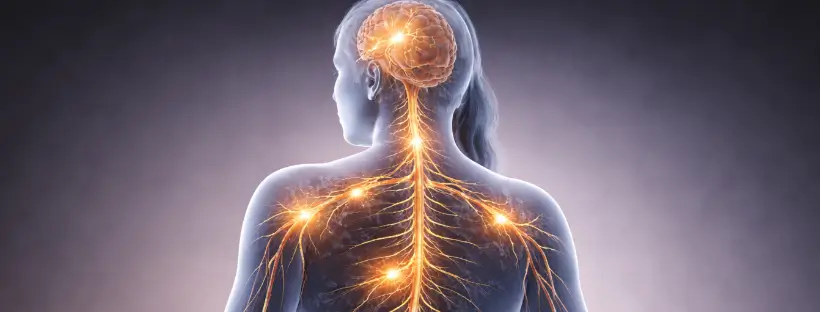
If the body is designed to heal itself, a reasonable question follows:
Why doesn’t it?
Most people assume something is “wrong” with their body when symptoms linger. But in the vast majority of cases, healing hasn’t failed—it has been delayed.
The body is always making decisions about how to use its energy. Those decisions are not conscious. They’re driven by signals of safety or threat. When resources are limited or danger is perceived, the body shifts into preservation mode. Healing becomes secondary.
This is not dysfunction.
It’s intelligent prioritization.
Healing requires significant energy. Repairing tissue, regulating immunity, rebuilding cells, and maintaining balance need energy, nutrients, and time. If the body believes those resources are needed elsewhere—staying alert, responding to stress, managing inflammation—it will delay repair.
Modern life sends constant signals that keep the body on guard.
Chronic psychological stress is one of the most powerful blockers. When stress hormones remain elevated, the nervous system stays in a defensive state. Digestion slows. Immune regulation shifts. Inflammation becomes harder to resolve. The body behaves as if the threat hasn’t passed—because, biologically, it hasn’t. Toxic load accumulates from everyday chemical exposures like pesticides, heavy metals, and synthetic fragrances, which can overwhelm the body’s ability to regulate and heal.
Sleep deprivation impairs repair processes. Deep sleep is when repair accelerates. Growth hormone is released. Neural waste is cleared. Immune cells reset. Without enough quality sleep, these processes stall. The body stays reactive instead of restorative.
Constant eating prevents cellular cleanup. Digestion is an energy-intensive process. When food intake never pauses, the body remains focused on processing incoming fuel instead of clearing damaged components. Cellular cleanup mechanisms remain suppressed—not because something is broken, but because the body is busy.
Chronic inflammation hinders healing. Inflammatory signals tell the body that damage or infection is present. Even low-grade, chronic inflammation—often driven by ultra-processed foods, blood sugar swings, toxins, or unresolved stress—keeps the immune system activated. Healing cannot fully proceed while the body believes it is still under attack.
Emotional stress also inhibits healing. Suppressed emotions, unresolved trauma, and constant mental pressure keep the nervous system braced. The body does not distinguish between physical and emotional threat. If the system doesn’t feel safe, repair remains on hold.
This is why people can follow every protocol and still feel stuck.
They’re trying to heal in an environment that signals danger.
Healing does not require perfection.
It requires enough safety, enough energy, and enough consistency.
Once you understand this, symptoms start to make sense. They are not signs of failure. They are signs of a body that has been prioritizing survival for too long.
The work of healing, then, is not about pushing harder.
It’s about removing the conditions that keep the body from standing down—so repair can resume naturally.
Self-Healing and Cellular Repair
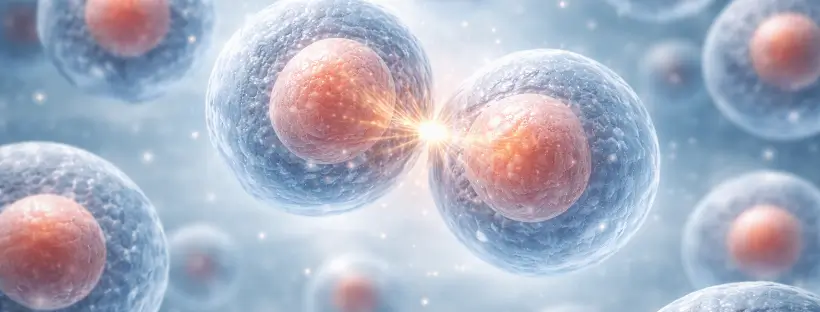
Healing happens at the cellular level.
Every tissue in your body—your gut lining, skin, muscles, immune cells, even parts of your brain—is constantly being broken down and rebuilt. Old or damaged cells are removed. New cells take their place. This turnover is not occasional. It is continuous.
In a healthy system, this process is efficient and quiet. You don’t feel it happening. You just feel functional.
Cellular repair depends on three non-negotiable conditions: energy availability, raw materials, and low threat. When those conditions are met, repair proceeds automatically. When they aren’t, the body conserves resources and postpones renewal.
This is where many people get confused.
They assume that if cells are damaged, the solution is to “add” something—more supplements, more treatments, more stimulation. But repair does not increase just because you demand it. It increases when the body has enough energy to allocate toward rebuilding rather than defense.
Energy is the limiting factor.
Your cells require energy to replicate DNA accurately, synthesize proteins, rebuild membranes, and regulate immune responses. When energy is scarce—or when it is being diverted toward stress responses—repair slows. This is why chronic fatigue and chronic inflammation often appear together. The body is operating in a low-resource state.
Inflammation plays a dual role here. Acute inflammation is part of healing. It helps isolate damage and initiate repair. But when inflammation becomes chronic, it stops being a signal and becomes a burden. The immune system stays active, energy is constantly consumed, and cellular renewal never fully completes.
Chronic neuroinflammation, for instance, can have a profound effect on the nervous system and disrupt cellular repair processes. How Neuroinflammation Hijacks Your Nervous System is one example of how this plays out in the body.
Another critical piece of cellular repair is cleanup.
Damaged cells and dysfunctional components must be removed before new ones can function properly. The body has built-in recycling systems for this purpose. When these systems are active, cellular efficiency improves. When they are suppressed, damaged components accumulate and interfere with normal function.
This is why repair is not just about building—it’s about clearing.
Most people live in a state where building and cleanup are both impaired. Not because the body forgot how to do them, but because the environment doesn’t support them. Constant stress, constant intake, poor sleep, and inflammatory inputs keep the system overloaded.
The result is a body that is constantly compensating instead of regenerating.
Once you understand cellular repair this way, the goal of healing becomes much clearer. You are not trying to micromanage biology. You are trying to free up energy and reduce interference so repair can proceed.
When energy is available, inflammation is resolved, and threat signals are lowered, the body does what it has always done: it heals.
Everything that follows in this article is about restoring those conditions—system by system—so cellular repair can move from stalled to active again.
Nutrition for Repair and Inflammation Control

Food is not just fuel.
It is information.
Every time you eat, you send signals to your body about whether it should repair, defend, store, or brace. These signals influence inflammation, immune activity, hormone balance, and cellular regeneration long before calories or weight ever come into play.
This is where most nutrition advice goes wrong.
It treats food as numbers—macros, calories, restrictions—rather than as biological input. But your cells don’t count calories. They respond to nutrients, inflammatory compounds, blood sugar swings, and chemical stressors.
For healing to occur, nutrition has to support two things at the same time: cellular repair and inflammation resolution.
Cells require raw materials to rebuild. Amino acids to repair tissue. Fatty acids to rebuild membranes and regulate inflammation. Vitamins and minerals to drive enzymatic reactions. Without these, repair simply cannot proceed, no matter how motivated you are.
At the same time, chronic inflammation drains energy. It keeps the immune system activated, diverts resources away from regeneration, and interferes with normal signaling between systems. A body stuck in inflammatory mode does not heal efficiently.
This is why people can eat “enough” and still be undernourished.
Ultra-processed foods create a unique problem. They are energy-dense but nutrient-poor. They spike blood sugar, disrupt gut signaling, and introduce inflammatory compounds that the body must manage. Even when calories are sufficient, the system remains strained. Repair slows. Cleanup stalls. Fatigue builds.
Healing nutrition works in the opposite direction.
Whole, minimally processed foods provide the building blocks the body actually recognizes. Stable blood sugar reduces stress signaling. Adequate protein supports tissue repair. Natural fats help resolve inflammation rather than fuel it. Micronutrients allow cellular processes to run efficiently instead of compensating.
Just as important is what nutrition removes.
When inflammatory inputs decrease, the immune system can stand down. When digestion becomes efficient instead of reactive, energy is freed for repair. When blood sugar stabilizes, stress hormones settle. None of this is dramatic—but it is foundational.
Nutrition doesn’t heal the body on its own.
It creates the conditions where healing can happen.
This is why extreme diets and rigid rules often backfire. They add stress to a system that already lacks capacity. Healing nutrition is not about perfection or control. It’s about adequacy, consistency, and reducing unnecessary load.
When the body is properly nourished and no longer fighting its food, repair becomes possible again—quietly, steadily, and predictably.
The next piece of the puzzle is giving the body something it rarely gets in modern life: space.
Fasting, Autophagy, and Cellular Cleanup
Healing is not only about building.
It’s also about clearing.
Every cell in your body accumulates damage over time. Proteins misfold. Cellular components wear out. Metabolic byproducts build up. If these aren’t removed, they interfere with normal function—no matter how many nutrients you provide.
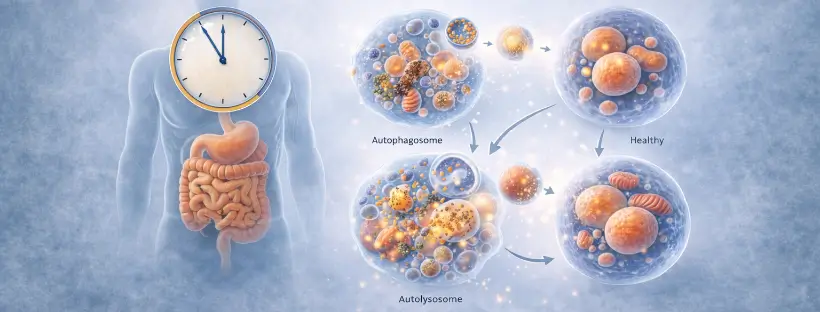
The body has a built-in cleanup system for this. It’s called autophagy.
Autophagy is the process by which cells identify damaged or dysfunctional components, break them down, and recycle the usable parts. It’s one of the most fundamental maintenance systems in human biology. Without it, cells become inefficient, inflamed, and unstable.
This process is not rare or extreme.
It is meant to happen regularly.
The problem is that autophagy requires something modern life rarely allows: metabolic pause.
Digestion is one of the most energy-demanding tasks the body performs. When food is constantly coming in, energy is allocated toward processing, storing, and regulating incoming nutrients. Cleanup is deprioritized. The body stays in “intake mode” instead of “maintenance mode.”
This is why constant eating—even when food quality is good—can quietly block repair.
Fasting, in its simplest form, gives the body time without intake. During that window, energy shifts away from digestion and toward internal maintenance. Autophagy increases. Inflammatory signaling decreases. Damaged cellular components are cleared so regeneration can proceed more efficiently.
This is not about extremes.
Aggressive fasting in a depleted or stressed body can backfire. Healing requires enough safety and energy. When fasting becomes another stressor, it adds load instead of relieving it. The goal is not deprivation. The goal is space.
Even short, consistent breaks between meals can restore this rhythm. The body recognizes the signal quickly. Cleanup resumes. Cellular efficiency improves. Repair becomes easier.
This is why fasting works when it works—and fails when it’s forced.
Autophagy is not something you hack.
It’s something you allow.
When nutrition is adequate, stress is lower, and intake is not constant, the body naturally cycles between building and cleaning. This balance is essential. Without cleanup, repair becomes sloppy. Without repair, cleanup leaves the system depleted.
Healing requires both.
As the body clears internal debris, another system becomes critical to finishing the job: movement and circulation.
Movement, Circulation, and Lymphatic Health

Healing requires movement.
Not intensity. Not performance.
Movement.
Every repair process in the body depends on circulation. Oxygen, nutrients, immune cells, and repair signals all have to reach tissues—and waste has to be carried away. Without movement, this exchange slows. Healing becomes inefficient, even if everything else is in place.
This is one of the most overlooked barriers to recovery.
The cardiovascular system has a pump: the heart.
The lymphatic system does not.
The lymphatic system is responsible for clearing cellular waste, excess inflammation, pathogens, and metabolic byproducts. It plays a central role in immune regulation and detoxification. But it relies almost entirely on muscle contraction and body movement to function.
When you move, lymph moves.
When you don’t, it stagnates.
Stagnation doesn’t always feel dramatic. It shows up subtly—as puffiness, fatigue, brain fog, heaviness, slow recovery, or a sense that your body feels “stuck.” These are not signs of weakness. They’re signs that clearance has slowed.
Modern life encourages stillness. Long hours sitting. Minimal daily movement. Exercise framed as punishment or something you “fit in” instead of a basic biological requirement. The body was not designed for this.
Movement supports healing in several ways at once:
- It increases blood flow, delivering nutrients and oxygen to tissues
- It activates lymphatic drainage, clearing inflammatory waste
- It improves insulin sensitivity, reducing metabolic stress
- It lowers baseline stress hormones, freeing energy for repair
What matters most is consistency, not intensity.
Aggressive exercise in a depleted or inflamed body can actually delay healing. It adds stress, increases cortisol, and pulls energy away from repair. This is why people often feel worse when they try to “exercise their way out” of dysfunction.
Healing movement looks different.
Walking. Gentle strength work. Stretching. Rhythmic motion. Breathing that moves the diaphragm. These forms of movement signal safety rather than threat. They support circulation without overwhelming the system.
When circulation improves, everything else becomes easier. Nutrients reach cells more efficiently. Waste clears faster. Inflammatory signals resolve more completely. The body spends less time compensating and more time repairing.
Movement doesn’t heal the body by force.
It allows healing to circulate.
Once circulation and clearance improve, the body becomes more responsive to another critical signal—one that determines whether healing is sustained or constantly interrupted: the state of the nervous system.
Nervous System Regulation, Chronic Stress, and Healing

Healing does not stop during chronic stress—but it changes priorities.
When the nervous system is stuck in fight-or-flight or survival mode, the body reallocates energy toward immediate demands. Heart rate increases. Digestion slows. Immune signaling shifts. Inflammation may stay elevated. Healing continues, but it becomes selective and less efficient, focused on short-term survival rather than long-term repair.
This is physiological, not psychological.
Chronic stress—from ongoing worry, trauma, emotional suppression, overstimulation, or constant pressure—activates the same stress pathways as physical danger. Even when life looks stable, a dysregulated nervous system can keep the body in a state of high alert, reducing resources available for deeper healing.
This helps explain why symptoms can persist despite good nutrition or supplements. The body is often coping rather than restoring.
Nervous system regulation is not about positive thinking. It’s the body’s ability to exit fight-or-flight and return to a regulated state. As regulation improves, digestion, immune balance, sleep, and repair processes function more efficiently.
Reducing chronic stress doesn’t “turn healing on.”
It frees up energy that was tied up in constant vigilance.
Gentle movement, slow breathing, predictable routines, safe connection, and reduced stimulation help lower stress signals. As this load decreases, the body naturally shifts from survival-focused coping toward recovery and repair.
Healing isn’t blocked by stress—but it works better when the nervous system isn’t stuck in it.
Natural Therapies and Supportive Practices

Natural therapies don’t heal the body.
They support the conditions that allow healing to happen.
This distinction matters more than most people realize.
When the body is overloaded, inflamed, and locked in survival mode, no therapy—natural or pharmaceutical—can override that state. But when the system is regulated and resources are available, certain practices can gently reinforce repair, reduce load, and help the body settle into recovery.
This is why natural therapies sometimes feel miraculous—and other times do nothing at all.
They are context-dependent.
Many traditional healing practices work because they influence core systems: circulation, inflammation, nervous system tone, and energy availability. Heat increases blood flow and tissue repair. Cold exposure reduces inflammatory signaling. Breathwork shifts the nervous system out of fight-or-flight. Herbs modulate stress responses or immune activity. These effects are real, measurable, and well-documented.
But none of them work in isolation.
When people chase therapies without addressing sleep, nutrition, stress, or safety, they often end up frustrated. They assume the therapy failed—or that their body is broken. In reality, the foundation wasn’t there.
Supportive practices are most effective when they reduce pressure, not add it.
This is where modern “biohacking” culture often goes wrong. It turns healing tools into performance demands. More routines. More tracking. More intensity. The body doesn’t interpret that as support. It interprets it as more to manage.
True supportive practices are boring in the best way.
They are consistent. Predictable. Gentle enough that the body doesn’t brace against them. Over time, they reinforce regulation rather than disrupt it.
This is also why traditional systems emphasized rhythm and repetition. Daily movement. Regular heat. Breath. Herbs used seasonally, not constantly. Healing was integrated into life, not layered on top of it.
The goal is not to “activate” the body through stimulation.
It’s to signal safety repeatedly.
When safety becomes the dominant signal, the body stops guarding and starts repairing. In that state, supportive practices amplify what the system is already trying to do.
Used correctly, natural therapies don’t force change.
They cooperate with biology.
And that cooperation—more than any single technique—is what allows healing to become sustainable rather than temporary.
What remains is understanding the final and often hardest shift: letting go of the idea that healing requires constant effort at all.
Healing Isn’t Effort — It’s Environment

Most people approach healing as a project.
They try harder. Research more. Add protocols. Stack routines. Optimize every variable. And when the body doesn’t respond, they assume they’re missing something—or that they’re failing.
But the body doesn’t heal because you push it.
It heals because the environment allows it to.
Biology responds to conditions, not intentions.
When energy is available, threat is low, and resources are sufficient, repair turns on automatically. When those conditions aren’t met, healing pauses—no matter how disciplined or motivated you are. This is not a mindset issue. It’s physiology.
This is why effort often backfires.
Constant self-monitoring, pressure to “do it right,” and fear of doing it wrong all register as stress. Even well-intentioned health habits can become another signal of demand. The body doesn’t interpret that as care. It interprets it as more to manage.
Healing environments feel different.
They are predictable. Supportive. Repetitive rather than intense. They reduce decision fatigue and lower baseline stress. They make it easier for the nervous system to stand down—not harder.
This is also why small changes, made consistently, often outperform dramatic interventions. When the body receives the same signals of safety over and over—adequate food, rest, movement, emotional space—it begins to trust that repair is allowed again.
Trust is biological.
Over time, inflammation resolves more completely. Sleep deepens. Energy stabilizes. Symptoms lose urgency. Not because you forced healing, but because the system no longer needs to stay on guard.
This is the shift most people miss.
Healing is not something you achieve.
It’s something you stop interfering with.
Once you understand this, the entire process becomes simpler. You stop chasing fixes and start observing patterns. You remove what creates friction. You restore what supports function. You let the body do what it has always known how to do.
Your body was not designed to be micromanaged.
It was designed to respond intelligently to its environment.
When that environment supports safety, repair is not optional.
It’s inevitable.
And that is how healing actually works.
What to Focus on First (When Everything Feels Like Too Much)

Once people understand how healing actually works, a new problem often appears: overload.
They see how many systems are involved—nutrition, sleep, stress, movement, emotions, environment—and feel pressure to fix everything at once. That impulse is understandable. It’s also the fastest way to stall healing again.
The body does not require total optimization to heal.
It requires enough support in the right places.
Healing always begins where load is highest and safety is lowest.
For some people, that’s sleep. For others, it’s constant stress, blood sugar instability, or emotional suppression. The most effective starting point is rarely the most complicated one. It’s the place where the body is working the hardest just to maintain baseline function.
This is why copying someone else’s protocol rarely works.
Two people can follow the same plan and have opposite results—not because one is doing it wrong, but because their bodies are prioritizing different threats. Healing is contextual. It responds to what the system needs most, not what looks best on paper.
The goal is not to overhaul your life.
It’s to reduce enough pressure that repair can begin.
When one system stabilizes, others often follow. Better sleep improves stress tolerance. Reduced stress improves digestion. Improved digestion supports inflammation resolution. Healing cascades when the body no longer feels overwhelmed.
This is also where patience matters.
Healing is not linear. Symptoms may shift, surface, or temporarily intensify as the body reallocates resources. This is not regression. It’s reorganization. A system that has been compensating for years does not unwind overnight.
What matters most is consistency, not intensity.
Small, repeatable signals of safety—adequate nourishment, predictable rest, gentle movement, emotional space—teach the body that it no longer needs to stay on guard. Over time, repair becomes the new baseline instead of the exception.
You do not need to force healing.
You need to stop treating your body like it’s the problem.
When you work with biology instead of against it, the process becomes quieter, steadier, and far more sustainable.
And once you see that, you don’t just heal differently.
You live differently.
Final Thoughts

Healing is not something you earn through effort, discipline, or perfect habits.
It’s something the body does naturally when it no longer has to defend itself.
Most people spend years trying to fix symptoms without ever being shown how healing actually works. Once you understand that the body heals through safety, energy, and consistency—not force—the process becomes clearer and far less overwhelming.
You don’t need to control every variable.
You don’t need to do everything at once.
You need to remove enough pressure for repair to resume.
When the body feels supported instead of pushed, it begins to reorganize. Inflammation settles. Energy stabilizes. Symptoms lose urgency. Not because you forced change, but because the system finally has room to heal.
Your body was designed for this.
Your job is simply to stop standing in its way.
