
11 Daily Habits That Actually Help Regulate Your Nervous System

Maybe you feel tired even after sleeping.
Maybe your mind keeps running when you finally sit down. Maybe small things suddenly feel more overwhelming than they used to, you feel constantly on edge, or your body never seems to completely switch off.
Sometimes there is an obvious reason.
Sometimes there is not.
That uncertainty is often what makes it frustrating.
Because you can still be functioning. You can still be going to work, taking care of responsibilities, and doing everything you are supposed to be doing while feeling like something in the background is constantly working harder than it should.
People often describe experiences like feeling tired but wired, emotionally reactive, unable to fully relax, or feeling stuck in stress mode as signs of nervous system dysregulation.
So you start looking for answers.
You try supplements, breathing exercises, podcasts, morning routines, or whatever advice keeps appearing online.
Some things might help temporarily.
Some might seem to do nothing at all.
What often gets overlooked is that the nervous system is responding to far more than isolated moments.
It is also responding to patterns repeated every day.
Which means the small habits happening in the background — how you start your mornings, recover between demands, move, sleep, eat, and structure your day — can sometimes influence more than people realize.
The habits below are not designed to “hack” your nervous system or force calm.
They are daily patterns that can gradually create conditions your body may respond to differently over time.
Disclosure: This guide is for informational purposes only. If you make a purchase through the links provided, I may earn a small commission at no additional cost to you. As an Amazon Associate, I earn from qualifying purchases.
QUICK SUMMARY
— Nervous system regulation usually changes through repeated daily patterns, not one technique or quick fix.
— Starting the day in stress mode, relying on stimulation, and constantly pushing through exhaustion can keep the body working harder in the background.
— Sleep rhythms, movement, nutrition, recovery time, and predictable routines all help create signals the body can learn from.
— You do not need a perfectly calm life or a perfect routine for regulation to improve.
— Small experiences repeated consistently often matter more than dramatic interventions.
- QUICK SUMMARY
- 1. Stop Starting Your Day in Stress Mode
- 2. Stop Relying on Stress and Caffeine to Keep You Going
- 3. Support Your Body With the Building Blocks It Needs
- 4. Create Small Periods of Real Recovery Throughout Your Day
- 5. Move Your Body Every Day
- 6. Create Consistent Sleep and Wake Rhythms
- 7. Spend More Time Outside
- 8. Stop Pushing Through Exhaustion
- 9. Stop Turning Healing Into Another Task to Perfect
- 10. Reduce Unnecessary Decisions and Mental Load
- 11. Build More Predictability Into Your Day
- Final Thoughts
- ❓ Nervous System Regulation FAQs
1. Stop Starting Your Day in Stress Mode

The first hour after waking can influence the signals your nervous system receives for the rest of the day.
This does not mean you need an elaborate morning routine or that one stressful morning will disrupt your nervous system. The issue is not perfection. The issue is repetition.
Many people begin the day by immediately shifting into response mode. Before the body has fully woken up, attention is already directed toward notifications, emails, social media, news updates, or mentally reviewing everything that needs to happen that day.
The nervous system is constantly gathering information and asking a simple question in the background:
What should I prepare for?
If the first signals it receives each morning consistently involve urgency, information overload, and immediate demands for attention, the body can begin preparing for pressure before the day has really started.
This matters because the nervous system learns through repeated experiences.
Over time, waking up and immediately entering a cycle of reacting, responding, and rushing can become a familiar pattern. Repeated experiences often shape expectations, and expectations can gradually shape how the body prepares for the day ahead.
Creating a different pattern does not require a two-hour morning routine, meditation practice, or strict rules.
Small changes are often enough:
- drink water before checking your phone
- delay emails or social media for 20–30 minutes
- open the curtains or step outside shortly after waking
- sit quietly while drinking coffee instead of immediately consuming information
- give yourself a few minutes before entering responsibilities and demands
These actions are not powerful because they are relaxing.
They are powerful because they create a different set of signals.
Instead of beginning the day with immediate urgency, the body repeatedly experiences something else:
There is time before I need to respond.
2. Stop Relying on Stress and Caffeine to Keep You Going

Feeling alert is not always the same as having energy.
Many people become used to functioning while tired and eventually stop questioning it. Coffee in the morning, pushing through fatigue, and relying on stimulation to get through the day can gradually become routine.
The reason this matters for nervous system regulation is that caffeine does not actually create energy.
Throughout the day, your brain gradually builds up a chemical called adenosine, which helps create the feeling of fatigue and signals that the body needs recovery. Caffeine temporarily blocks adenosine receptors, making tiredness feel less noticeable.
The body also has its own built-in alertness system.
Hormones such as cortisol and adrenaline help prepare the body for increased demand. They increase alertness, help make stored energy available, and direct attention toward what feels important in the moment.
None of this is harmful.
These systems are designed to help during exercise, challenges, deadlines, and situations that temporarily require more from you.
The problem begins when compensation becomes routine.
Over time, repeatedly using stimulation to override fatigue can make it harder to recognize the difference between:
I have energy
and
I feel more alert right now
The goal is not avoiding coffee or fearing cortisol.
The goal is noticing when stimulation has quietly become a substitute for support and recovery.
Because nervous system regulation is not only about helping the body feel calmer.
It is also about reducing how often the body has to compensate just to keep up.
3. Support Your Body With the Building Blocks It Needs

The nervous system does not run on stress management techniques alone.
It also runs on energy and resources.
Every nerve signal, neurotransmitter, stress response, and recovery process depends on physical building blocks the body uses every day. If the body is repeatedly being asked to do more while receiving less support, regulation can become harder.
This does not mean eating perfectly or following strict food rules.
It means paying attention to whether the body is regularly receiving what it actually uses.
For many people, that includes:
- eating enough overall rather than constantly under-fueling
- prioritizing protein and nutrient-dense foods
- staying hydrated
- including healthy fats
- avoiding patterns of relying on highly processed foods, convenience foods, or stress alone
Micronutrients also play a role.
Minerals such as sodium, potassium, calcium, zinc, and magnesium help support processes involved in nerve signaling, muscle function, fluid balance, energy production, and how the body responds to stress.
This does not mean every symptom automatically points to a deficiency, and it does not mean one nutrient suddenly fixes nervous system regulation.
The body works through systems, not isolated ingredients.
But if the body is repeatedly under-fueled, chronically stressed, dehydrated, or missing resources it regularly uses, the nervous system may have fewer tools available to adapt and recover efficiently.
Because regulation is not only about reducing stress.
It is also about making sure the body has enough available to respond to it.
4. Create Small Periods of Real Recovery Throughout Your Day

Many people assume recovery happens at the end of the day.
Finish work. Sit down. Watch something. Scroll for a while. Go to sleep.
But the nervous system does not only respond to how much rest happens at night. It also responds to what happens between periods of demand.
Modern life often moves directly from one thing into the next. Emails become meetings. Meetings become errands. Errands become dinner, notifications, screens, and more responsibilities.
The body may stop one activity while the brain immediately starts processing something else.
This matters because stopping work is not always the same thing as reducing load.
Even while sitting still, the nervous system continues sorting information, filtering noise, switching attention, making decisions, and responding to constant input. Many people finish the day mentally exhausted not because they never stopped moving, but because the brain never stopped processing.
Real recovery does not necessarily require a weekend away, an hour of meditation, or removing all stress from life.
More often, it looks like creating small periods where nothing is actively competing for your attention.
This might look like:
- walking for five minutes without your phone
- eating lunch without scrolling
- sitting outside before moving into the next task
- taking a few minutes between meetings instead of immediately switching focus
- driving without automatically turning on music or a podcast
These moments can seem too small to matter.
But nervous system regulation often changes through repeated experiences rather than dramatic interventions.
Small periods throughout the day where the body receives the message:
Nothing is being asked of me right now
can gradually become another signal the nervous system learns from.
5. Move Your Body Every Day

Movement is often discussed as a way to burn calories, lose weight, or improve fitness.
But one of its most overlooked roles is how it affects the nervous system.
Stress is not only a mental experience. It is also a physical one.
When the brain perceives increased demand, the body responds by preparing for action. Heart rate can increase, breathing changes, muscles tighten, attention narrows, and energy becomes more available.
This response is useful.
It helps us react quickly, focus attention, and deal with situations that require effort or action.
The problem is that modern stress often looks very different from the environments humans evolved in.
Many stressors now involve sitting still while the body prepares to do something:
reading emails
meeting deadlines
commuting
financial pressure
constant notifications
mental load
The brain may interpret these situations as demands that require energy and attention, but there is often very little physical release.
This does not mean stress becomes trapped inside the body.
But it can mean the body spends long periods preparing for action while spending very little time actually moving.
Movement creates an opportunity for the body to use some of that activation.
This does not necessarily mean intense exercise.
Walking, stretching, strength training, yoga, dancing, gardening, or simply moving more throughout the day can all create opportunities for the body to shift states.
The goal is not forcing the body to perform.
The goal is helping the body do something it was designed to do:
move.
Because nervous system regulation is not only about learning how to slow down.
Sometimes it is also about giving the body a way to complete what stress was preparing it for in the first place.
6. Create Consistent Sleep and Wake Rhythms

Sleep is one of the most important opportunities the body has for repair and recovery.
But when people think about sleep, the focus is often on total hours alone:
Did I get seven hours? Eight hours?
The nervous system also pays attention to something else:
predictability.
The body runs on internal rhythms that help regulate energy, alertness, hormone release, body temperature, and sleep-wake patterns throughout the day. These rhythms are influenced by repeated signals such as light exposure, movement, meal timing, and when you regularly go to sleep and wake up.
When those signals become highly inconsistent, the body spends more time adjusting.
This does not mean you need military-level routines or that sleeping in on a weekend ruins your nervous system.
The issue, again, is repetition.
If bedtime shifts by several hours every night, wake-up times constantly change, and the body receives different signals every day, the nervous system has fewer predictable patterns to work from.
Consistency creates familiarity.
Familiarity reduces the amount of adaptation the body has to do in the background.
This is one reason some people notice that they feel better not simply after sleeping more, but after sleeping more regularly.
Creating more consistent rhythms does not need to be complicated.
Small changes often matter:
- waking up around the same time most days
- getting natural light early in the morning
- reducing bright light late in the evening
- creating a regular wind-down period before bed
- avoiding large shifts in sleep timing whenever possible
The goal is not perfect sleep.
The goal is giving the body signals it can learn to expect.
Because nervous system regulation often depends less on isolated actions and more on repeated patterns that gradually become familiar.
7. Spend More Time Outside

Modern life places many people in environments the nervous system did not evolve around.
Large amounts of time are now spent indoors, under artificial light, looking at screens, sitting for long periods, and moving between environments that continuously compete for attention.
The issue is not that indoor life is inherently harmful.
The issue is that the body uses information from the environment to help regulate itself, and many of those signals become weaker or less consistent when most of the day happens indoors.
Natural light is one example.
Light entering the eyes helps regulate circadian rhythms that influence energy, alertness, hormone signaling, and sleep patterns throughout the day. Morning light in particular acts as one of the body’s strongest cues for helping establish a predictable daily rhythm.
Nature may also affect the nervous system in another way:
it often reduces the amount of stimulation competing for attention.
Notifications, traffic, screens, advertisements, conversations, and constant task-switching all require processing. Natural environments tend to place fewer demands on attention and often contain slower, more predictable patterns of movement and sensory input.
This does not mean nature automatically heals the nervous system or that you need long hikes through forests every day.
The goal is not escaping life.
The goal is increasing the amount of time your body spends receiving signals that are different from constant demand and stimulation.
This can look like:
- drinking your coffee outside in the morning
- taking a short walk during the day
- sitting in a park while eating lunch
- gardening
- opening windows and spending more time in natural light
- walking without immediately reaching for your phone
These actions may seem small.
But nervous system regulation often changes through repeated experiences rather than dramatic interventions.
Sometimes simply changing the environment the body is receiving information from can change the information it learns from.
8. Stop Pushing Through Exhaustion

Many people automatically respond to exhaustion by trying to become more productive.
More coffee, more effort, pushing through until the end of the day, then promising themselves they will rest later.
The body can compensate for a surprising amount of stress and fatigue, which is why this approach can work for a while.
The problem is that functioning and recovering are not the same thing.
Fatigue is one of the ways the body communicates information about energy availability, sleep, stress load, physical demands, illness, and recovery needs. It is part of a feedback system designed to help regulate how much demand the body can comfortably handle.
This does not mean every feeling of tiredness requires stopping what you are doing. Daily life still involves responsibilities and periods that require effort.
But repeatedly overriding exhaustion can gradually create a pattern where recovery is continuously delayed.
Over time, many people become highly skilled at functioning while tired. They continue completing tasks and meeting responsibilities, but spend less attention on the conditions that may be creating the fatigue in the first place.
Sometimes the issue is poor sleep.
Sometimes it is prolonged stress.
Sometimes it is inadequate nutrition, lack of recovery, illness, or simply asking too much from the body for too long.
The goal is not avoiding effort.
The goal is paying attention to whether exhaustion is being addressed or repeatedly bypassed.
Because nervous system regulation is not only influenced by how much stress the body experiences.
It is also influenced by whether the body regularly receives opportunities to recover from it.
9. Stop Turning Healing Into Another Task to Perfect

When people finally realize their nervous system may be struggling, the response is often understandable:
They start trying to fix it.
Books get ordered. Podcasts get saved. Supplements get researched. Sleep trackers appear. Morning routines become more detailed. Every new piece of information feels like another possible answer.
At first, this can feel helpful.
Learning about the body can create relief because it finally feels like there is an explanation and something practical to do.
The problem begins when healing quietly becomes another source of pressure.
Some people move from constantly monitoring work, responsibilities, and other people to constantly monitoring themselves instead.
Every symptom gets analyzed.
Every bad day feels like a setback.
Every stressful moment starts feeling like evidence that something is not working.
The nervous system does not only respond to external stress. It also responds to ongoing experiences of pressure, urgency, and constant monitoring.
When healing becomes another area where the brain is continually scanning for problems, tracking progress, and searching for the next thing to fix, the body can remain in a state of ongoing attention and vigilance.
That does not mean learning, experimenting, or improving your health is a problem.
The issue is treating healing as though it is a project that can only succeed if everything is done perfectly.
Nervous system regulation rarely changes because of one perfect routine, one supplement, or one week of doing everything correctly.
More often, it changes through repeated experiences that gradually become normal over time.
The goal is not becoming perfect at healing.
The goal is creating conditions that allow the body to spend more time living and less time constantly trying to fix itself.
10. Reduce Unnecessary Decisions and Mental Load

The nervous system is not only responding to major stressors.
It is also responding to the small demands repeated throughout the day.
Many people move through hundreds of decisions without noticing them. What to wear, what to eat, which message to answer first, what needs buying, what needs remembering, what still needs to be done later.
Individually these decisions often seem insignificant.
Collectively they create ongoing mental work.
The brain is constantly filtering information, prioritizing attention, remembering tasks, switching focus, and deciding what matters most in that moment. Even when these processes happen automatically, they still require energy.
This does not mean everyday decisions are harmful.
The issue is that many people live in a state of continuous adaptation where the brain rarely gets a break from organizing, anticipating, and managing what comes next.
This is one reason routines can sometimes feel surprisingly helpful.
Not because routines are magical, but because familiar patterns reduce the number of things that require active processing.
Simple examples might include:
- eating similar breakfasts or lunches during the week
- keeping frequently used items in the same place
- creating recurring routines for mornings or evenings
- writing tasks down instead of mentally rehearsing them
- limiting unnecessary multitasking
The goal is not creating a perfectly organized life.
The goal is reducing the amount of background work the brain is constantly being asked to manage.
Because nervous system regulation is influenced not only by major sources of stress, but also by the accumulation of smaller demands repeated throughout the day.
11. Build More Predictability Into Your Day
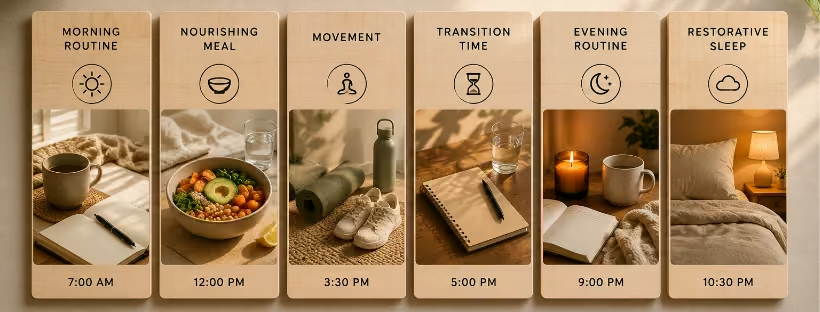
The nervous system spends much of its time doing one thing in the background:
predicting what happens next.
The brain is constantly taking in information from the environment and using previous experiences to anticipate what may require attention. This process helps us navigate daily life efficiently.
Predictability makes that process easier.
Unpredictability requires more work.
This does not mean the nervous system needs a perfectly structured life or that every unexpected event becomes stressful. Flexibility is a normal part of being human.
The issue is when large parts of daily life begin feeling inconsistent, rushed, or constantly changing. Irregular sleep patterns, skipping meals, unpredictable schedules, constant interruptions, and moving from one demand directly into the next can keep the body repeatedly adjusting throughout the day.
Adaptation itself is not harmful.
But adaptation requires resources.
This is one reason familiar routines can sometimes feel calming even when the routine itself is simple. The body gradually learns what to expect.
Predictability can look like:
- eating at roughly similar times
- creating a consistent morning or evening routine
- building transition periods between activities
- preparing meals ahead of time
- setting aside regular time for movement or recovery
The goal is not creating a rigid schedule where every minute is planned.
The goal is reducing how often the body has to remain in a constant state of adjustment.
Because nervous system regulation is not only influenced by the amount of stress in your life.
It is also influenced by how much stability the body repeatedly experiences alongside it.
Final Thoughts

Many people start looking for nervous system healing by searching for one missing answer.
One supplement.
One technique.
One morning routine.
One thing that finally makes everything click.
But the nervous system rarely changes through isolated moments.
It adapts through repeated experiences.
The same way the body can gradually adapt to ongoing stress, urgency, overstimulation, and pressure, it can also gradually adapt to repeated experiences of recovery, consistency, and support.
That is why regulation is often less about dramatic interventions and more about daily conditions.
You do not need to do all 11 of these habits perfectly.
You do not need a perfectly calm life.
And you do not need to turn healing into another project that requires constant effort.
Start with one or two patterns that feel realistic and repeat them long enough for the body to recognize them.
Because nervous system regulation is not built through what you occasionally try.
It is built through what your body repeatedly experiences.
