
How to Use Essential Oil Blends (What to Use and When)
Essential oil blends are usually just a combination of a few oils mixed for a specific purpose.
Some are used to make a space feel calmer.
Some are used to feel a bit more alert or clear-headed.
And some are simply combinations that people find pleasant to use together.
The difficulty isn’t mixing them—it’s knowing what to reach for in a given moment, and what kind of effect to expect from it.
A blend can feel different depending on when you use it, how you use it, and what you’re trying to shift.
What follows are a handful of simple blends, along with when they tend to make sense and how they’re typically used.
Before You Start
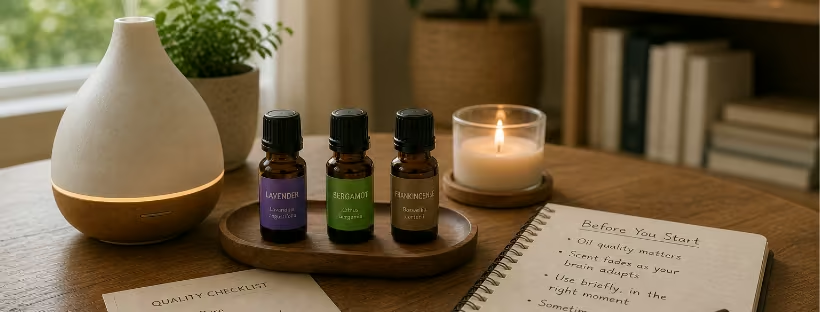
Not all essential oil blends feel the same—and not all of that comes down to the combination itself.
The oil you’re using matters more than it seems. Two bottles labeled the same can behave very differently depending on what’s actually in them.
Once you know how to use blends, the next step is choosing oils that actually work—because without that, even the “right” blend can fall flat.
If you’ve ever used something that smelled right but didn’t seem to do much, that’s often part of it—and usually comes down to how pure the oil actually is.
A blend can feel different depending on how your body is already feeling. Something that feels calming one day might feel flat the next, simply because your system hasn’t fully settled. If that sounds familiar, this is why your body doesn’t always calm down the way you expect.
There’s also a point where your senses stop registering it. A blend can feel noticeable at first, then fade into the background—not because it stopped working, but because your brain tuned it out.
So instead of expecting a strong or lasting effect, it helps to think of these as something you use briefly, in a specific moment.
Sometimes you’ll notice a shift. Sometimes you won’t.
That’s normal—and it’s enough to tell you whether a blend is worth using again.
1. When Your Mind Won’t Switch Off at Night
A Simple Essential Oil Blend for Sleep
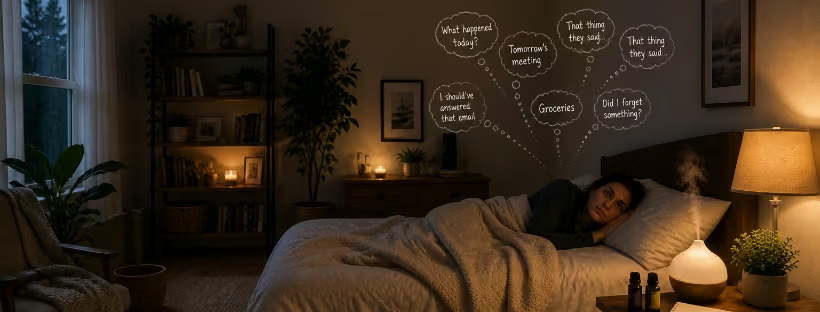
This usually shows up as being physically tired, but mentally still active.
You lie down, and instead of slowing down, your thoughts keep moving—jumping from one thing to the next, replaying the day, or getting pulled into random details that don’t seem to settle.
In that state, the goal isn’t to “force sleep.”
It’s to take the edge off that mental activity just enough for your body to take over.
Blend:
- 2 drops lavender
- 1 drop chamomile
How to use it:
Use this shortly before bed, not all evening.
Diffuse for 15–20 minutes in a quiet room, or rub a drop between your hands and inhale slowly.
What to expect:
Not a strong effect, and not immediate sleep.
More like a slight quieting—thoughts feel less sharp, a bit less insistent.
Sometimes that’s enough to make the transition into sleep easier.
2. When You Can’t Focus or Think Clearly
Essential Oil Blend for Focus and Mental Clarity
This isn’t about being overwhelmed.
It’s more like sitting down to do something and not quite getting into it. Your attention drifts, your thoughts feel slower than usual, and even simple tasks take longer to start.
In that state, using something calming can make it feel heavier.
What helps here is a slight shift in alertness.
Blend:
- 1 drop peppermint
- 1 drop lemon
How to use it:
Inhale directly or diffuse for a short period in your workspace.
This works best in small amounts—too much can become distracting.
What to expect:
A subtle sharpening rather than a boost.
Things feel a bit clearer, a bit easier to engage with. Not a surge of energy—just less resistance to getting started.
3. When Your Body Feels Tense (But Your Mind Is Fine)
Essential Oil Blend for Physical Tension Relief

This is different from feeling stressed.
Your thoughts are steady, but your body is holding tension—shoulders tight, neck stiff, maybe a general sense of physical resistance that doesn’t go away just by “relaxing.”
In this case, diffusing something in the background usually doesn’t do much.
The tension is local, not mental.
Blend:
- 2 drops marjoram
- 1 drop eucalyptus
How to use it:
Dilute with a carrier oil and apply directly to the area that feels tight—shoulders, neck, lower back.
A simple option is jojoba or sweet almond oil—they absorb well and don’t leave the skin greasy.
Take a minute to actually work it into the area rather than applying it passively.
What to expect:
A mild loosening or softening in the area over a few minutes.
Not a full release, but enough to take the edge off the tightness—especially if combined with movement or massage.
4. When Your Mood Feels Flat or Heavy
A Light Essential Oil Blend to Lift a Low Mood

This isn’t stress or anxiety.
It’s more like a lack of lift.
Nothing feels particularly wrong—but nothing feels especially good either. Motivation is low, energy is muted, and everything feels a bit dull.
In that state, heavier or deeply calming oils can keep you there.
What tends to help is something lighter and more noticeable.
Blend:
- 1 drop bergamot
- 1 drop grapefruit
How to use it:
Diffuse in the room for a short period, or inhale directly when you feel that dip.
This works best when used briefly, rather than running in the background all day.
What to expect:
Not a mood shift in the dramatic sense.
More like a small lift—things feel a bit brighter, a bit less flat. Sometimes that’s enough to change how the rest of the moment unfolds.
5. When You Feel Wired but Exhausted
A Gentle Essential Oil Blend for Anxiety and Nervous System Support

This is the in-between state that’s hard to place.
You feel tired, but not settled. Your body is low on energy, but your system still feels “on.” Rest doesn’t feel fully restful, and switching off isn’t easy either.
Using something stimulating makes it worse.
Using something too heavy can feel like it doesn’t land.
Blend:
- 2 drops lavender
- 1 drop frankincense
How to use it:
Use in a quiet moment—either diffuse lightly for a short period or inhale slowly from your hands.
This works best when you’re actually pausing, not multitasking.
What to expect:
Not a strong calming effect.
More of a gradual settling—like the background tension softens a bit, and your system feels less “on edge.” Sometimes that’s enough to make rest feel more natural.
Final Thoughts
Essential oil blends don’t need to be complicated to be useful.
A small combination, used at the right time, is usually enough to notice whether it makes a difference for you.
Some will feel better than others. Some you won’t come back to.
That’s part of it.
Over time, you end up keeping the ones that actually fit—without needing a large collection or a fixed routine.
And for most people, that’s all this needs to be.
