
Essential Oils Can Calm You—But Poison Your Pet

If you’ve been diffusing essential oils around your pet, you’ve probably assumed it’s safe.
They’re natural. Calming. Everywhere in “clean living.”
But here’s the part most people don’t realize:
What relaxes your nervous system might be overloading your dog’s liver—or irritating your cat’s lungs.
Essential oils aren’t harmless fragrance. They’re concentrated plant compounds. And around animals, even commonly used oils like lavender or eucalyptus can trigger vomiting, tremors, breathing issues, or worse—especially in cats, birds, and small mammals.
This isn’t a gentle wellness warning. It’s a clear look at what actually happens when essential oils and animal biology collide—and what you need to change before it turns into a real problem.
Because “natural” doesn’t mean safe. And your pet doesn’t get a say in what they’re exposed to.
Disclosure: This article is for informational purposes only and is not a substitute for veterinary or medical advice. Always consult a qualified professional before using essential oils around animals.
- How Essential Oils Affect Pets Differently Than Humans
- How Exposure Actually Happens in Everyday Life
- But I Only Diffuse a Little—Why That’s Still a Risk?
- What to Do If You’ve Been Using Essential Oils Around Your Pet
- Which Essential Oils Are Higher Risk for Pets—and Are Any Truly Safe?
- Can You Still Use Essential Oils Around Pets?
- ❓ FAQs
How Essential Oils Affect Pets Differently Than Humans

If you’ve looked into essential oils and pet safety, you’ve probably come across advice that doesn’t agree.
Some sources suggest certain oils are safe when diluted or used occasionally. Others—particularly veterinary guidance—recommend avoiding them altogether. The difference comes down to how safety is being evaluated.
In many wellness contexts, essential oils are discussed based on their effects in humans—how they smell, how they feel, or how they’re traditionally used. In contrast, veterinary guidance focuses on how animals process these compounds after exposure.
That distinction matters.
Animals metabolize many of the chemical components in essential oils differently from humans. For example, cats have limited ability to process certain compounds due to differences in liver enzyme activity. Birds have highly sensitive respiratory systems that can absorb airborne substances quickly. Even in dogs, tolerance can vary depending on the oil, the amount used, and how exposure occurs.
Because of this, what may be considered low-risk for humans under certain conditions does not translate directly to animals.
When one source describes an oil as “safe,” it may be referring to:
- limited or diluted use
- absence of immediate symptoms
- or general use in human-focused contexts
That is not the same as established safety across different animal species and exposure types.
Veterinary recommendations tend to be more cautious for this reason. They are based on known differences in metabolism, documented adverse reactions, and the potential for harm—even at low levels of exposure in some cases.
Understanding this difference helps explain why the guidance can appear inconsistent—and why caution is often advised when essential oils are used around pets.
How Exposure Actually Happens in Everyday Life
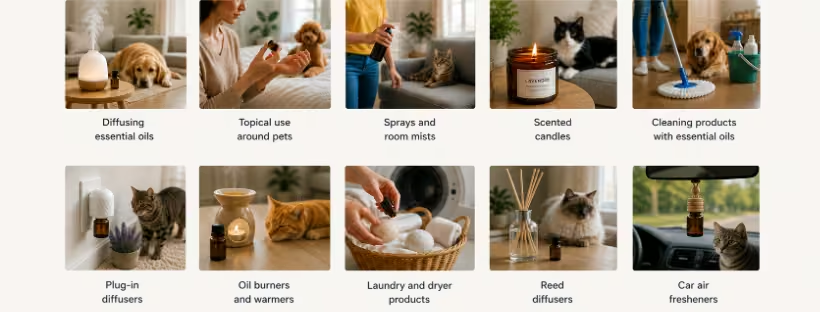
Most people assume essential oils are only a problem if a pet ingests them directly.
In reality, exposure is often indirect—and much easier to overlook.
Diffusers release fine particles into the air that can be inhaled or settle on fur, bedding, and surfaces. What feels subtle to you can accumulate over time in a closed environment, especially in smaller spaces.
Oils applied to your skin can transfer through contact. If your pet nuzzles you, licks your hands, or rests on treated areas, they may ingest small amounts without you realizing it.
Residue can also build up on fabrics, furniture, and floors. This matters more than it seems—especially for animals that groom frequently or spend most of their time close to the ground.
Even occasional use can create repeated low-level exposure, depending on how and where the oils are used.
This is why problems don’t always look immediate or obvious. Exposure often happens gradually, through normal daily contact—not a single, noticeable event.
But I Only Diffuse a Little—Why That’s Still a Risk?
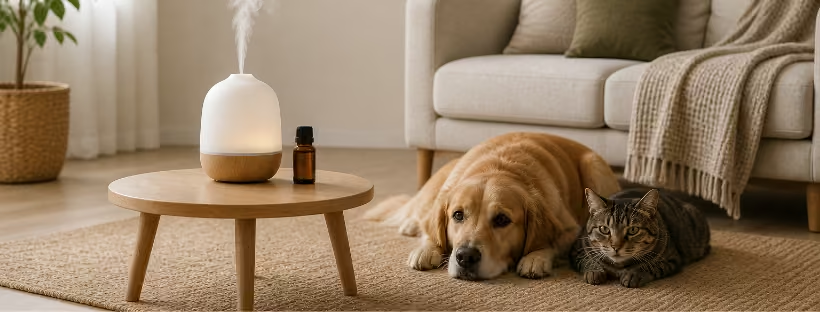
It’s easy to assume that essential oils are only a problem in large amounts.
A few drops in a diffuser. Occasional use. A light scent in the air.
On the surface, it doesn’t feel like enough to matter.
But with essential oils, the risk isn’t just about how much is used at once—it’s about how exposure builds and how sensitive your pet’s system is to those compounds.
When oils are diffused, they don’t disappear. They circulate, settle, and linger on surfaces, fabrics, and fur. Even low levels of repeated exposure can add up over time, especially in enclosed spaces where ventilation is limited.
For animals with reduced ability to process these compounds—like cats—or highly sensitive respiratory systems—like birds—even small amounts can have a disproportionate effect.
There’s also a difference between what seems mild and what is biologically active. A scent that feels subtle to you can still represent a meaningful level of exposure for an animal that is smaller, closer to the ground, and far more sensitive to airborne compounds.
This is why problems don’t always follow a clear pattern. It’s not always a single, obvious reaction. In many cases, it’s gradual exposure that goes unnoticed until symptoms appear.
So while occasional use may seem harmless, it doesn’t remove the underlying risk—especially when exposure is repeated, indirect, or difficult to fully control.
What to Do If You’ve Been Using Essential Oils Around Your Pet

If you’ve been diffusing or using essential oils around your pet, it’s easy to jump to worst-case thinking.
In most cases, occasional or low-level exposure doesn’t automatically mean serious harm has occurred. What matters more is reducing ongoing exposure and knowing what to watch for moving forward.
Start with the basics.
Stop or limit use of essential oils in shared spaces, especially diffusers. Increase ventilation by opening windows or moving to a well-aired room. Clean surfaces, fabrics, and areas where oils may have settled—particularly places your pet rests or spends time.
If you’ve been applying oils to your skin, be mindful of contact. Wash hands before touching your pet, and avoid direct exposure through grooming or close contact.
Next, pay attention to your pet’s behavior.
Early signs of exposure can be subtle. In cats, this may include lethargy, hiding, drooling, or changes in appetite. In dogs, look for panting, restlessness, vomiting, or unusual fatigue. Birds may show respiratory changes such as wheezing or labored breathing, sometimes progressing quickly.
If you notice any of these symptoms—and essential oils have been used nearby—remove the source immediately and contact a veterinarian. It’s always better to act early than wait for symptoms to escalate.
If your pet appears normal, that’s a good sign. But it’s still worth adjusting your environment to prevent ongoing exposure. Many issues related to essential oils are not caused by a single event, but by repeated, low-level contact over time.
The goal isn’t panic. It’s awareness, followed by simple, practical changes that reduce risk and protect your pet going forward.
Which Essential Oils Are Higher Risk for Pets—and Are Any Truly Safe?
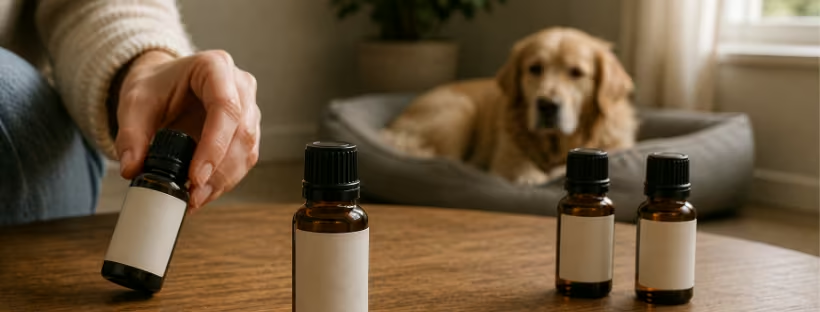
It’s one of the most common questions: which essential oils are safe to use around pets?
The honest answer is less straightforward than most guides suggest.
There isn’t a universal list of “safe” oils that applies across all animals, environments, and methods of use. What matters isn’t just the oil itself—but the species, the level of exposure, and how the oil is used.
That said, some essential oils are consistently linked to adverse reactions in pets and are widely considered higher risk.
These include oils such as tea tree, eucalyptus, peppermint, citrus oils (like lemon and orange), cinnamon, clove, pine, wintergreen, and ylang ylang. These contain compounds that are known to affect the liver, nervous system, or respiratory tract—particularly in cats, birds, and smaller animals.
Even commonly used oils like lavender are not risk-free. While often described as “gentle,” they still contain active compounds that animals may struggle to process, especially with repeated exposure.
This is where much of the confusion comes from.
Part of that confusion also comes from how oils are marketed—where terms like “pure” or “high-quality” are often mistaken for safety, even though that isn’t necessarily the case. If you’ve ever wondered what those labels actually mean, here’s how to tell if an essential oil is truly pure.
An oil may be described as “safe” in the sense that it doesn’t cause immediate or severe reactions under certain conditions. But that’s not the same as being universally safe across species or over time.
In veterinary contexts, safety is defined more conservatively. If an oil has the potential to cause harm—whether through inhalation, ingestion, or skin contact—it’s treated with caution, even at low levels of exposure.
For that reason, the question isn’t just “which oils are safe?”
It’s:
👉 how much exposure is happening
👉 how often
👉 and whether your pet’s body can process those compounds effectively
When those factors aren’t clear or controllable, reducing or avoiding exposure becomes the safer approach.
Can You Still Use Essential Oils Around Pets?

For many people, essential oils are part of a daily routine—used for relaxation, focus, or simply creating a certain atmosphere. The goal isn’t to remove that entirely, but to understand the limits of what’s actually safe in a shared environment.
In general, the safest approach is to avoid using essential oils in spaces your pet cannot leave freely. This includes continuous diffusion in enclosed rooms, applying oils directly to surfaces they contact, or using them on your skin before close interaction.
If oils are used, it should be done with distance, ventilation, and separation in mind—ideally in areas your pet doesn’t access.
This isn’t about eliminating every exposure. It’s about reducing unnecessary risk in situations where your pet has no control over their environment.
For many households, that shift alone is enough to prevent the types of low-level, repeated exposure that lead to problems over time.
