
Clean Beauty Routine for Hormonal & Nervous System Health (Backed by Science)
Every product you apply to your skin interacts with your skin barrier, immune cells, and sensory nerves—triggering chemical and neurological responses throughout the body.
Some calm the system. Others trigger it.
If your skincare, makeup, or deodorant still contains synthetic fragrance, harsh preservatives, or hormone-disrupting chemicals, your nervous system could be reacting—every time you use them. Not with a rash or a breakout. But with subtle signs: tension, fatigue, irritability, poor sleep, or a vague sense that your body never fully relaxes.
This routine was built differently.
Step by step, we’ll show you which products support hormonal balance, regulate stress pathways, and help your body feel safe again—without giving up performance or results.
Because clean beauty isn’t about perfection. It’s about creating the conditions for your system to reset.
The Science: How Clean Beauty Impacts Stress, Hormones & Mood

This isn’t just about nice packaging or plant-based formulas. What you put on your skin can directly influence your nervous system, hormonal balance, and even your emotional state—because your skin isn’t a wall. It’s a communication channel.
Here’s what the research is showing:
- Skin absorbs ingredients fast—especially the small, synthetic ones. A study published in Toxicology and Applied Pharmacology found that certain endocrine-disrupting chemicals (EDCs) in personal care products—including parabens, phthalates, and synthetic musks—can be absorbed transdermally and act systemically in the body.
- EDCs mimic or block your natural hormones. Your body relies on delicate hormonal rhythms to regulate stress, energy, mood, and reproductive health. When synthetic chemicals like parabens or oxybenzone enter the system, they can mimic estrogen or interfere with thyroid hormones—throwing off everything from your menstrual cycle to your stress response.
- Fragrance isn’t just irritating—it’s a neurotoxin for some, and one of several endocrine-disrupting ingredients still hiding in cosmetics. The word “fragrance” on a label can legally mask over 100 synthetic chemicals—a loophole often exploited in greenwashed beauty products. Some of these hidden compounds are linked to neurotoxicity, allergic reactions, and hormone disruption. A 2016 study published in Air Quality, Atmosphere & Health found that fragrance in consumer products releases hazardous air pollutants—including VOCs associated with headaches, asthma, and even mood changes.
- Chronic low-level exposure is worse than you think. Your body doesn’t just react to one product. It reacts to the cumulative effect of everything layered on, day after day. This constant chemical exposure may subtly dysregulate your hypothalamic-pituitary-adrenal (HPA) axis—your body’s central stress response system. Over time, this can lead to burnout, mood swings, or even reproductive issues.
- Switching to clean products may lower your chemical burden—fast. One study published in Environmental Health Perspectives found that teenage girls who switched to low-chemical personal care products for just three days had significant drops in their body levels of parabens, phthalates, and triclosan.
- What you smell can calm—or inflame—your brain. Synthetic fragrance doesn’t just sit on your skin—it enters your body through your lungs and olfactory system. And the brain doesn’t treat all scents equally. Natural essential oils like lavender and bergamot have been shown in multiple studies to reduce cortisol and promote parasympathetic (rest-and-digest) activity. In contrast, synthetic fragrance can spike alertness and irritation, especially in sensitive individuals.
When you replace products full of hidden chemicals with clean, transparent alternatives, you reduce the background noise your body is constantly trying to filter out. You give your hormones a break. You allow your nervous system to stop bracing.
This isn’t about fear—it’s about capacity. Clean beauty isn’t just gentler for your skin. It’s information your body can actually use.
When your skincare supports regulation, instead of hijacking it, healing becomes easier. Because the less your body has to defend against, the more it can focus on what it was designed to do: restore balance, resilience, and calm.
Here’s where to start.
1. Cleanse Gently
Swap: Harsh Foaming Cleansers → Creamy or Oil-Based Cleansers

If your skin feels “squeaky clean” after washing, that’s not a good sign. It’s a biological stress signal. Your skin isn’t just a surface—it’s a sensory organ deeply wired to your nervous system and immune response.
Harsh cleansers strip away natural lipids, disrupt the skin barrier, and activate a subtle fight-or-flight reaction that your body feels even if you don’t—one of the most overlooked signs you might be stuck in fight-or-flight mode.
Research in dermatology and neuroimmunology shows that skin barrier disruption directly impacts the HPA axis—your stress response system. When the skin’s protective layer is compromised (often by sulfates, high-pH foams, or synthetic fragrances), the body may perceive threat, releasing cortisol and pro-inflammatory cytokines that not only inflame the skin, but also affect mood and hormonal balance.
This makes your cleanser a nervous system decision—not just a cosmetic one.
Signs your cleanser may be dysregulating:
- Skin feels tight or dry after cleansing
- Redness, reactivity, or skin barrier sensitivity
- Greasy rebound by midday (sebum overproduction = stress response)
- A subtle “wired” feeling after face-washing, especially at night
What to choose instead:
Go for low-pH, creamy or oil-based cleansers that cleanse without stripping, allowing your skin to maintain homeostasis. Look for ingredients like:
- Squalane – biomimetic oil that supports barrier repair
- Aloe vera or oat extract – naturally anti-inflammatory
- Glycerin or beta-glucan – hydrators that calm and soothe
These kinds of cleansers do more than clean—they signal safety to the skin and, by extension, the nervous system.
🛒 Try: The INKEY List Oat Cleansing Balm
Unscented, barrier-safe, and rich in soothing oat kernel oil and colloidal oatmeal. A nourishing balm-to-milk formula that dissolves makeup and grime without overstimulating skin.
2. Hydrate Without Stimulation
Swap: Astringent Toners → Skin Barrier-Safe Hydration Mists

If your toner feels “refreshing,” your nervous system might feel the opposite. That cooling zing, often from alcohols or essential oils, doesn’t mean your skin is clean—it means it’s bracing.
Toners and mists marketed as clarifying or balancing often contain subtle stress signals: high alcohol content, fragrance, astringents, and volatile oils that activate nerve endings and increase transepidermal water loss.
The skin isn’t just absorbing what you spray—it’s responding to it. Sensory neurons in the skin send real-time updates to your brain and endocrine system. When that message is irritation or dryness, your body shifts toward sympathetic dominance—aka survival mode.
And here’s the twist: even toners labeled “natural” or “botanical” can do this. Especially if they contain ingredients like witch hazel, peppermint, citrus oils, or rose water—all common in so-called clean but greenwashed products, and all known to trigger subtle inflammatory responses in sensitive or dysregulated systems.
Signs your toner may be dysregulating:
- A tight, squeaky sensation after use
- Redness or blotchiness that fades slowly
- Subtle anxious energy post-routine (not imagined—it’s neurological)
- Skin that’s dry and oily at once
What to choose instead:
Skip the stimulation. Choose toners or mists that hydrate and soothe without forcing a “feeling.” Think water-binding humectants, calming extracts, and no volatile ingredients. These help your skin regulate water content, reduce transdermal stress, and send a signal of safety to your nervous system.
Look for:
- Glycerin or beta-glucan – supports hydration without heaviness
- Aloe vera – anti-inflammatory, barrier-friendly
- Panthenol (vitamin B5) – enhances skin repair and reduces reactivity
These aren’t “extras.” They’re bio-signals. And in nervous system–informed skincare, they matter.
🛒 Try: Tower 28 SOS Daily Rescue Facial Spray
Fragrance-free, alcohol-free, and dermatologist-tested for sensitive skin. Made with hypochlorous acid—a naturally occurring molecule that calms inflammation and supports skin barrier healing without triggering the stress response.
3. Moisturize Without the Hormone Disruptors
Swap: Scented Lotion → Fragrance-Free Balm

Your skin absorbs more than you think—and when you apply lotion daily, it’s not just moisture you’re putting on your body. It’s instructions. Many conventional moisturizers include synthetic fragrance, petroleum byproducts, and emulsifiers that can quietly disrupt hormone balance and overstimulate your sensory system. These ingredients may seem benign, but your body doesn’t recognize them as safe.
Fragrance, in particular, is often a legal loophole. Just one listed word—“parfum”—can contain hundreds of unregulated chemicals, including phthalates, which are known endocrine disruptors. These compounds mimic or block hormones like estrogen and testosterone, confusing your body’s signaling pathways and burdening your liver and nervous system.
Because the skin barrier is both porous and innervated, applying a fragranced moisturizer—especially after a hot shower—can act like a subtle chemical stressor. That stress may not be obvious, but over time, it can contribute to low-grade inflammation, sensory hypersensitivity, and hormonal imbalance.
Signs your moisturizer may be dysregulating:
- Subtle headaches or mood shifts after applying body products
- Skin that feels reactive, even when “hydrated”
- Trouble winding down after showers or nighttime skincare
- Ongoing dryness despite daily moisturizing (skin barrier confusion)
What to use instead:
Reach for a fragrance-free balm or cream made with food-grade oils, plant butters, and ingredients your body recognizes. These formulas don’t just seal in hydration—they help your skin feel safe.
Look for:
- Shea butter or cocoa butter – rich in skin-compatible fats
- Beeswax or plant waxes – protective, non-clogging
- Calendula, oat, or chamomile – soothe inflammation and calm the skin–nervous system interface
These balms don’t just hydrate. They tell your body: you’re not under attack anymore.
🛒 Try: The INKEY List Omega Water Cream
Fragrance-free, lightweight, and formulated with niacinamide and omega fatty acids to deeply hydrate without triggering irritation or hormonal confusion. Absorbs quickly—no greasy residue.
4. Protect With Mineral SPF
Swap: Chemical Sunscreens → Non-Nano Zinc Oxide

Sunscreen is non-negotiable. But if you’re using a conventional chemical formula, your body might be absorbing more than just UV protection. Many popular sunscreens rely on filters like oxybenzone, octinoxate, and avobenzone—compounds linked to endocrine disruption, allergic reactions, and even coral reef toxicity.
These ingredients don’t just sit on your skin—they can enter your bloodstream within hours. The FDA has acknowledged that several of these filters are systemically absorbed, yet still widely used without adequate long-term safety data. For anyone with a sensitive nervous system or fragile hormone balance, that’s a hidden stressor worth rethinking.
Chemical SPFs may also contain synthetic fragrance, alcohols, and silicones that irritate the skin barrier or create a tight, occlusive film—subtly activating the stress response in skin that’s already overworked.
Signs your sunscreen may be dysregulating:
- Burning, tingling, or tightness after application
- Breakouts, rashes, or barrier sensitivity
- Difficulty finding a “safe” SPF despite trying multiple products
- Feeling wired or agitated after applying scented facial products
What to use instead:
Mineral sunscreens made with non-nano zinc oxide offer physical UV protection that stays on the surface of the skin and is less likely to irritate, disrupt hormones, or impact your nervous system.
Look for:
- Zinc oxide (non-nano, reef-safe) – broad spectrum, calming, and anti-inflammatory
- No fragrance or essential oils – especially for facial use
- Hydrating bases – squalane, glycerin, or hyaluronic acid to prevent barrier stress
These options may take an extra few seconds to rub in, but your skin—and nervous system—will thank you for the upgrade.
🛒 Try: Biossance Squalane + Zinc Sheer Mineral Sunscreen SPF 30
Mineral-based SPF with non-nano zinc oxide, no synthetic fragrance, and skin-supportive squalane. Lightweight, reef-safe formula that hydrates while protecting—no hormonal disruptors, no nervous system irritants.
5. Makeup That Doesn’t Send Mixed Signals
Swap: Heavy, Fragranced, Long-Wear Makeup → Breathable, Nervous System–Safe Alternatives

Makeup is intimate. You wear it on your face, near your eyes, on your lips. And yet, it’s one of the least regulated categories in personal care. Most conventional makeup products include ingredients that either mimic hormones (like parabens and certain chemical UV filters), interfere with skin communication (like silicones and PEGs), or overstimulate your sensory system (through fragrance, colorants, or volatile oils).
When you apply makeup daily, it’s not just cosmetic—it becomes biochemical.
Your nervous system notices what’s on your skin. That includes ingredients that:
- Disrupt the skin barrier and trigger immune responses
- Accumulate in tissue (like synthetic musks or titanium dioxide in nano form)
- Send subtle irritation signals to the vagus nerve endings in your face
And it’s not just foundation. It’s also:
- Mascara with carbon black or phenoxyethanol
- Eye shadow with synthetic mica or talc
- Lipsticks with artificial dyes and petroleum-based waxes
When these products layer up—over time—they keep your system slightly “on,” even if you don’t consciously feel it.
How dysregulating makeup might show up:
- Tingling or fatigue around the eyes by midday
- Breakouts or dryness that only appear where makeup is applied
- A subtle feeling of being overstimulated or wired after makeup application
- Needing more and more product over time to get the same effect
What to use instead:
Look for non-toxic makeup brands that are:
- Fragrance-free and essential oil–free (yes, even “natural” isn’t always safe)
- Using mineral pigments instead of synthetic dyes
- Avoiding silicones and drying alcohols that trap or dehydrate skin
- Transparent about their ingredient sourcing and safety data
These products don’t just perform well—they align with how your body wants to feel: safe, unburdened, regulated.
🛒 Try:
- ILIA Limitless Lash Mascara – No carbon black, fragrance-free, ophthalmologist tested.
- 100% Pure Fruit Pigmented Eye Palette – Talc-free, dyed with fruit pigments, clean enough for sensitive eyes.
- RMS Beauty Lip2Cheek – Multi-use, coconut oil-based tint with minimal ingredients and no synthetic additives.
Makeup shouldn’t hijack your system to look good. It should work with your biology—not against it.
6. Choose Scents That Don’t Hijack Your Brain
Swap: Synthetic Fragrance + Aluminum Deodorant → Nervous System–Safe Scent + Deodorant
Scent is one of the most powerful inputs your nervous system receives—and one of the most overlooked.
Every time you use a scented deodorant, body spray, or perfume, you’re exposing your brain and endocrine system to a cocktail of unlisted chemicals. These can include phthalates (hormone disruptors), synthetic musks (neurotoxins), and preservatives like formaldehyde-releasing agents that quietly activate stress and inflammatory pathways—especially when applied to lymphatic-rich areas like your underarms.
Unlike other senses, smell is hardwired to the limbic system—the brain’s emotional and survival center. That means your body doesn’t just notice fragrance. It reacts to it.
Even if you like the scent, your biology might be bracing.
Daily use of synthetic fragrance (especially in warm, absorbent areas like underarms or neck) can lead to:
- Low-grade anxiety or overstimulation
- Hormonal imbalances, especially in estrogen and thyroid pathways
- Headaches, sleep issues, or sensory fatigue
- Skin irritation or “mystery” rashes in scent-applied zones
Clean swaps aren’t just about avoiding parabens or aluminum. It’s about minimizing chemical noise—so your body isn’t constantly filtering out false signals of danger.
🧠 Less scent = more calm. And more trust between your skin, brain, and body.
What to choose instead:
- Fragrance-free deodorants with magnesium, arrowroot, or low-baking soda formulas
- Roll-on or spray perfumes made with transparent ingredients (not “natural fragrance”)
- Pure essential oils you can blend yourself—because they work with your body, not against it
- Or skip scent entirely. True confidence smells like nothing.
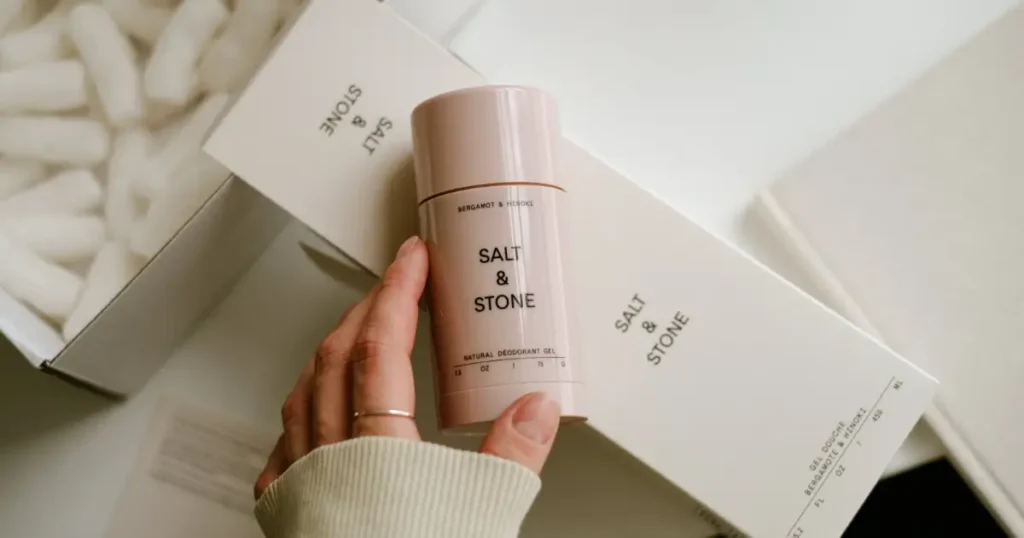
🛒 Try: Salt & Stone Natural Deodorant (Fragrance-Free)
A magnesium-based, baking soda-free deodorant with no aluminum, parabens, or synthetic scent. Formulated to respect your sweat—not block it—with ingredients your nervous system can read as safe.
🛒 Try: By Rosie Jane “Rosie” Eau de Parfum
A clean, phthalate-free perfume made with plant-based alcohol and transparent ingredients. Light rose and white musk notes that evolve gently with your skin chemistry—without leaving a chemical trail.
Final Thoughts

The beauty industry was never designed with your nervous system or hormones in mind. But now you are. And that changes everything.
Every product you swap is more than a cleaner ingredient list—it’s a signal to your body that it’s safe to soften, breathe, and heal. This isn’t about fear-mongering or purity culture. It’s about reducing invisible stressors so your system can finally downshift.
When your skincare routine becomes a source of regulation instead of stimulation, the results go far deeper than surface glow. You sleep better. You feel calmer. Your energy stabilizes. Because the body listens to what you put on it—every single day.
Clean beauty is nervous system hygiene.
And that makes it one of the most radical, everyday acts of self-regulation you can choose.
