
What to Replace First in Your Kitchen to Reduce Toxic Load
If you’ve ever tried to clean up your kitchen, you’ve probably noticed this: the more you look into it, the less clear it feels.
You start swapping things out, then realize you don’t actually know what matters most. Everything sounds important. Every product claims to be safer. And at some point, it becomes easier to stop than to keep guessing.
That’s where most people get stuck.
Not because they don’t care—but because there’s no clear starting point.
When everything feels like a priority, nothing changes.
If you’re trying to figure out how to reduce hidden toxins without overhauling everything, it helps to approach it differently.
The shift is simple: not everything in your kitchen has the same impact. Some items create daily, repeated exposure. Others barely matter.
Once you know the difference, the next steps become obvious.
Disclosure: If you make a purchase through the links provided, I may earn a small commission at no additional cost to you.
Where to Start
If low-tox living feels overwhelming, start here: do not replace everything at once. Replace the items that check these three boxes first:
- Does it get hot?
- Does it touch your food?
- Is it scratched, chipped, warped, or worn out?
If the answer is yes to all three, that item moves to the top of your list.
This rule matters because not every kitchen item has the same impact. A cold storage container is not the same as a scratched pan you heat every morning. Heat puts more stress on materials. Food contact makes that exposure more direct. Condition tells you what is already breaking down.
That is why a worn nonstick pan, a plastic container used for reheating, or a melted cooking utensil matters more than an item used only occasionally or for cold food.
This approach helps you stop spiraling. You do not need to panic and throw everything out. You do not need to stay frozen because you cannot afford to replace it all. You just need to start with the highest-use, highest-contact, most worn items first.
A simple way to remember it is this: hot + touching food + breaking down = replace first.
That is how you build a lower-tox kitchen with clarity instead of fear.
If you are still figuring out where this fits into the bigger picture, it helps to understand what actually matters first in low-tox living.
Now that you know what to look for, the next step is simple: start with the items that show up in your daily routine.
Not everything needs your attention right now. But some things are used constantly, exposed to heat, and already wearing down—those are the ones that matter first.
These are the swaps that reduce your exposure immediately, without overhauling your entire kitchen.
1. Scratched or Flaking Nonstick Cookware
Scratched or flaking nonstick cookware is one of the most common—and most overlooked—sources of daily toxic exposure. It’s easy to ignore because nonstick pans are so normalized. They’re convenient, familiar, and marketed as safe. But that safety depends on one condition: the surface must remain completely intact.
Most nonstick cookware is made with PFAS-based coatings—often called “forever chemicals.” These compounds are designed to resist heat and prevent sticking, but they also don’t break down easily in the body. When the surface is smooth and undamaged, it acts as a barrier. Once that surface is scratched, worn, or flaking, that barrier is gone.
At that point, the pan becomes a shedding surface. Small particles from the coating can transfer into your food, especially with repeated heat and use. You may not see it clearly, but over time, exposure adds up.
This is where many people get stuck. You’ll hear that nonstick is “safe if used properly,” but that assumes perfect conditions—no overheating, no scratches, no wear. In reality, all nonstick pans degrade. Slowly, then all at once. And there’s no clear warning when they cross that line.
So here’s the only rule that matters: if your pan is scratched, peeling, flaking, discolored, or no longer smooth, it’s time to replace it.
Not out of fear—but because it’s a daily, avoidable input your body doesn’t need.
The concern isn’t one meal. It’s accumulation. Your body is already handling a constant stream of environmental inputs. A damaged nonstick pan adds to that load in a way that’s consistent and completely within your control to remove.
When it comes to replacements, the goal isn’t to find a “safer nonstick.” It’s to move away from coatings altogether.
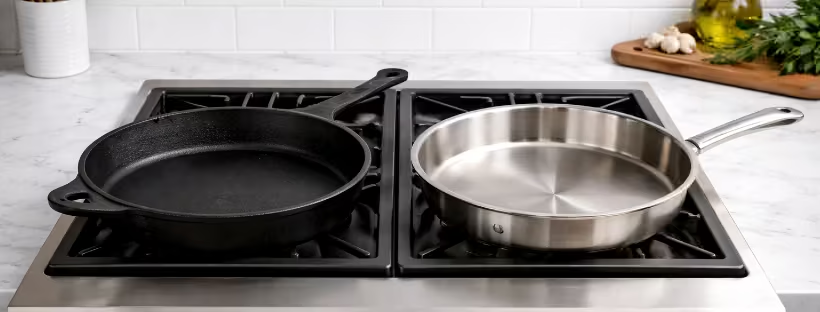
Stainless steel is the most practical place to start. It’s stable, non-reactive, and built to last. There’s a small learning curve, but once you understand heat and fat, it becomes effortless. This simply means preheating the pan properly and using enough fat so food releases naturally instead of sticking.
Cast iron offers a naturally nonstick surface when seasoned and holds heat exceptionally well. It’s simple, durable, and rooted in traditional cooking.
Enameled cast iron is an easy transition option—no seasoning required, non-reactive, and ideal for everyday meals.
True ceramic (not coated) can also work for lower-heat cooking, as long as it’s genuinely free from synthetic coatings.
You don’t need to replace everything at once. Start with the pan that’s already damaged—the one you use most. That single change removes a daily source of exposure immediately.
2. Plastic Containers Used for Reheating
Plastic becomes a problem the moment heat is involved.
Most plastic containers are made with chemical compounds that aren’t permanently bound to the material. Even when labeled “BPA-free,” they often contain alternatives that can behave similarly in the body. When heated, these chemicals can migrate into your food—especially if it’s hot, fatty, or acidic.
This is where confusion happens. “Microwave-safe” doesn’t mean non-toxic. It simply means the plastic won’t melt or warp. It says nothing about what may be leaching into your food at a level you can’t see.
So while your container may look fine, exposure can still be happening with every reheated meal.
The issue isn’t one-time use—it’s repetition. Daily exposure adds to your overall toxic load, especially when it involves compounds that can disrupt hormones or stress the body over time.
The shift is simple: avoid plastic anytime heat is involved—no microwaving in it and no adding hot food to it.
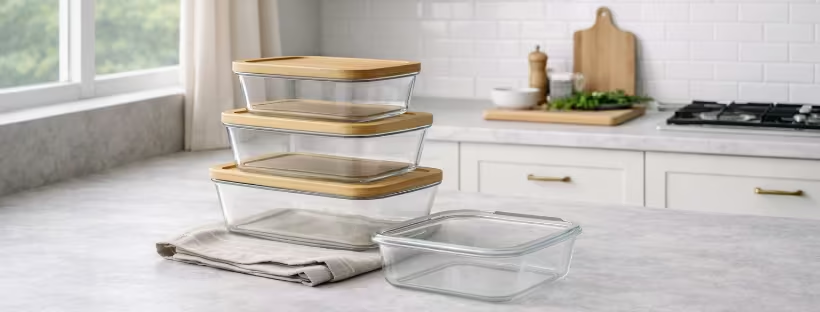
Instead, use materials that stay stable under heat. Glass is the easiest upgrade. It’s non-reactive, doesn’t leach, and works seamlessly for reheating. Stainless steel works well for storage, just not for the microwave. Ceramic is another safe option when made well.
You don’t need to replace everything at once. Start with what you use most often.
3. Worn Cooking Utensils Used with Heat
Cooking utensils are easy to overlook. If they’re still usable, they stay in rotation—often for years. But like everything exposed to heat, they don’t stay stable forever.
Plastic and lower-quality silicone utensils are made with compounds that give them flexibility and heat resistance. Over time, repeated heat and use cause those materials to break down. Surfaces become scratched, faded, or slightly sticky. Edges fray. What once felt smooth no longer is.
As that wear increases, so does the chance of small amounts transferring into your food—especially during cooking.
There’s no clear expiration date, which is why most people keep using them longer than they should. A simple rule helps: if a utensil is worn, discolored, warped, cracking, or no longer smooth, it’s time to replace it.
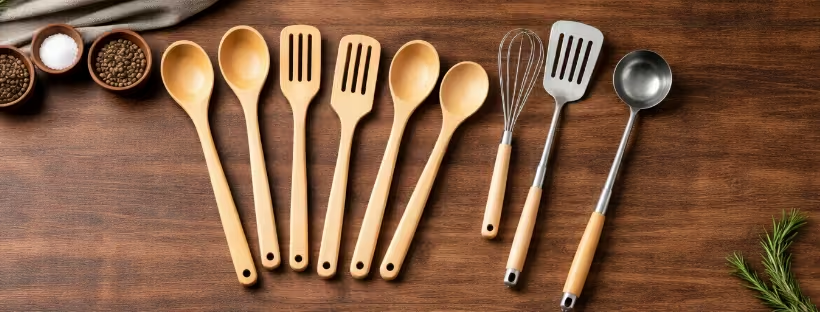
The goal isn’t to eliminate utensils, but to choose materials that hold up under heat. Wood is one of the most reliable options—it’s stable, simple, and doesn’t introduce synthetic compounds. Stainless steel is another durable choice, especially for non-coated cookware. High-quality silicone can work, but only while it’s in good condition.
You don’t need to replace everything at once. Start with the utensils you use daily.
This is a small shift, but it removes another consistent, unnecessary source of exposure from your kitchen.
4. Worn-Out Cutting Boards

Cutting boards are one of the most quietly debated items in a low-tox kitchen. Most people default to plastic because it’s considered “more hygienic” and easier to clean—but that’s only part of the picture.
The real issue with plastic shows up over time. Every knife cut creates grooves in the surface. With daily use, those grooves deepen, and the board becomes worn and rough. At that point, you’re not just cutting on plastic—you’re cutting into it. Small particles can transfer into your food, especially as the board ages.
This is where the disconnect happens. The same grooves that raise concerns about bacteria are also a sign the material is breaking down. So while plastic may feel practical, it becomes a source of ongoing microplastic exposure the longer you use it.
Wood, on the other hand, is often avoided because of bacteria concerns. But quality wood cutting boards don’t behave the same way. They have natural antimicrobial properties and don’t degrade into your food like plastic does. Instead of breaking down, they age.
The decision becomes clearer when you stop comparing brand-new products and start looking at long-term use: plastic breaks down, wood holds up.
A simple rule: if your cutting board is deeply grooved, heavily scarred, or no longer smooth, it’s time to replace it—especially if it’s plastic.
Solid wood boards, like maple or beech, are the most reliable upgrade. They’re durable, stable, and don’t introduce synthetic materials into your food. They require basic care, but nothing complicated.
You don’t need to overthink it. Many people keep one separate board for raw meat and use wood for everything else.
This isn’t about perfection. It’s about choosing a surface that doesn’t slowly break down into your food every time you cook.
5. Unfiltered Tap Water
Tap water is one of the most consistent inputs your body receives—and one of the least questioned.
In most places, people trust that if water meets regulatory standards, it must be fully safe. And to be clear, those standards are designed to prevent immediate harm. Tap water is regulated by public health agencies and must meet established safety limits.
But those limits are based on what is considered acceptable—not what is completely absent.
That means your water can still contain small amounts of substances like chlorine or chloramine, trace heavy metals from pipes, pesticide runoff, PFAS, and pharmaceutical residues, while remaining within official guidelines. These aren’t usually present at dangerous levels on their own.
The issue is repetition.
You drink it daily, cook with it, and concentrate it into your food. Over time, it becomes a constant input your body has to process—on top of everything else you’re exposed to.
This isn’t about distrust. It’s about understanding the difference between water that meets minimum standards and water that better supports your overall load.
Filtering is simply a way to reduce what doesn’t need to be there.
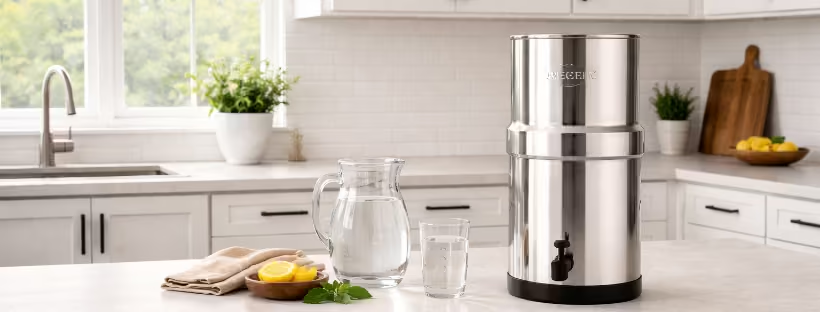
You don’t need a complex system to start. A simple carbon filter can reduce chlorine and improve overall quality. More advanced options, like reverse osmosis, remove a wider range of contaminants but aren’t necessary for everyone.
Start with your drinking water. That one shift reduces a daily, repeated exposure immediately.
This isn’t about perfection. It’s about upgrading one of the most frequent inputs your body receives in a simple, sustainable way.
How to Avoid “Non-Toxic” Greenwashing

Walk into any store and the same words appear across kitchen products—natural, non-toxic, eco-friendly, safe. These terms are widely used in marketing because they are not tightly regulated. In most cases, there is no strict legal standard defining what “non-toxic” or “natural” must mean on a kitchen product. That gives brands room to highlight reassuring language without having to explain how the product actually performs under real use.
What stands out on packaging tends to guide decisions. Labels like “BPA-free” or “PFOA-free” point to what has been removed, while terms like “ceramic” or “eco” suggest a cleaner alternative. The wording creates a sense of improvement, even when the underlying material or structure has not meaningfully changed.
This is where confusion builds. A plastic container may still behave like plastic without BPA. A nonstick pan may use a different coating, but it is still a coating exposed to heat and wear. A product can sound safer without changing how it interacts with food during cooking or storage.
What actually matters is how the material behaves:
- Plastic is lightweight and flexible, which also makes it more reactive under heat and repeated use
- Coated surfaces rely on a thin layer that gradually wears down with cooking and cleaning
- Terms like natural or eco-friendly do not describe how a material handles temperature, friction, or time
The body responds to what transfers during use, not to what is printed on the label. Heat, moisture, and daily wear determine that exposure.
A low-tox kitchen is built by choosing materials that stay stable through those conditions. Glass does not break down when reheated. Solid wood, when untreated, does not rely on synthetic layers. Stainless steel performs without a coating that can wear away.
When attention shifts from marketing language to the material itself, the difference becomes clear.
My Low-Tox Kitchen (Without the Overwhelm)
You don’t need a perfect kitchen.
You need a few things that work well, hold up over time, and don’t add unnecessary load to your daily routine.
If I were starting from scratch, this is exactly what I’d use. Not everything. Just what matters.
Everyday pan
A simple stainless steel skillet is enough. It handles most meals, doesn’t rely on a coating, and holds up to daily use without breaking down. If you’re used to nonstick, there’s a small learning curve—but once you get it, you won’t go back. Look for a heavy-bottomed pan that heats evenly and lasts for years.
Second pan (optional)
Cast iron skillet is useful for higher-heat cooking and foods that tend to stick. It also lasts indefinitely if you take care of it, which means you’re not replacing it every few years.
Food storage
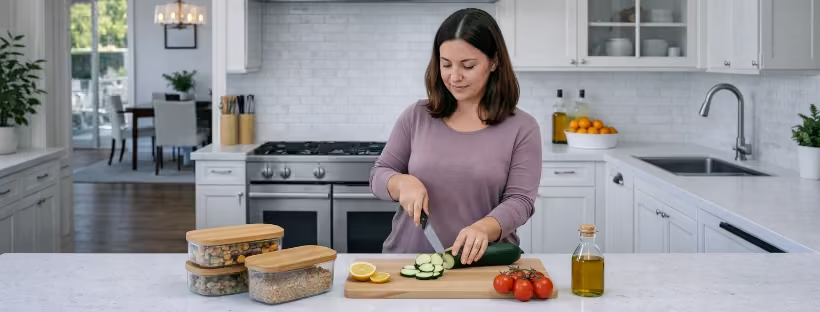
Glass containers are one of the simplest upgrades, especially for anything you plan to reheat. A basic set with a few different sizes is often the easiest way to start, as it covers most everyday use without needing multiple purchases.
You don’t need a large collection—just enough to handle leftovers, meal prep, and daily use. The goal is to replace what you use most, not everything at once.
Plastic can still be used for cold storage if needed. When reheating, use the glass only and keep lids off. To reduce wear over time, it’s also best to avoid microwaving or dishwashing the lids.
Cooking utensils
Stick to wood utensils or stainless steel utensils. The key is to avoid anything coated or treated to look “finished.” You want materials that wear naturally, not ones that degrade. A few well-made utensils will last far longer than a drawer full of cheaper ones.
Cutting board
A solid wood cutting board is the most reliable option. It holds up well with daily use and can be maintained over time. Look for boards with an oil finish rather than a glossy or sealed coating, so the surface wears naturally instead of breaking down. When it becomes deeply worn, you replace it. Until then, it does its job without needing constant upgrades.
Water
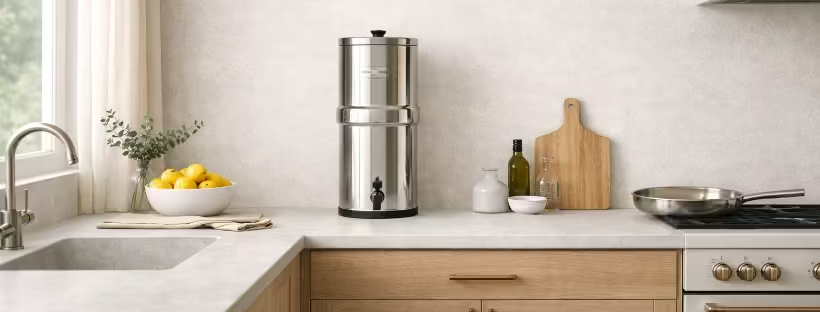
A glass water filter pitcher or stainless steel water filter system is a simple way to improve your water without relying on plastic storage.
A glass pitcher is the easiest place to start. It’s affordable and simple, but the filters need replacing every 1–2 months. A stainless steel gravity system is a step up. The filters last much longer, and ceramic filters can be cleaned and reused before eventually needing replacement.
You don’t need to overcomplicate this. Choose the option you’ll actually use. The goal is to improve your daily exposure in a way that’s consistent, not perfect.
That’s enough.
You don’t need a fully “clean” kitchen. You need a functional one that reduces the most obvious sources of daily exposure.
Final Thoughts

At some point, the goal shifts.
It’s no longer about finding the perfect label or the cleanest brand. It’s about stepping out of a system that profits from your confusion—and learning to trust simpler, more transparent choices.
You don’t need to decode every product or research every ingredient. Most of the time, the answer is quieter than that. It looks like choosing materials you recognize, products that don’t rely on claims, and upgrades that actually reduce your daily load instead of just sounding better.
There will always be new labels, new buzzwords, new “safer” alternatives. But the more you understand what’s behind them, the less power they have.
This is where low-tox living becomes sustainable.
Not when everything is perfect—but when your decisions are grounded in clarity, not marketing.
