
The First 5 Changes That Matter Most in Low-Tox Living

You clean up your diet, try to avoid the obvious junk, and still do not feel quite right.
Your home looks fine on the surface, but something still feels off. Low energy. Light sleep. A body that does not fully settle.
That is where low-tox living gets confusing.
Because once you start looking into it, everything starts to sound like a problem. Air. Water. Skincare. Cookware. Bedding. And very quickly, it feels expensive, unrealistic, and impossible to do all at once.
The good news is that you do not need to fix everything.
What matters most is frequency of exposure, not perfection. The best place to start is with what your body deals with most often each day, which is why some changes matter more than others.
So if you feel overwhelmed, do not try to change your whole home at once. Start with one room or one daily exposure, and focus on the source your body is dealing with most consistently.
These five areas were chosen because they are the main everyday exposures most people come into contact with repeatedly through breathing, drinking, skin contact, eating, and the spaces they spend the most time in.
For most people, air comes first because it is the exposure your body is dealing with most constantly, without much break. Even low-level irritants can keep adding up when they are part of your environment all day and all night.
Disclosure: If you make a purchase through the links provided, I may earn a small commission at no additional cost to you.
1. Air (Fastest Nervous System Impact)
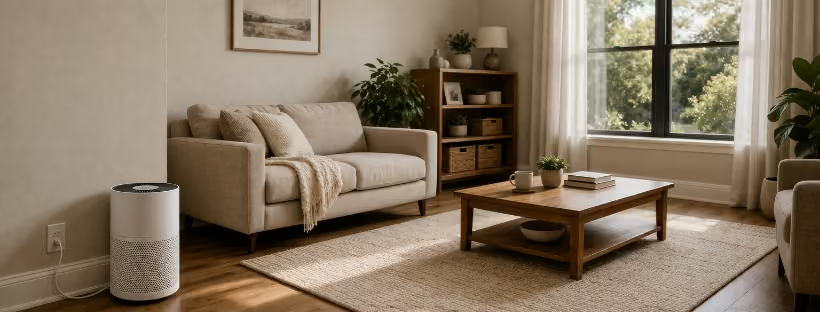
If there’s one place people notice a difference quickly, it’s this.
What you breathe becomes your baseline.
If your air is carrying fragrance, residues, and particles all day, your body never fully settles—even if everything else looks “clean.”
This is where a lot of people get stuck. Their home looks clean, but their air isn’t. And that’s enough to keep your body slightly on edge—especially if you’re dealing with low energy, poor sleep, or that wired-but-tired feeling.
For most homes, the biggest issue is synthetic fragrance.
Candles, air fresheners, laundry detergent, cleaning sprays—they don’t just sit in one place. They spread through your space and linger.
Every breath pulls that in.
You might not notice it consciously, but your system still responds to it.
Over time, that can be enough to affect your sleep and keep your body from fully relaxing.
Start by removing the constant sources:
- Scented candles
- Air sprays and plug-ins
- Fragranced laundry detergent
- Cleaning products that list “fragrance” or “parfum” on the label
Anything that makes your space smell clean is usually adding to the load.
Once those are gone, make one change that actually improves what you’re breathing every day.
A HEPA air purifier is the fastest upgrade here. It removes fine particles and airborne irritants that would otherwise keep circulating through your space.
This is often where people notice the first real shift—especially in sleep and that constant low-level tension.
You don’t need to overthink this—just choose one that fits your space:
- Levoit Core 300 → best for bedrooms or smaller spaces (quiet, simple, effective)
- Coway Airmega AP-1512HH → better for larger areas or stronger filtration
Start with the room you spend the most time in—usually your bedroom.
From there, keep everything else simple.
Go fully fragrance-free for laundry (Molly’s Suds or Seventh Generation Free & Clear both work).
If you still want your space to smell good, use a non-toxic diffuser with pure essential oils—not synthetic blends. Keep it minimal.
If you use candles, switch to pure beeswax.
You’re not adding more.
You’re removing one of the most constant stress signals your body is dealing with—so it can finally start settling.
2. Water (What You’re Drinking Every Day)

Water feels harmless, which is why most people never question it.
But it’s one of the most consistent inputs your body deals with—every day, multiple times a day, without variation.
And unlike food, you don’t rotate it. You don’t take breaks from it. You just keep consuming it.
This is where it starts to matter.
Because tap water isn’t just water. It often contains chlorine, trace chemicals, and contaminants your body has to process on top of everything else.
It can also contain microplastics—tiny plastic particles now found in both tap and bottled water, adding to the constant load your body has to deal with.
Not enough to feel immediate.
But enough to add up—every single day.
And if your system is already slightly on edge, this is the kind of constant input that keeps it there.
You don’t need perfect water. You need cleaner water.
The easiest way to do that is to filter what you’re drinking daily.
- Berkey Water Filter System → best if you want strong, broad filtration without installing anything
- ProOne Big+ → similar setup, simpler filters, good alternative
- CuZn UC-200 Under Sink Filter → best if you want a set-and-forget option directly from your tap
If you want the least friction, go under-sink.
If you want more control, go countertop.
Start with your drinking water first. That’s where this makes the biggest difference.
From there, keep it simple.
Use glass or stainless steel when you can—especially for anything that sits or gets reheated.
You don’t need to overhaul everything.
You just need to stop the constant input your body is dealing with every day.
This is one of those changes that doesn’t feel dramatic at first.
But it compounds.
And once it’s in place, it’s one less thing your body has to work against—every single day.
If you want to take it one step further, your shower is another consistent exposure point.
Hot water and steam increase what your skin and lungs absorb—especially from chlorine.
A simple shower filter can help reduce that daily exposure, particularly if you notice dry skin, irritation, or that “tight” feeling after showering.
3. Skin (What Absorbs Directly Into Your Body)

What you put on your skin isn’t neutral.
Your skin absorbs more than you think—and most of it stays there, used daily, layered, reapplied.
Cleanser. Moisturizer. Serum. Body products.
Not because you need all of it—
but because that’s what you’ve been told your skin needs.
And it adds up.
Every product you use adds another layer—most contain synthetic fragrance (listed as “fragrance” or “parfum”), preservatives, and long ingredient lists.
“Fragrance” isn’t one ingredient—it’s a catch-all term that can hide dozens of undisclosed chemicals under a single label.
One product doesn’t seem like much.
But several, used every day, is constant exposure.
That’s why more products don’t fix anything.
They just add more to the same cycle.
The best clean skincare brands all have one thing in common: fewer ingredients and nothing hidden.
So simplify.
Cut everything back.
Then use one product instead of multiple, for example:
- TAGG Organics Whipped Tallow (Unscented) → best if your skin feels dry, tight, or reactive
(use it to cleanse and moisturize—replaces both) - Cliganic Organic Jojoba Oil → best if your skin feels oily, clogged, or inconsistent
(use it as a cleanser and light moisturizer—it won’t strip your skin)
Pick one and stick with it.
If your products contain fragrance, start there. There’s a lot in conventional skincare that doesn’t need to be there—but fragrance is everywhere, and the easiest place to begin.
You don’t need a full routine.
You need fewer things on your skin—every single day.
4. Kitchen (Where Most Hidden Toxins Come From)

This is where a lot of people think they’re doing everything right.
You’re cooking more. Choosing better ingredients. Making an effort.
But a lot of the problem isn’t the food.
It’s what the food touches.
Because heat, friction, and repeated use break things down over time—and that ends up in what you’re eating.
Not in a dramatic way.
But enough to add to the load, meal after meal.
The biggest issues are non-stick coatings and plastic.
Non-stick pans degrade with heat and use. Plastic containers and utensils break down over time—especially when exposed to hot food.
So even when you’re eating clean, what your food touches still ends up in it.
You don’t need to replace everything. Start with your main cooking pan.
- All-Clad Stainless Steel Fry Pan → best long-term option for everyday cooking (stable, durable, no coating to break down)
- Lodge Cast Iron Skillet → simple, reliable, and naturally non-stick when used properly
Then remove plastic where it matters most:
- Vtopmart Glass Storage Containers with Bamboo Lids → for storing and reheating food without plastic contact
- DI ORO Silicone Kitchen Utensils or OXO Wooden Utensils → better than constant contact with heated plastic
Avoid wooden utensils that mention varnish, lacquer, or glossy coatings—these can break down with heat and defeat the point.
Focus on what touches heat and food repeatedly.
That’s where the biggest difference comes from.
You don’t need a perfect kitchen.
You just need to stop the constant, low-level exposure happening every time you cook and eat.
These are one-time changes.
And once they’re in place, they remove a source your body was dealing with every single day—without you realizing it.
5. Environment (What Keeps Your System Switched On)

By this point, most people have already cleaned up what they eat, drink, and use.
And still, something feels off.
This is usually where the environment comes in.
Not toxins.
Signals.
Because your nervous system is constantly reading what’s around you—light, noise, materials, and stimulation.
And if your environment keeps signaling “alert,” your body doesn’t fully switch off.
Even when you’re trying to rest.
The biggest trigger here is lighting.
Bright, cool-toned overhead lights keep your system in a more alert state—especially at night.
Switching to warmer, softer light in the evening helps your body start winding down naturally.
- Philips Hue Warm White Bulbs (2700K) → simple way to shift your space without changing everything
Then look at what you’re in contact with for hours at a time.
Synthetic fabrics hold heat, static, and don’t regulate well against your skin. It’s subtle, but over time it adds to that “can’t fully relax” feeling.
- Bedsure 100% Cotton Sheets → simple upgrade if your bedding is mostly synthetic
You don’t need to replace everything.
Just start with what your body interacts with the most:
- your bed
- your lighting at night
- the space where you spend your evenings
Then reduce what’s constantly stimulating your space.
Clutter, background noise, and visual overload all keep your environment feeling “on,” even when you’re trying to slow down.
You don’t need a perfect home.
You need a space that lets your system downshift.
Because if your environment keeps signaling “stay alert,”
your body will keep responding that way—no matter what else you’ve fixed.
