
How to Tell If Your Essential Oils Are Pure (9 Signs Most People Miss)
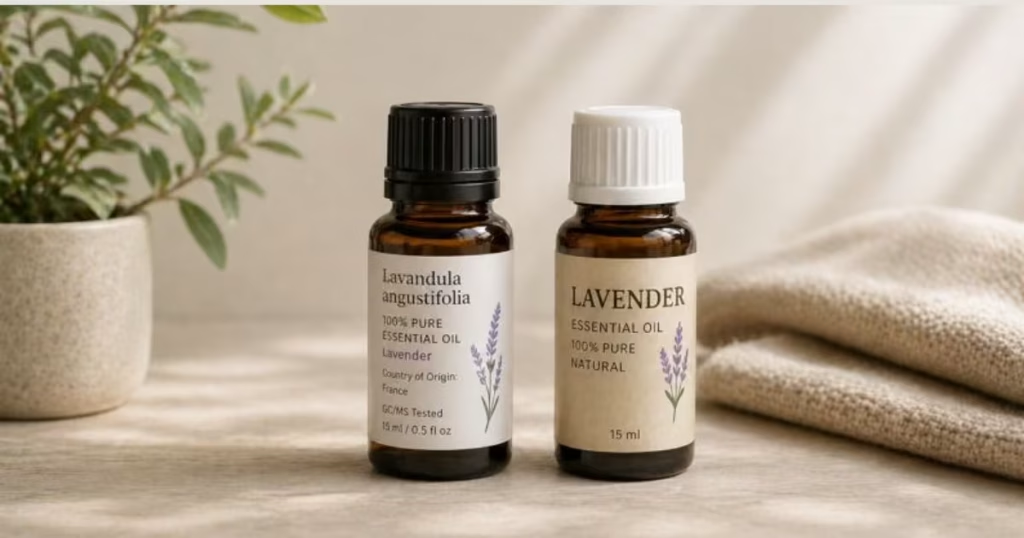
Most people assume essential oils are either pure or not.
In reality, it’s rarely that clear.
An oil can be diluted without being labeled as such. It can come from a different plant than expected. It can be processed in a way that changes how it behaves—while still smelling convincing.
None of that is obvious from the bottle.
And none of it is clearly explained on the label.
What matters is knowing which details actually reflect what’s inside—and which ones are just there to make the oil easier to sell.
Disclosure: This guide is for informational purposes only. If you make a purchase through the links provided, I may earn a small commission at no additional cost to you. As an Amazon Associate, I earn from qualifying purchases.
- 1. The Label Doesn’t Tell the Full Story
- 2. The Latin Name Matters More Than the Brand Name
- 3. Country of Origin Affects Quality
- 4. Price Is Often a Clue
- 5. Many Oils Are Diluted or Adulterated
- 6. How the Oil Is Extracted Changes Its Quality
- 7. GC/MS Testing Is the Closest Thing to Proof
- 8. Packaging and Storage Affect the Oil
- 9. Not All Oils Are Made for Therapeutic Use
- How to Choose Better Essential Oils Going Forward
1. The Label Doesn’t Tell the Full Story
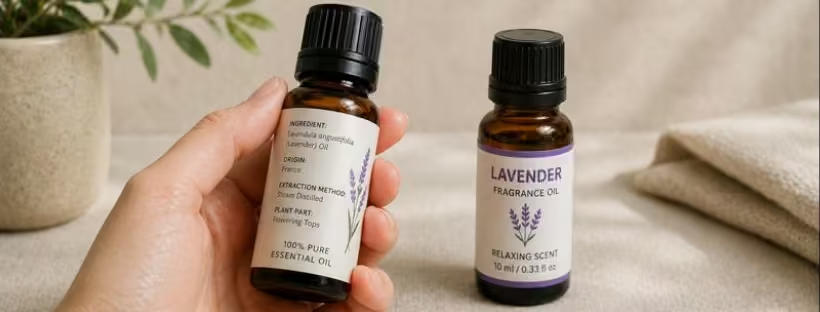
Most people assume that if an essential oil says “100% pure” or “therapeutic grade,” it must be high quality.
It’s a reasonable assumption—but it doesn’t hold up.
These terms aren’t regulated in any meaningful way. They can be used freely, without proof, testing, or standardization. That means two bottles can carry the exact same claims on the label while being completely different in what they actually contain.
One might be carefully sourced and properly distilled. The other might be diluted, poorly processed, or built around synthetic components designed to mimic the scent.
From the outside, you wouldn’t know the difference.
That’s where most people get misled—not because they’re careless, but because they’re trusting language that was never designed to verify anything in the first place.
What matters is what sits behind the label.
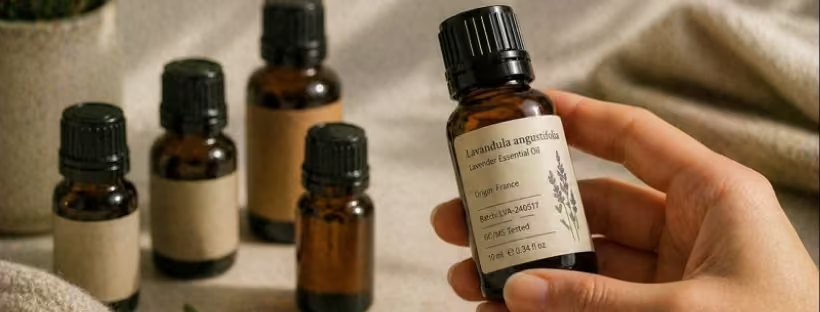
Look for specifics, not claims. A real essential oil should tell you what plant it comes from (not just “lavender,” but the full botanical name), where it was sourced, and whether there’s any form of testing to back it up.
If that information isn’t there, the label isn’t giving you clarity—it’s giving you a version of the product that’s easier to sell.
Once you start reading labels this way, the difference between marketing and substance becomes much easier to spot.
2. The Latin Name Matters More Than the Brand Name
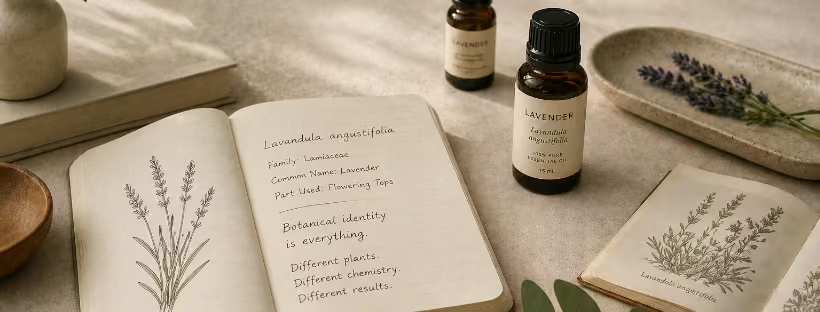
Most essential oils are sold under familiar names—lavender, peppermint, eucalyptus.
But those names aren’t precise enough to tell you what you’re actually getting.
Take lavender. It can refer to multiple plant species, each with a different chemical profile and effect. Lavandula angustifolia is typically associated with calming properties, while Lavandula latifolia is sharper, more stimulating, and used differently.
Both can be labeled simply as “lavender.”
Without the Latin name, there’s no way to know which one is in the bottle.
This isn’t a small detail—it directly affects how the oil behaves, how strong it is, and whether it does what you expect.
The same applies across many oils. Different species, different growing conditions, and even different parts of the plant can produce oils that smell similar but function very differently.
That’s why the botanical name matters more than the branding on the front.
A label that clearly states the full plant name is giving you something specific. A label that doesn’t is asking you to rely on assumptions.
Once you start check
3. Country of Origin Affects Quality
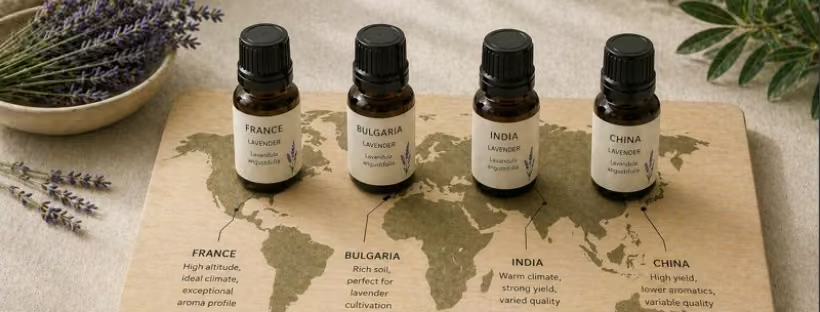
Where a plant is grown has a direct impact on the oil it produces.
Soil, climate, altitude, and growing conditions all shape the plant’s chemistry. Even when the species is the same, the final oil can vary in strength, scent, and effect depending on where it comes from.
Take lavender again. Provence is known for producing oils high in calming compounds, while the same plant grown in a different climate may yield a sharper or less balanced profile.
This is why certain regions become known for specific oils—not because of branding, but because the conditions consistently produce a certain quality.
If a label includes the country of origin, it’s giving you a clearer picture of what you’re getting. If it doesn’t, you’re missing part of the context that helps explain how that oil will actually perform.
It’s not about chasing a specific country. It’s about knowing that origin matters—and noticing when that information is absent.
4. Price Is Often a Clue
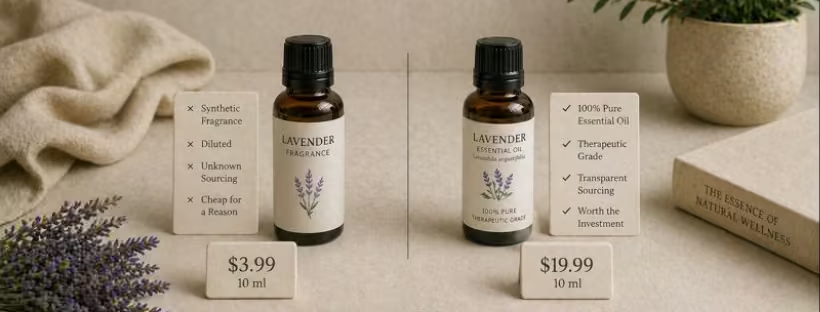
Essential oils are expensive to produce—there’s no way around that.
It can take large amounts of plant material to produce a small bottle of oil. In some cases, pounds of raw plant matter are needed for just a few milliliters. That process alone sets a natural floor on price.
So when an oil is unusually cheap, it usually reflects a compromise somewhere.
That might mean the oil has been diluted, blended with lower-cost substitutes, or made from lower-quality plant material. Sometimes it’s not even the species you think you’re buying—just something close enough in scent to pass.
Price doesn’t guarantee quality. Expensive doesn’t always mean better.
But extremely low prices, especially for oils that are known to be costly to produce, are often a signal that something has been adjusted behind the scenes.
It’s less about knowing exact price ranges, and more about noticing when something feels out of proportion.
If a bottle seems surprisingly cheap for what it claims to be, it’s worth asking what had to be simplified—or removed—to get it there.
5. Many Oils Are Diluted or Adulterated
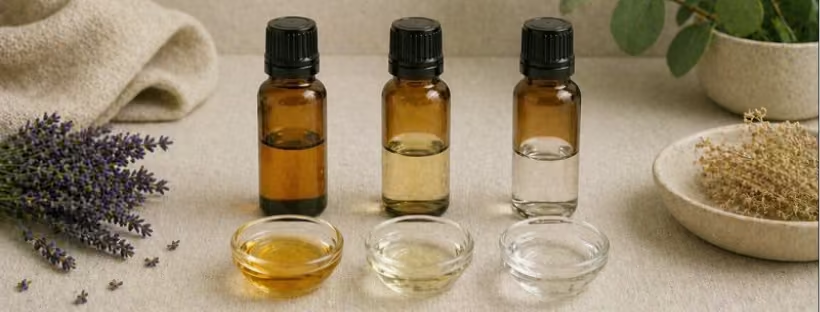
A large portion of essential oils on the market aren’t pure in the way most people assume.
To reduce costs or standardize scent, oils are often diluted with cheaper substances or adjusted with synthetic compounds. In some cases, they’re blended to mimic a more expensive oil while keeping the label simple.
On the surface, these products can look—and even smell—convincing.
But what’s missing is the full chemical profile that gives a true essential oil its depth and effect. That’s why diluted or altered oils often feel weaker, flatter, or inconsistent when you use them.
There’s also a second layer to this: contamination.
Even when an oil hasn’t been intentionally altered, it can still carry residues from pesticides, solvents, or environmental pollutants depending on how the plant was grown and processed.
None of this is obvious from the outside.
Which is why purity isn’t just about what’s added—it’s also about what hasn’t been removed.
If an oil doesn’t come with clear sourcing and testing information, you’re left assuming it’s clean. And in this category, that assumption doesn’t always hold up.
6. How the Oil Is Extracted Changes Its Quality
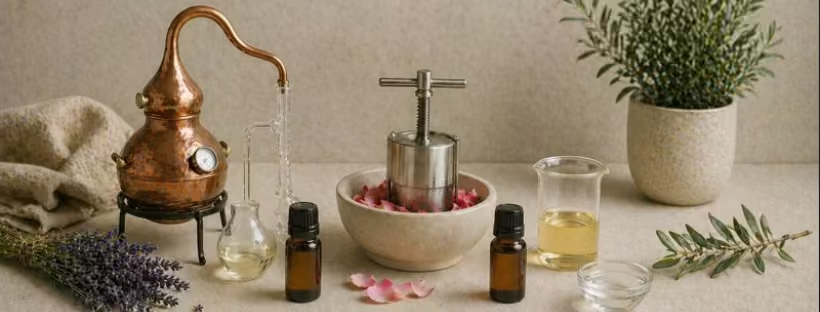
By the time an essential oil reaches the bottle, the extraction process has already shaped what it is.
Different methods pull different compounds from the plant—and not all of them preserve the oil in the same way.
Steam distillation is the most common approach and, when done carefully, can preserve a balanced chemical profile. Cold pressing, used for citrus oils, keeps the brighter, more fragile compounds intact.
Other methods, like solvent extraction, can produce a stronger scent—but may also leave behind residues or alter the composition of the oil.
This doesn’t mean one method is always “good” and another is always “bad.” It means the method needs to match the plant—and be done with precision.
What matters is whether the process preserves what makes the oil effective, rather than just extracting something that smells similar.
Most labels won’t go into detail here. But when a brand does share how an oil is extracted, it’s usually a sign they’re paying attention to more than just the end result.
And over time, that attention shows up in how the oil performs.
7. GC/MS Testing Is the Closest Thing to Proof
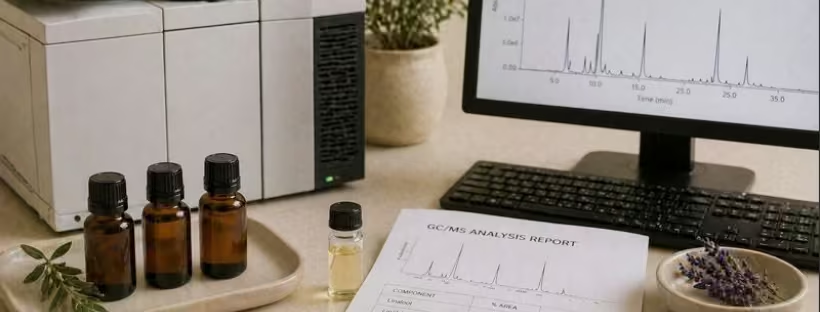
At a certain point, you move past labels and assumptions and need something more concrete.
This is where GC/MS testing comes in.
It’s a form of analysis that breaks an essential oil down into its chemical components, showing exactly what’s present—and in what proportions. In practical terms, it’s one of the few ways to confirm whether an oil is pure, altered, or missing key compounds.
Without it, you’re relying on trust.
With it, you have something you can verify.
Not every brand makes these reports easy to find. Some don’t share them at all. Others provide batch-specific results, often linked directly to the product.
That difference matters.
Because while scent and appearance can be imitated, a full chemical profile is much harder to fake.
If there’s one signal that consistently separates well-made oils from everything else, it’s this—and it becomes very clear when you look at essential oil brands that are actually pure.
You don’t need to analyze the report in detail. Just knowing that it exists—and is available to you—is often enough to tell you how seriously a brand takes what’s in the bottle.
8. Packaging and Storage Affect the Oil
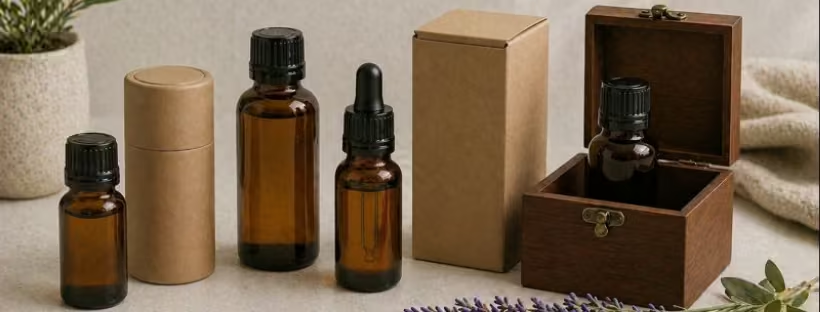
By the time you open a bottle, the oil inside has already been shaped by how it was stored.
Essential oils are sensitive to light, heat, and air. Exposure to any of these can start to break down the compounds that give the oil its structure, scent, and effect.
That’s why packaging matters more than it seems.
High-quality oils are almost always stored in dark glass—usually amber or cobalt—to protect them from light. The bottle should seal tightly to limit air exposure, and the overall presentation should feel stable, not flimsy or disposable.
If an oil is sold in clear glass or plastic, it’s a signal that long-term stability wasn’t a priority.
Storage conditions matter too, even before the product reaches you. Oils that sit in warm environments or direct light during shipping or storage can degrade faster, regardless of how they were made.
This isn’t just about shelf life—it’s about consistency.
A well-produced oil can still lose its integrity if it isn’t protected properly. And when a brand pays attention to packaging, it usually reflects a broader level of care across the entire process.
It’s a small detail on the surface, but one that tends to align with everything else behind the bottle.
9. Not All Oils Are Made for Therapeutic Use
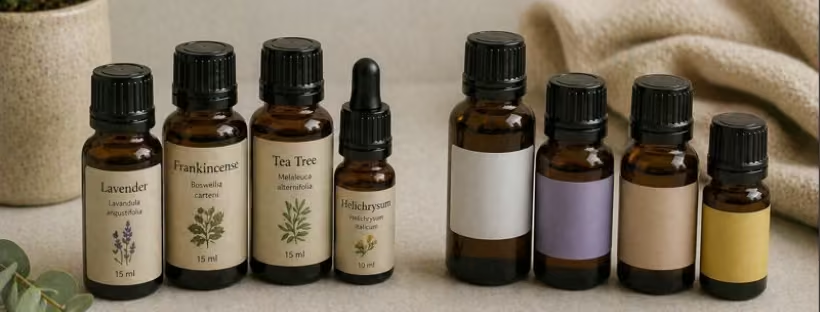
Not every essential oil is produced with the same purpose in mind.
Some are made primarily for scent—used in candles, cleaning products, or fragrance blends. They may smell pleasant, but that doesn’t mean they’re designed to interact with the body in any meaningful way.
Others are produced with more care around sourcing, extraction, and composition, with the goal of preserving the compounds that give the oil its functional effects.
From the outside, these two types can look almost identical.
This is where terms like “therapeutic grade” often create confusion. They sound authoritative, but they aren’t regulated or consistently defined. One brand’s version of that label may not mean the same as another’s.
So the distinction isn’t in the wording—it’s in the intent behind the oil.
Is it made to simply smell good, or is it produced in a way that preserves how the plant actually works?
You won’t always get a direct answer from the label. But when a brand shares detailed sourcing, testing, and production information, it usually points to an oil that was made for more than just fragrance.
How to Choose Better Essential Oils Going Forward
Most essential oils don’t look low quality.
They sit on the shelf like everything else. Same bottle style. Same language. Same promises.
The difference isn’t obvious until you know where to look.
Once you do, the way you choose oils changes completely.
You stop relying on words like “pure” or “natural,” and start paying attention to what actually signals quality—clear sourcing, real testing, and details that are hard to fake.
That shift removes most of the guesswork.
And it’s what separates an oil that simply smells pleasant from one that actually does what it’s supposed to do.
If you don’t want to evaluate every brand yourself, these are the essential oil brands that already meet these standards.
