
7 Best Non-Toxic Essential Oil Diffusers (2026)
Cleaner materials. Gentler diffusion. Less unnecessary plastic.
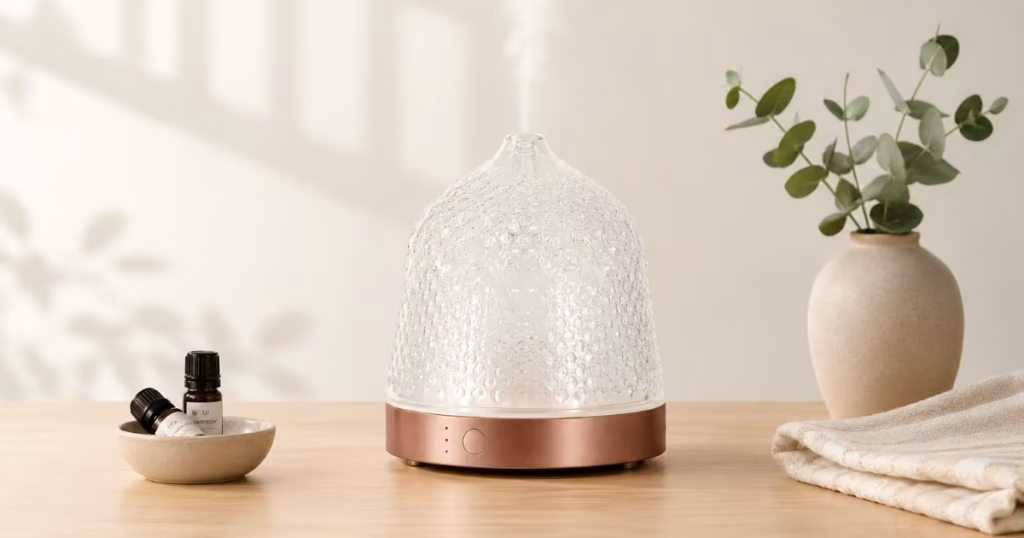
Some essential oil diffusers do the exact opposite of what you bought them for.
More mist. Stronger scent. Longer run times. They sound like signs of a better diffuser — but in a bedroom, office, or smaller space, they can quickly become far more intense than you actually need.
Add questionable oils, heat-based diffusion, or hours of continuous fragrance, and something sold as “wellness” can leave the air feeling heavy rather than calming.
Strong scent is also one of the many environmental inputs your nervous system is processing throughout the day.
The solution isn’t necessarily to stop diffusing. It’s choosing the right diffuser — and using it differently.
Here are the 7 best options for a cleaner, gentler approach.
Disclosure: This article is for informational purposes only and is not intended as medical advice. I may earn a commission from purchases made through links on this page at no additional cost to you.
Quick Compare
When “Wellness” Diffusers Do More Harm Than Good

Many diffusers are designed to create a strong, immediate scent experience because stronger fragrance is often associated with better performance. Bigger mist clouds, stronger scent projection, and large room coverage can sound appealing in product listings — even though that level of diffusion is often far more intense than most people actually need day to day.
High-output ultrasonic diffusers, strong nebulizers, and cheap heat diffusers can quickly saturate smaller rooms with fragrance, especially when they run continuously for hours at a time.
That becomes even more complicated when synthetic fragrance blends and heavily altered oils get marketed as “wellness.” Some essential oils are diluted, chemically altered, or blended with fragrance compounds, solvents, or fillers designed to intensify and prolong scent. That makes the quality of the essential oils you diffuse just as important as the diffuser itself.
For sensitive people, that combination can start to feel surprisingly overstimulating indoors — particularly in bedrooms, offices, or spaces with limited airflow.
Research on fragranced products and fragrance sensitivity has found that a noticeable percentage of people report physical symptoms after exposure to strong scents — particularly in enclosed indoor environments with ongoing fragrance exposure.
For some people, that can look like:
- headaches
- nausea
- brain fog
- sinus irritation
- dizziness
- migraines
- or that strange “heavy air” feeling after diffusing too long
This may help explain why the same diffuser can feel calming to one person and overstimulating to another.
That can become even more important in homes with animals, since some essential oils can be toxic to pets when diffused too heavily or used in poorly ventilated spaces.
If you’re using essential oils regularly, it’s worth learning how to tell if your essential oils are actually pure before assuming the diffuser itself is the only problem.
How to Choose a Non-Toxic Essential Oil Diffuser
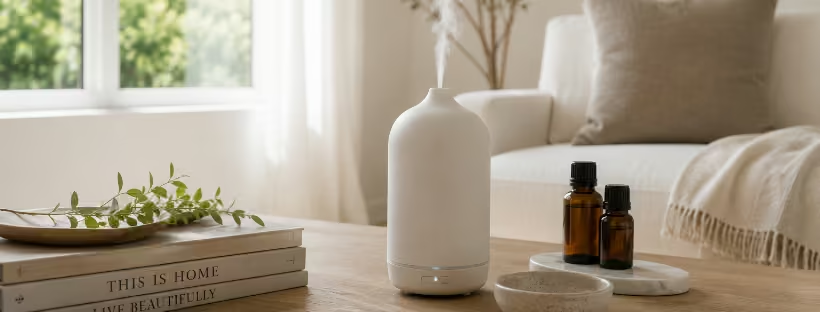
Once you know what actually matters, choosing a diffuser becomes much simpler.
The differences between diffusers go much deeper than appearance, capacity and how much mist they produce. Here’s what’s actually worth looking at before you buy one.
Diffusion method
Passive diffusers give you the lowest-intensity scent. Ultrasonic models dilute oils in water and work well for everyday use. Nebulizers disperse undiluted oil and create the strongest exposure. Choose based on how much scent you actually want — not simply how much space the manufacturer says the diffuser can fill.
What the oil comes into contact with
Look past the exterior. A ceramic or glass diffuser can still contain a plastic reservoir. Some compounds naturally found in essential oils can interact with certain plastics even without heat, so glass or ceramic contact surfaces have an advantage. A plastic reservoir isn’t automatically a deal-breaker, particularly in ultrasonic models where a few drops are diluted in water and dispersed without heat.
Room size and output
Bigger isn’t necessarily better. A high-output diffuser designed for 1,000 square feet can be useful in an open living area and unnecessarily intense beside your bed. Match the output to the space you actually plan to use it in.
Cleaning
If it uses water, look for a reservoir you can easily empty, wipe and dry. Standing water and essential-oil residue make awkward tanks much less appealing than they look on the product page.
Controls that actually matter
Prioritize adjustable output, timers, automatic shutoff and the ability to turn lights completely off. Long runtime and bright LEDs aren’t necessarily advantages — especially for a bedroom.
7 Better Essential Oil Diffusers to Consider
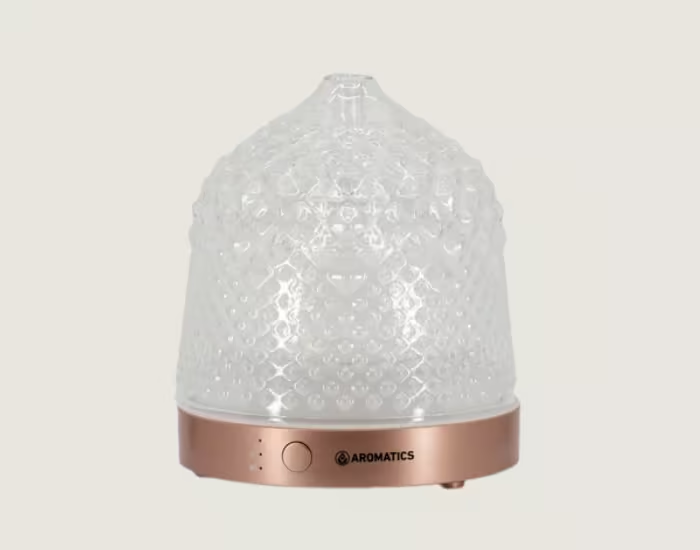
1. Aromatics International Glass Reservoir Aroma Diffuser
BEST OVERALL
Minimal Plastic Contact • Glass Reservoir • Ultrasonic Diffusion • Easy-To-Clean Design • Automatic Shutoff • Low-Noise Operation
Aromatics International Glass Reservoir Aroma Diffuser
Choose this diffuser if: You want a quiet, easy-to-clean diffuser that works just as well beside the bed as it does scenting a larger space.
Shop at Aromatics.com →Aromatics International was founded by aromatherapists more than 20 years ago, with a focus on essential-oil quality, education, and sourcing rather than simply building a lifestyle brand. That aromatherapy background still shapes the company today.
Its Glass Reservoir Aroma Diffuser uses a 200 ml glass reservoir for the water and essential oils. It produces a cool ultrasonic mist at under 30 dB, with 1-, 3-, and 6-hour timers, continuous mode, optional lighting, and automatic shutoff.
What sets it apart is that glass reservoir. It gives the oils and water a glass contact surface while retaining the convenience of an ultrasonic diffuser — the main reason it earned Best Overall.
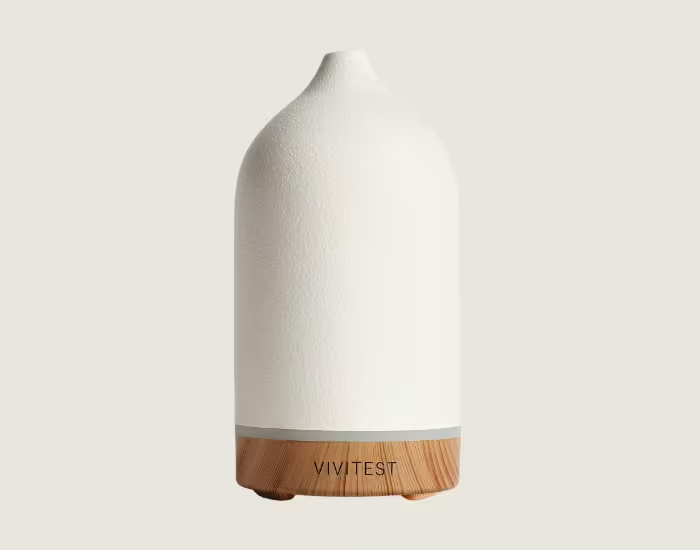
2. Vivitest Aromatherapy Diffuser
BEST BUDGET ULTRASONIC DIFFUSER
Ceramic Exterior • BPA-Free Internal Reservoir • Quiet Ultrasonic Diffusion • Soft Ambient Lighting • Automatic Shutoff • Beginner-Friendly Design
Vivitest Aromatherapy Diffuser
Choose this diffuser if: You want a simple, affordable ultrasonic diffuser for everyday use in smaller spaces.
Shop at AmazonThe Vivitest keeps things simple. It uses ultrasonic vibration rather than heat to create its mist. Its internal reservoir is BPA-free plastic, so this isn’t the pick for someone specifically looking for a glass oil-and-water contact surface.
The 200 ml capacity is enough for everyday use without being oversized for a smaller room. You can set it for 1, 3 or 6 hours, which makes shorter diffusion sessions easy rather than leaving it running continuously.
At $24.99, it’s an affordable way to get controlled ultrasonic diffusion with useful timer settings, as long as a plastic reservoir isn’t a deal-breaker for you.
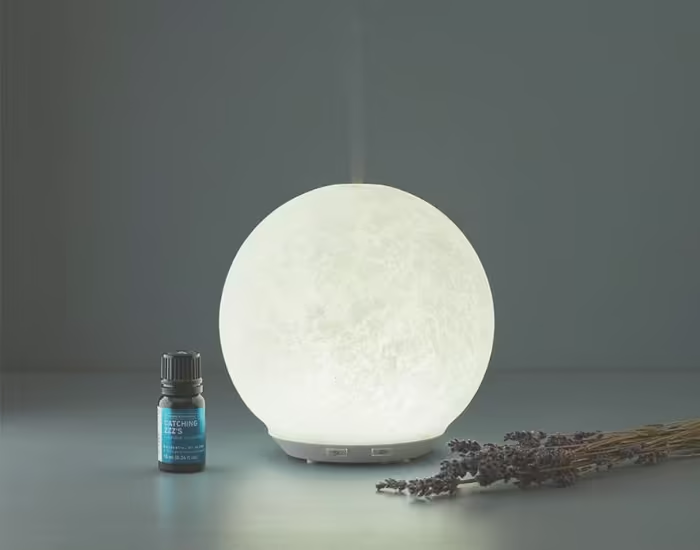
3. Aromatics International Moon Glow Diffuser
BEST FOR LARGE LIVING SPACES
Hand-Blown Glass • Large-Room Coverage • Quiet Ultrasonic Diffusion • Automatic Shutoff • Soft Ambient Lighting • Decorative Design
Aromatics International Moon Glow Diffuser
Choose this diffuser if: You want an ultrasonic diffuser for a larger living space without bringing another obvious-looking appliance into the room.
Shop at Aromatics.com →The Moon Glow solves a different problem from the smaller diffusers on this list. If you have a large living room or open-plan space, a small diffuser can tempt you to compensate with more oil or longer run times just to notice the scent.
This one is designed to cover up to 1,000 square feet while still using water-diluted ultrasonic diffusion rather than the concentrated output of a nebulizer. That makes it an interesting middle ground when you need more reach without necessarily wanting more intensity.
The hand-blown glass exterior is a bonus. It looks more like a softly glowing lamp than an aromatherapy appliance, so it can stay out in a living room rather than being something you want to put away after every use.
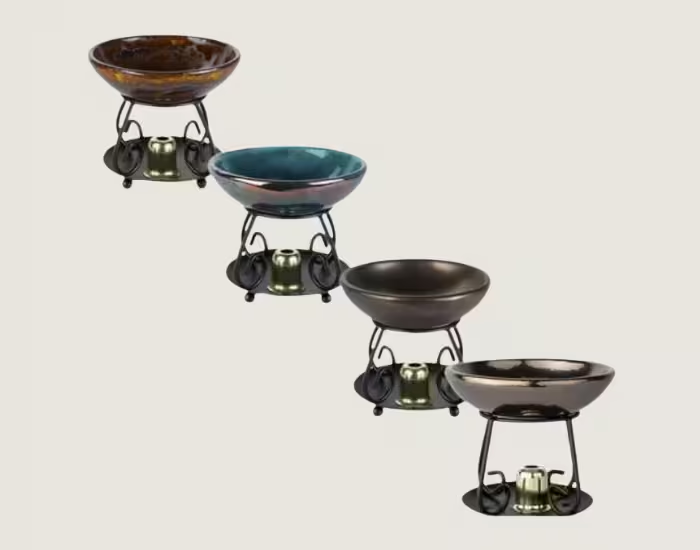
4. Aromatics International Raku Ceramic Diffuser
BEST FOR SUBTLE SCENT DIFFUSION
Candle-Warmed Diffusion • Ceramic Oil & Water Bowl • No Plastic Reservoir • No Electricity • No Ultrasonic Mist • Gentle Scent Output
Aromatics International Raku Ceramic Diffuser
Choose this diffuser if: You want a softer, more subtle scent for smaller spaces without the constant mist of an ultrasonic diffuser.
Shop at Aromatics.comWhat makes the Raku interesting is that it sits somewhere between an aromatherapy tool and a handmade object for the home. Each piece is individually made by ceramic artist Diane DeBaun, so slight variations in the glaze and finish are part of its character rather than something to hide.
That changes the experience, too. This isn’t really a diffuser you switch on and forget about. Lighting the tea light, adding the water and oils, and allowing the aroma to develop slowly makes it feel more like a small aromatherapy ritual — a good fit for someone who wants scent to be part of winding down rather than constantly filling the room.
One thing worth thinking about is the candle itself. Since it sits directly beneath the bowl, an unscented tea light makes more sense than adding another fragrance source. Bluecorn Beeswax Tea Light Candles or Best Natural Organic Store Unscented Soy Wax Tea Light Candles are two options for keeping the setup fragrance-free.
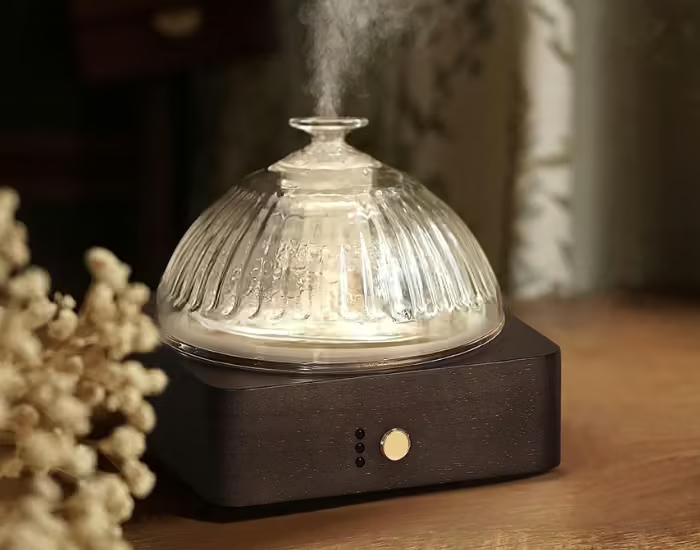
5. Glass Dome Essential Oil Diffuser with Glass Reservoir & Wood Base
BEST GLASS RESERVOIR VALUE
Glass Reservoir • Hand-Blown Glass Cover • Ultrasonic Cool Mist • Quiet Operation • 4 Timer Settings • Automatic Shutoff
Glass Dome Essential Oil Diffuser
Choose this diffuser if: You want the convenience of ultrasonic diffusion without your oils and water sitting in a plastic reservoir.
Shop at Amazon →A lot of glass diffusers are only glass on the outside. This one goes further: the reservoir holding the water and essential oils is glass too.
That means you can have an ultrasonic diffuser without your oils sitting in a plastic tank. Add water and a few drops of oil, choose from four timer settings, and it produces a cool mist until the timer ends or the water runs out.
The hand-blown glass dome gives it a completely different look from the usual plastic diffuser, while the light can be set to one colour or switched off altogether. It also comes with a cleaning brush, which is useful with a glass reservoir where oil residue can otherwise build up over time.
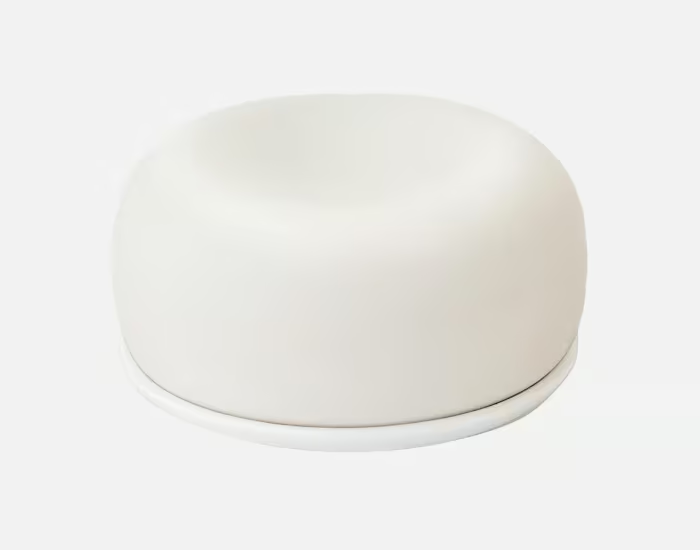
6. MUJI 02868284 Aroma Stone with Plate
BEST FOR FRAGRANCE-SENSITIVE PEOPLE
Minimal Ceramic Stone • No Electricity • No Heat • No Water Reservoir • Passive Diffusion • Ultra-Subtle Scent Output
MUJI 02868284 Aroma Stone with Plate
Choose this diffuser if: You want the simplest way to enjoy essential oils without water, electricity, heat, mist, or a plastic reservoir.
Shop at Amazon →The MUJI Aroma Stone makes the most sense when you don’t actually want to scent an entire room. Think bedside table, desk, bathroom counter or even a suitcase — somewhere you want the fragrance to stay close rather than travel across the house.
That also gives you much more control over when the scent is there. Add a few drops when you want it, then simply leave the stone alone as the aroma gradually fades. There is nothing continuously pumping fragrance into the air.
The oil itself makes a noticeable difference. Heavier scents such as sandalwood, cedarwood and frankincense tend to hang around longer, while lighter citrus oils disappear more quickly.
And there is almost nothing to maintain. No tank to empty, standing water to clean out or machine to put away — just the stone and its small protective plate.
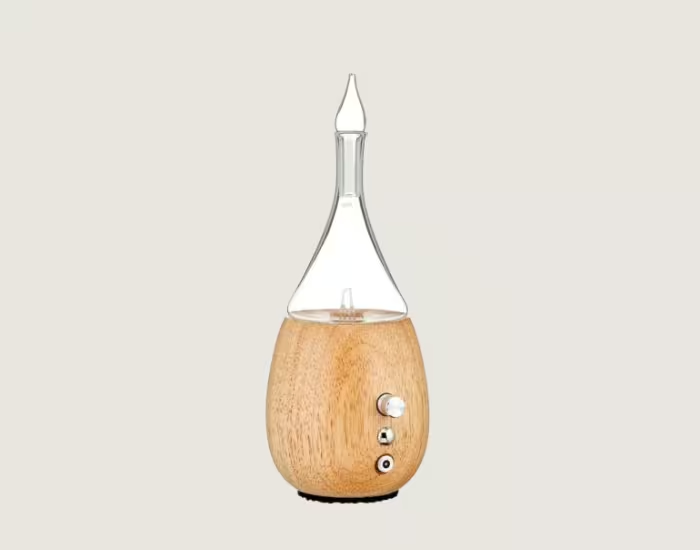
7. Organic Aromas Raindrop 3.0 Nebulizing Diffuser
BEST FOR STRONGER AROMATHERAPY
Glass Nebulizer • Waterless Diffusion • No Heat • No Standing Water • Intermittent Diffusion Cycle • Automatic Shutoff
Organic Aromas Raindrop 3.0
Choose this diffuser if: You want powerful, room-filling aromatherapy using pure essential oil — with no water, heat, or plastic in the diffusion path.
Shop at OrganicAromas.com →The Raindrop 3.0 works very differently from a standard ultrasonic diffuser. Instead of producing a diluted mist, it disperses concentrated essential oil particles directly into the air using nebulizing technology.
That creates a much stronger aromatherapy experience than passive or ultrasonic diffusers, making it better suited for larger open areas or people who prefer more noticeable scent projection throughout a space.
The tradeoff is intensity. Nebulizers use oils much faster, and in enclosed rooms the aroma can start to feel too strong surprisingly quickly if overused. For most people, shorter sessions and lighter oils tend to create a more comfortable experience.
